Feng Jihua, Pang Jielong, He Dan, Wu Zimeng, Li Qian, Ji Pan, He Cuiying, Zhong Zhimei, Li Hongyuan, Zhang Jianfeng
Department of Emergency Medicine, The Second Affiliated Hospital of Guangxi Medical University, Nanning 530007, People's Republic of China.
Int J Gen Med. 2021 Jan 25;14:243-253. doi: 10.2147/IJGM.S287960. eCollection 2021.
Early diagnosis of sepsis-induced acute respiratory distress syndrome (ARDS) is critical for effective treatment. We aimed to identify early stage biomarkers.
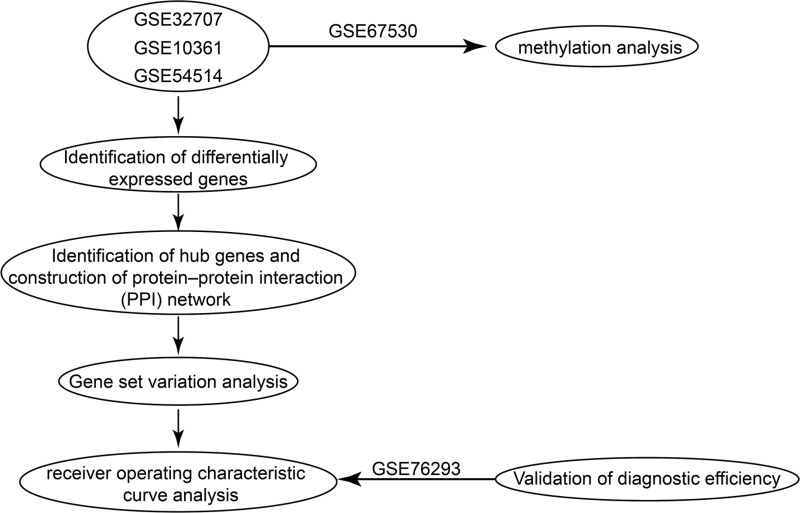
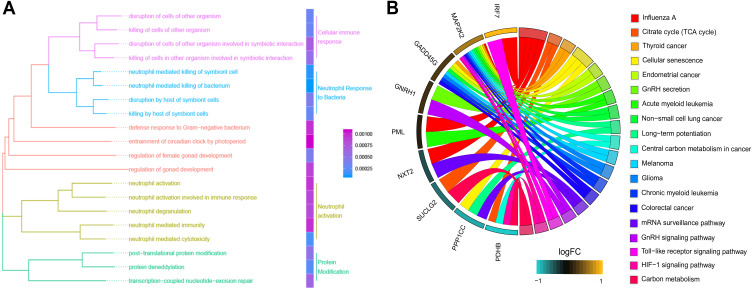
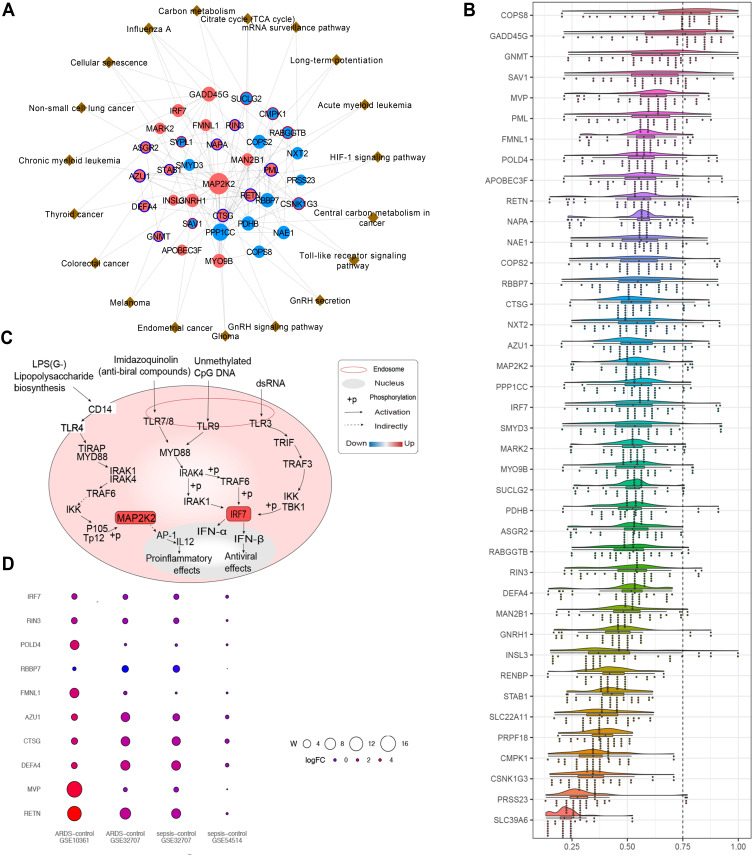
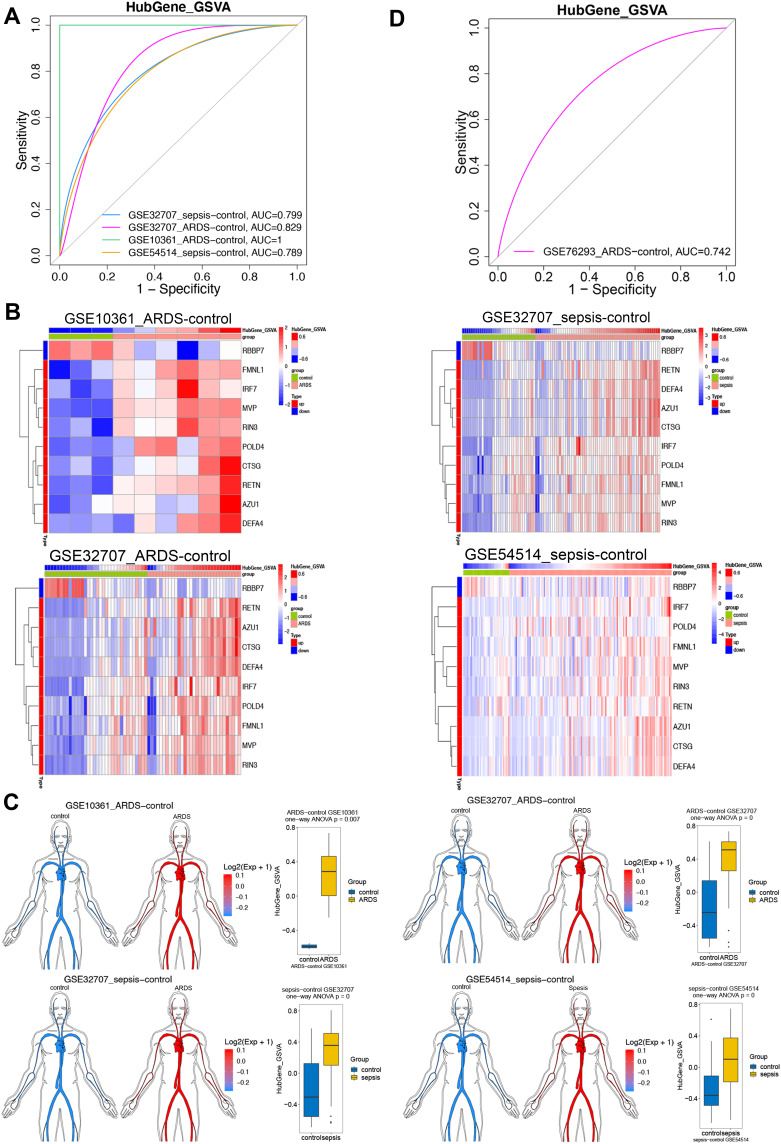
Differentially expressed genes were identified in whole blood samples from patients with sepsis or ARDS based on the Gene Expression Omnibus (GEO) datasets GSE32707, GSE54514 and GSE10361. Functional enrichment analysis explored the biological characteristics of differentially expressed genes. Genes with high functional connectivity based on a protein-protein interaction network were marked as hub genes, which were validated using the GEO dataset GSE76293, and a gene set variation analysis index (GSVA) was assigned. Diagnostic and predictive ability of the hub genes were assessed by receiver operating characteristic (ROC) curve analysis. DNA methylation levels of hub genes were quantified using the GEO dataset GSE67530.
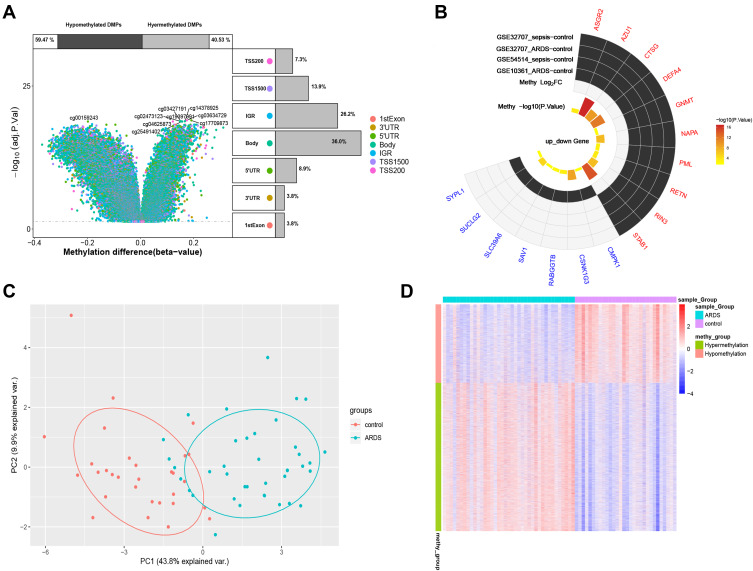
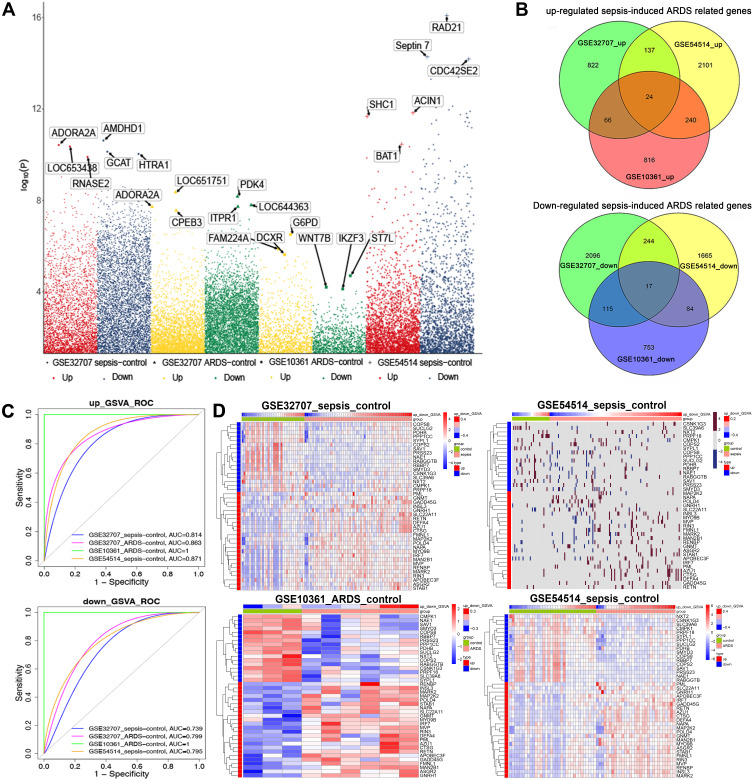
Forty-one differentially expressed genes were shared between sepsis-specific and ARDS-specific datasets. MAP2K2 and IRF7 functional activity was highly connected in sepsis-induced ARDS. Hub genes included RETN, MVP, DEFA4, CTSG, AZU1, FMNL1, RBBP7, POLD4, RIN3, IRF7. ROC curve analysis of the hub gene GSVA index showed good diagnostic ability in sepsis or ARDS. Among genes related to sepsis-induced ARDS, 17 were differentially methylated. Principal component analysis and heatmaps indicated that gene methylation patterns differed significantly between ARDS patients and controls.
We identified a genetic profile specific to early-stage sepsis-induced ARDS. The abnormal expression of these genes may be caused by hypomethylation, which may serve as a biomarker for early diagnosis of ARDS.
脓毒症诱导的急性呼吸窘迫综合征(ARDS)的早期诊断对于有效治疗至关重要。我们旨在识别早期生物标志物。
基于基因表达综合数据库(GEO)数据集GSE32707、GSE54514和GSE10361,在脓毒症或ARDS患者的全血样本中识别差异表达基因。功能富集分析探索差异表达基因的生物学特征。基于蛋白质-蛋白质相互作用网络具有高功能连通性的基因被标记为枢纽基因,使用GEO数据集GSE76293对其进行验证,并赋予基因集变异分析指数(GSVA)。通过受试者工作特征(ROC)曲线分析评估枢纽基因的诊断和预测能力。使用GEO数据集GSE67530对枢纽基因的DNA甲基化水平进行定量。
脓毒症特异性和ARDS特异性数据集之间共有41个差异表达基因。MAP2K2和IRF7的功能活性在脓毒症诱导的ARDS中高度连通。枢纽基因包括RETN、MVP、DEFA4、CTSG、AZU1、FMNL1、RBBP7、POLD4、RIN3、IRF7。枢纽基因GSVA指数的ROC曲线分析显示在脓毒症或ARDS中具有良好的诊断能力。在与脓毒症诱导的ARDS相关的基因中,17个基因存在差异甲基化。主成分分析和热图表明ARDS患者和对照组之间的基因甲基化模式存在显著差异。
我们识别出了早期脓毒症诱导的ARDS特有的基因谱。这些基因的异常表达可能由低甲基化引起,这可能作为ARDS早期诊断的生物标志物。