Du Qiu, Zhang Dingding, Hu Weimin, Li Xuefei, Xia Qiongrong, Wen Taishen, Jia Haiping
Department of Immunology, College of Medical Technology, Chengdu University of Traditional Chinese Medicine, Chengdu, Sichuan 610072, P.R. China.
Department of Microbiology and Immunology, North Sichuan Medical College, Nanchong, Sichuan 637100, P.R. China.
Int J Mol Med. 2021 Apr;47(4). doi: 10.3892/ijmm.2021.4864. Epub 2021 Feb 4.
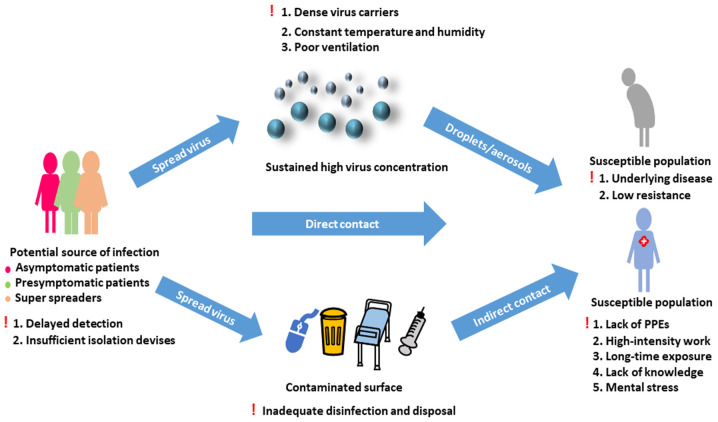
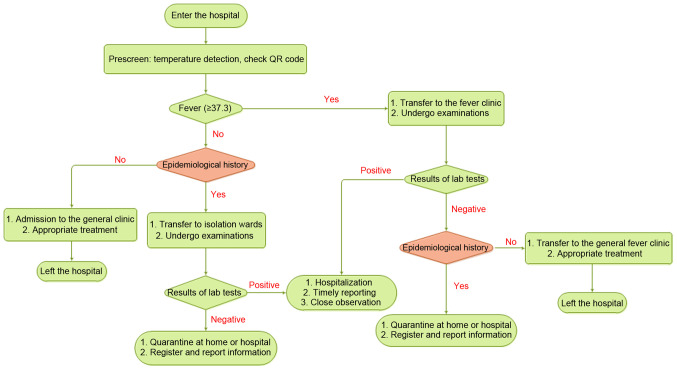
Nosocomial infections, also known as hospital-acquired infections, pose a serious challenge to healthcare professionals globally during the Coronavirus disease 2019 (COVID‑19) pandemic. Nosocomial infection of COVID‑19 directly impacts the quality of life of patients, as well as results in extra expenditure to hospitals. It has been shown that COVID‑19 is more likely to transmit via close, unprotected contact with infected patients. Additionally, current preventative and containment measures tend to overlook asymptomatic individuals and superspreading events. Since the mode of transmission and real origin of COVID‑19 in hospitals has not been fully elucidated yet, minimizing nosocomial infection in hospitals remains a difficult but urgent task for healthcare professionals. Healthcare professionals globally should form an alliance against nosocomial COVID‑19 infections. The fight against COVID‑19 may provide valuable lessons for the future prevention and control of nosocomial infections. The present review will discuss some of the key strategies to prevent and control hospital‑based nosocomial COVID‑19 infections.
医院感染,也称为医院获得性感染,在2019年冠状病毒病(COVID-19)大流行期间,对全球医疗保健专业人员构成了严峻挑战。COVID-19医院感染直接影响患者的生活质量,也会给医院带来额外支出。已有研究表明,COVID-19更有可能通过与受感染患者的密切、无防护接触传播。此外,目前的预防和控制措施往往忽视无症状感染者和超级传播事件。由于COVID-19在医院的传播方式和真正源头尚未完全阐明,将医院内的医院感染降至最低对医疗保健专业人员来说仍然是一项艰巨但紧迫的任务。全球医疗保健专业人员应结成联盟,抗击医院内的COVID-19感染。抗击COVID-19可能会为未来医院感染的预防和控制提供宝贵经验。本综述将讨论预防和控制医院内COVID-19医院感染的一些关键策略。