Department of Radiation Oncology, Faculty of Medicine Universitas Indonesia-Cipto Mangunkusumo Hospital, Jakarta, Indonesia.
Department of Otorhinolaryngology, Faculty of Medicine Universitas Indonesia-Cipto Mangunkusumo Hospital, Jakarta, Indonesia.
JCO Glob Oncol. 2021 Feb;7:190-203. doi: 10.1200/GO.20.00155.
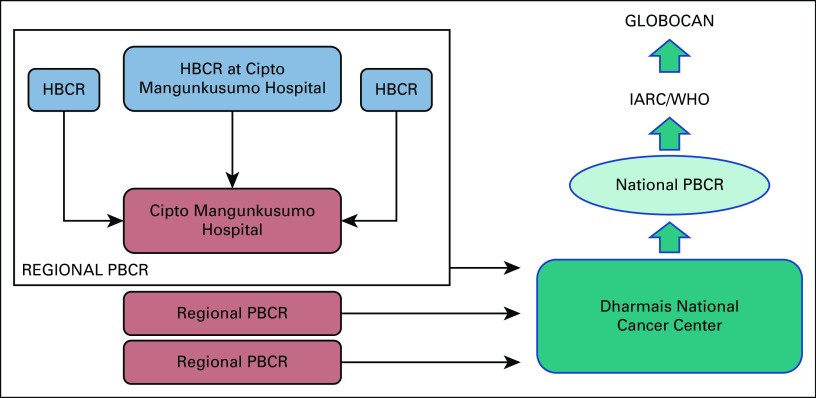
In 2016, there were 1,308,061 cases of cancer being treated in Indonesia, with 2.2 trillion rupiahs spent, amounting to $486,960,633 in US dollars (purchasing power parity 2016). The high burden of cancers in Indonesia requires a valid data collection to inform future cancer-related policies. The purpose of this study is to report cancer epidemiological data from 2008 to 2012 based on Hospital-Based Cancer Registry (HBCR) data from Cipto Mangunkusumo Hospital, Indonesia.
This was a descriptive study with cross-sectional design. Data were collected from Cipto Mangunkusumo Hospital HBCR 2008-2012. Demographical, diagnostic, stages of cancer, and histopathological types of cancer data were extracted.
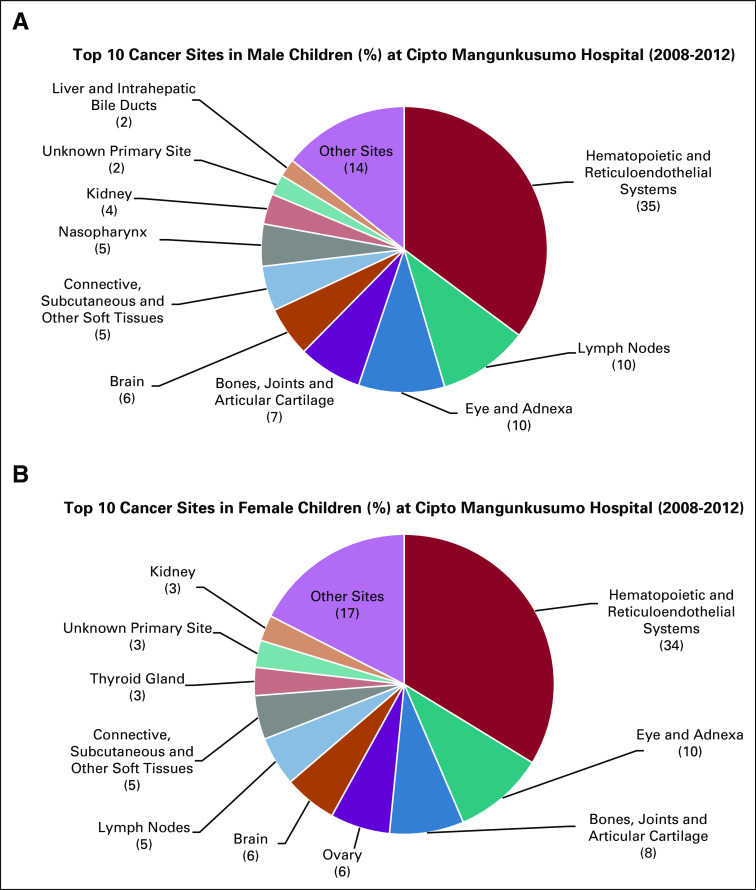
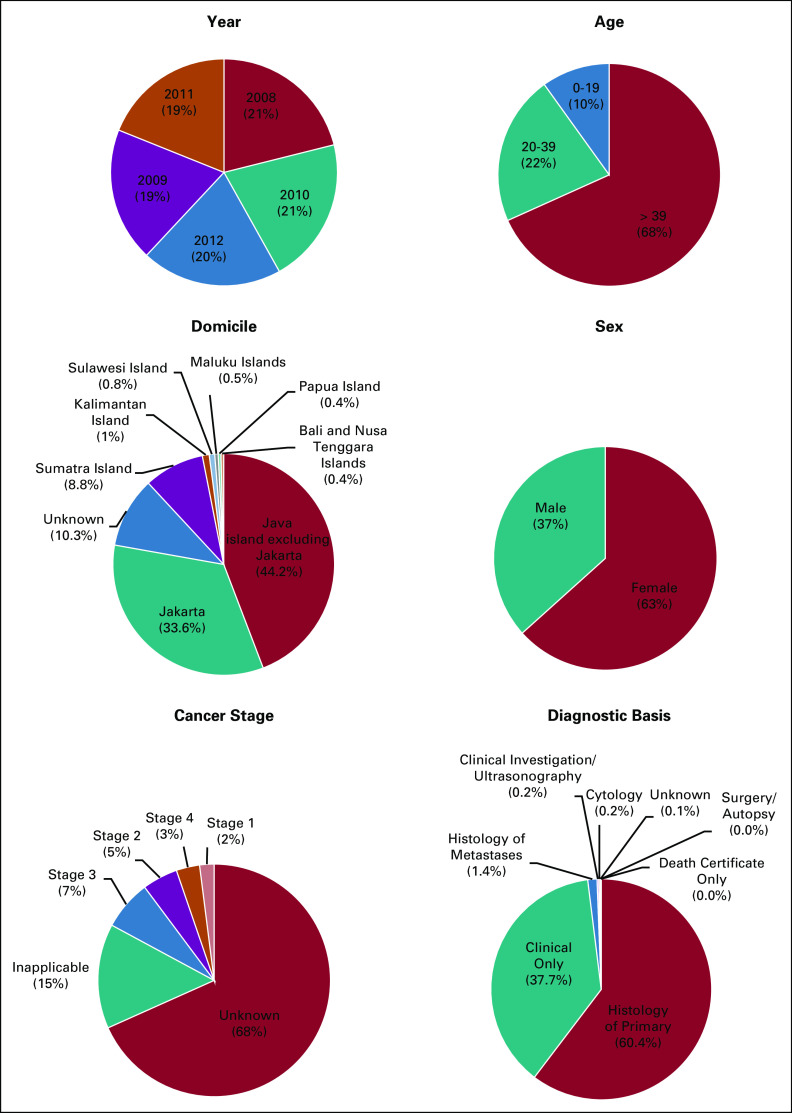
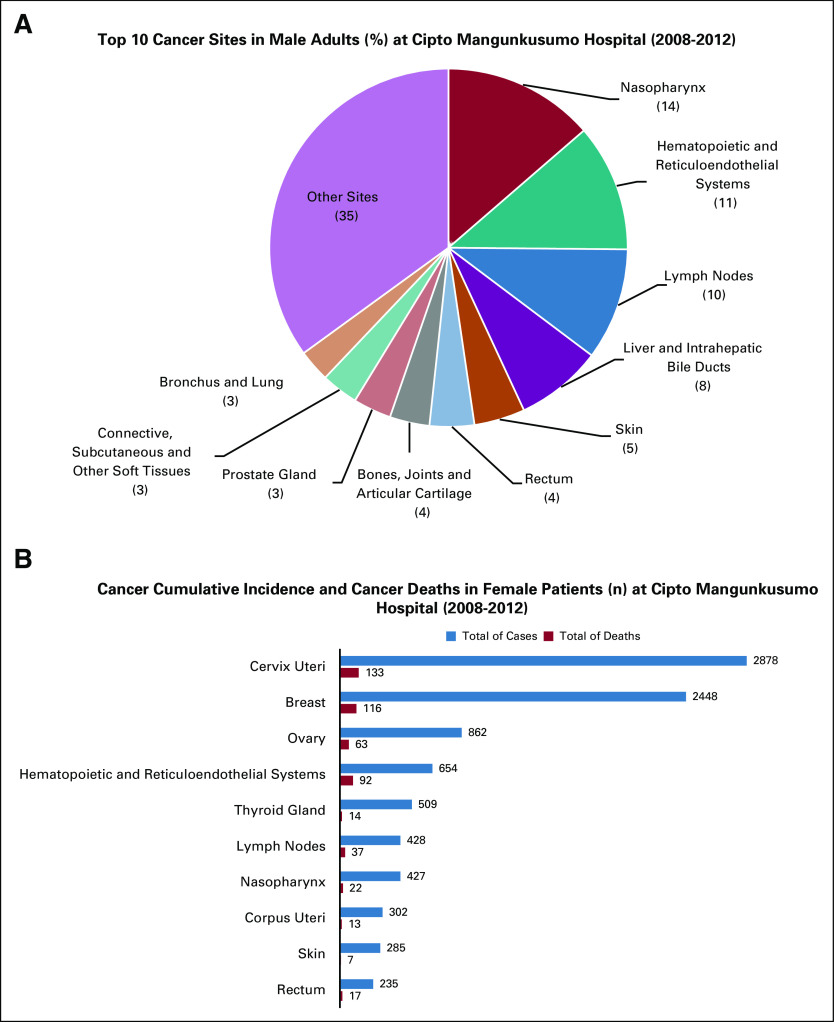
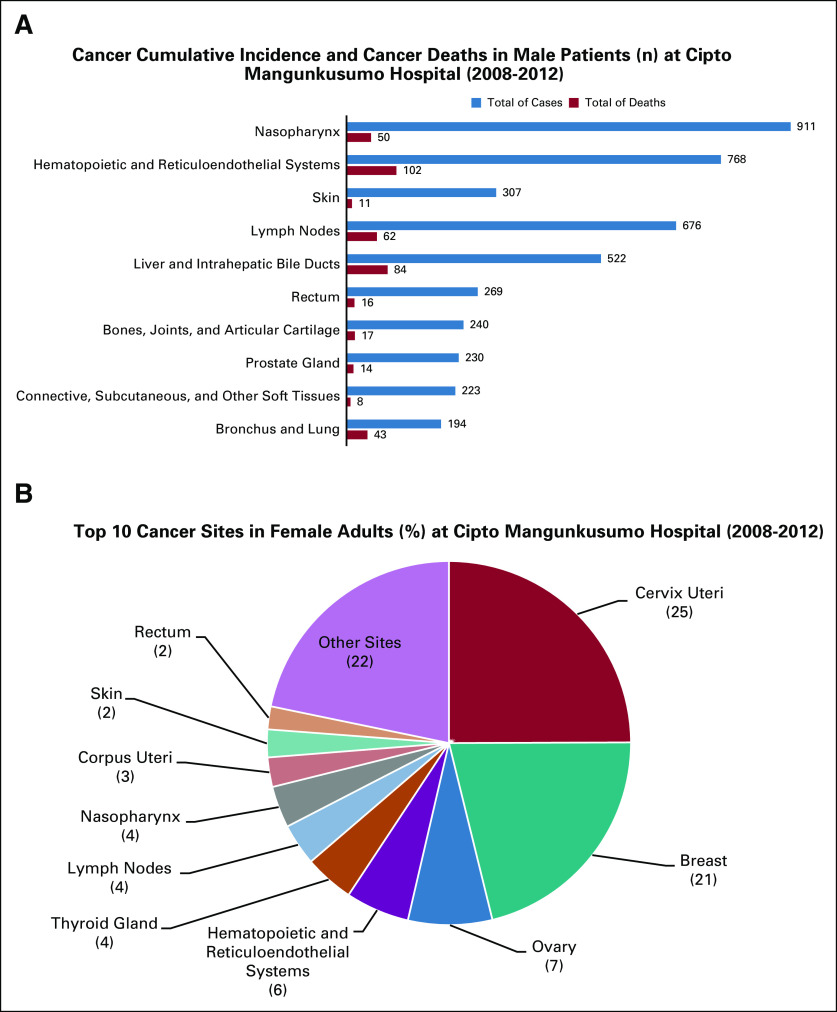
After screening, 18,216 cases were included. A total of 12,438 patients were older than 39 years of age (68.3%), with a female-to-male ratio of 9:5. Most patients have cancers at advanced stages (stages III and IV, 10.2%). The most common sites of cancer were cervix uteri (2,878 cases, 15.8%), breast (2,459 cases, 13.5%), hematopoietic and reticuloendothelial systems (1,422 cases, 7.8%), nasopharynx (1,338 cases, 7.4%), and lymph nodes (1,104 cases, 6.1%).
From this HBCR, cancer incidence in female was almost twice the incidence in male, largely because of the burden of cervical and breast cancers. The cervix uteri as one of the top five cancer sites based on this HBCR, 2008-2012, are still approximately consistent with Global Cancer Incidence, Mortality and Prevalence 2018, which portrayed that Indonesia has been severely afflicted by cervical cancer cases more than any other Association of Southeast Asian Nations countries. The HBCR could serve as a robust database of epidemiological data for cancer cases in Indonesia.
2016 年,印度尼西亚有 1308061 例癌症患者接受治疗,花费 2200 万亿印尼盾,相当于 486960633 美元(2016 年购买力平价)。印度尼西亚癌症负担沉重,需要有效的数据收集来为未来的癌症相关政策提供信息。本研究的目的是根据印度尼西亚 Cipto Mangunkusumo 医院的基于医院的癌症登记处(HBCR)数据报告 2008 年至 2012 年的癌症流行病学数据。
这是一项描述性研究,采用横断面设计。数据来自 Cipto Mangunkusumo 医院 HBCR 2008-2012。提取人口统计学、诊断、癌症分期和癌症组织病理学类型数据。
经过筛选,共纳入 18216 例病例。共有 12438 例患者年龄大于 39 岁(68.3%),男女比例为 9:5。大多数患者处于癌症晚期(III 期和 IV 期,10.2%)。最常见的癌症部位是子宫颈(2878 例,15.8%)、乳房(2459 例,13.5%)、造血和网状内皮系统(1422 例,7.8%)、鼻咽(1338 例,7.4%)和淋巴结(1104 例,6.1%)。
根据本 HBCR,女性癌症发病率几乎是男性的两倍,这主要是由于宫颈癌和乳腺癌的负担。子宫颈作为本 HBCR 中基于前五大癌症部位之一,2008-2012 年仍与 2018 年全球癌症发病率、死亡率和患病率大致一致,表明印度尼西亚宫颈癌病例比任何其他东南亚国家联盟国家都严重。HBCR 可以作为印度尼西亚癌症病例的强大流行病学数据数据库。