IEEE Trans Neural Syst Rehabil Eng. 2021;29:468-477. doi: 10.1109/TNSRE.2021.3057054. Epub 2021 Mar 2.
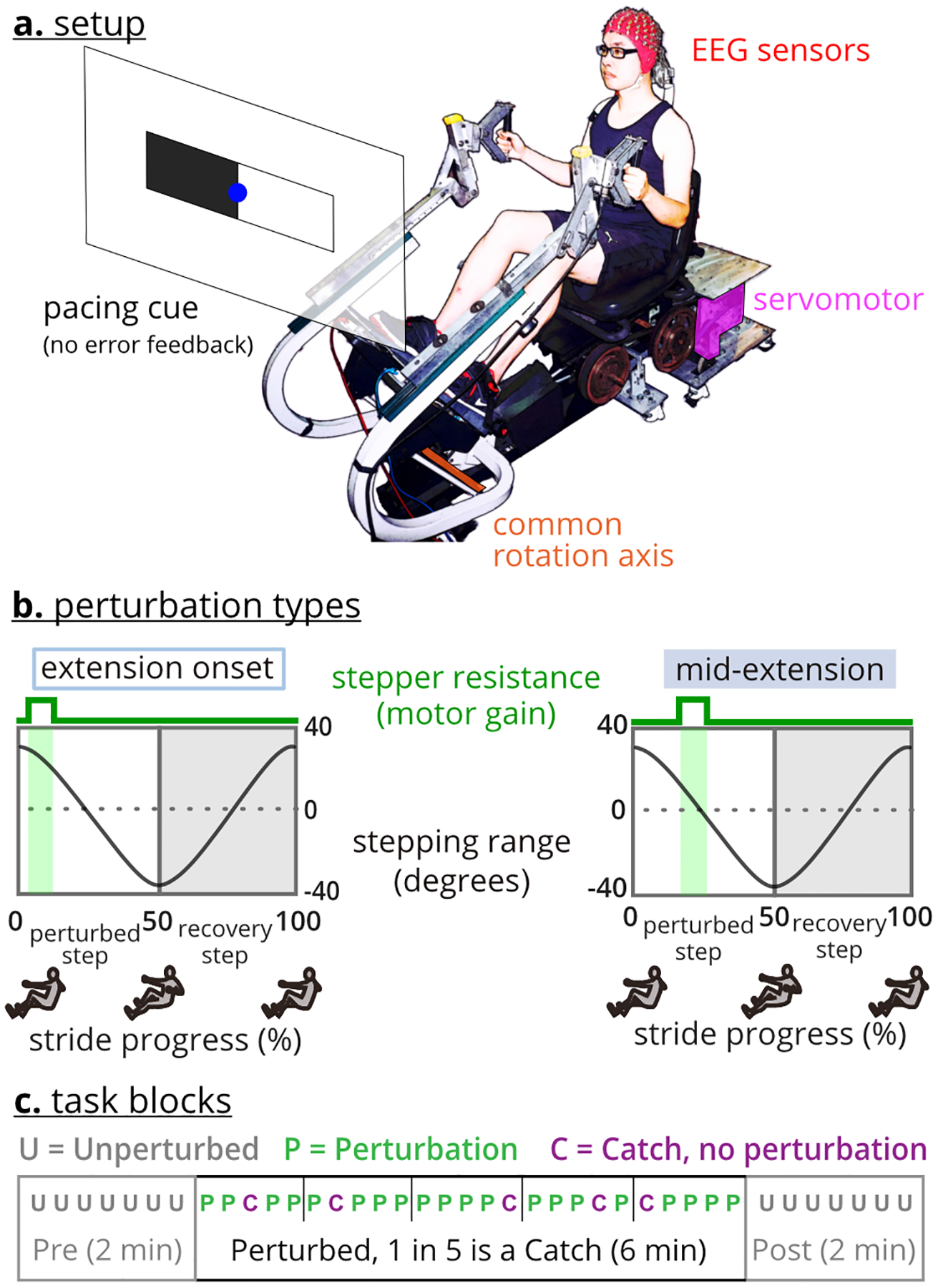
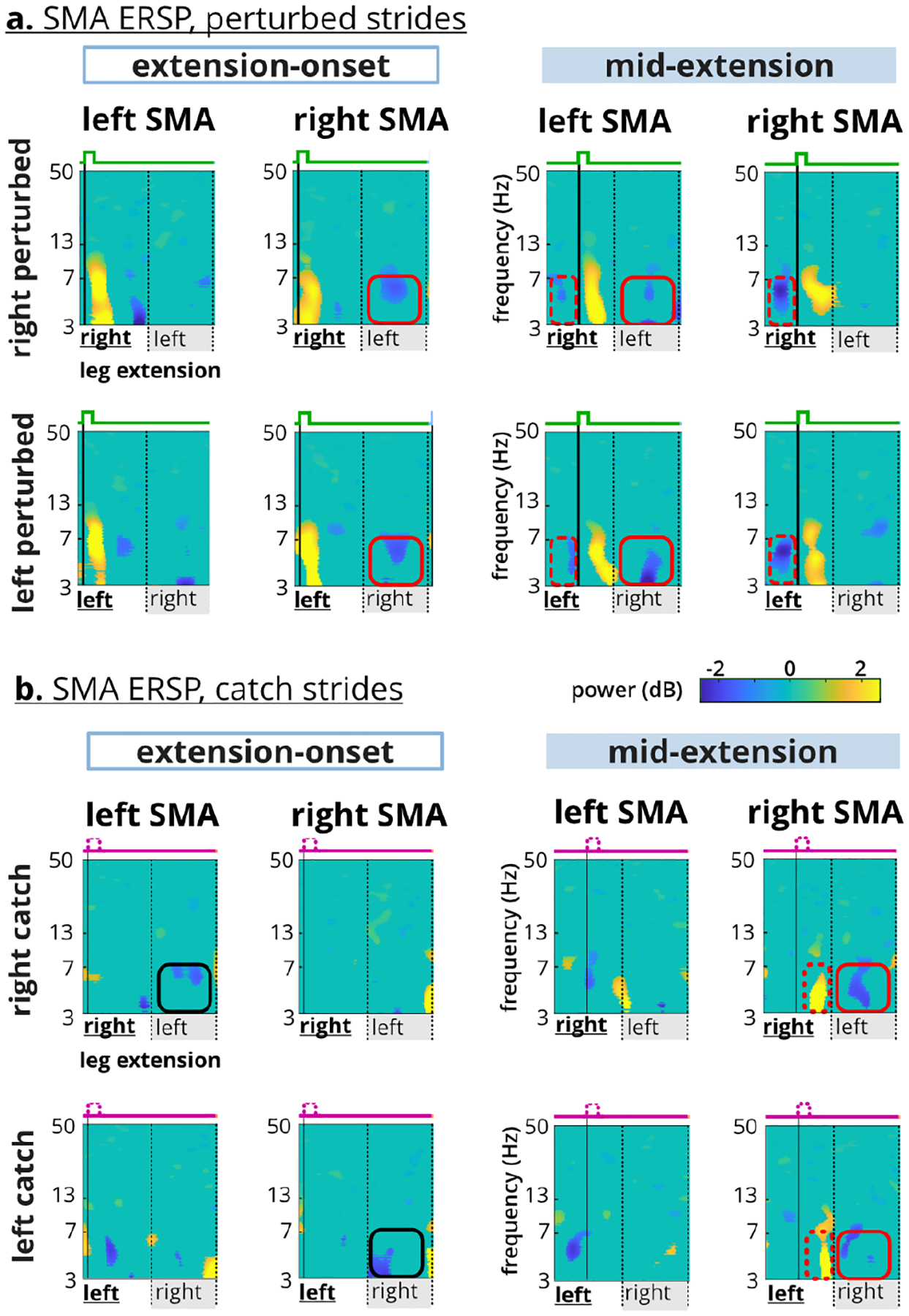
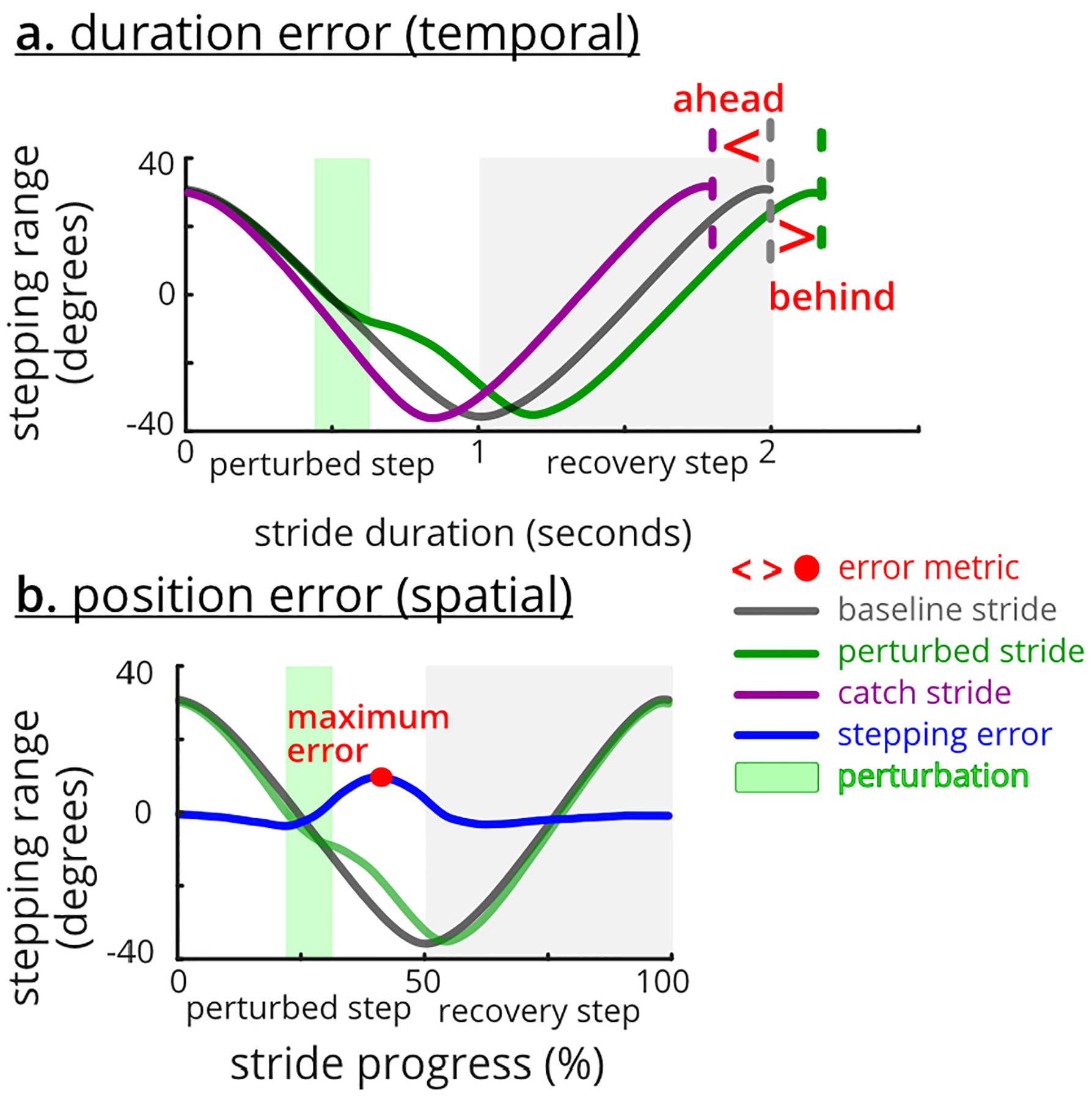
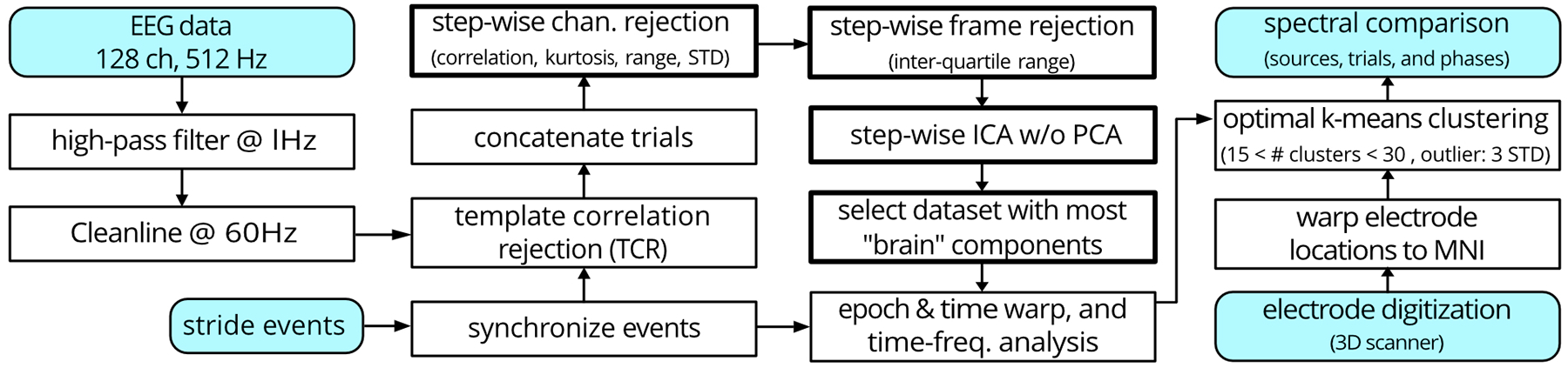
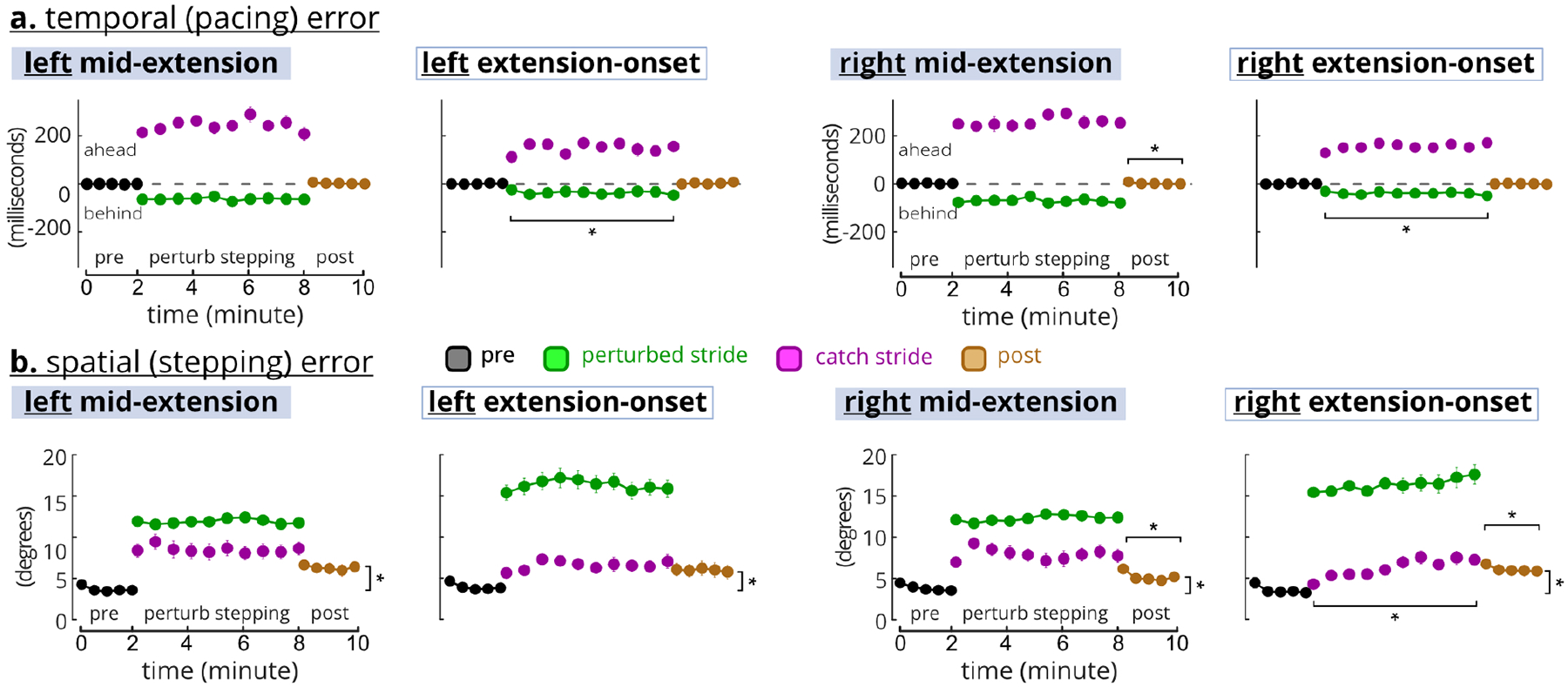
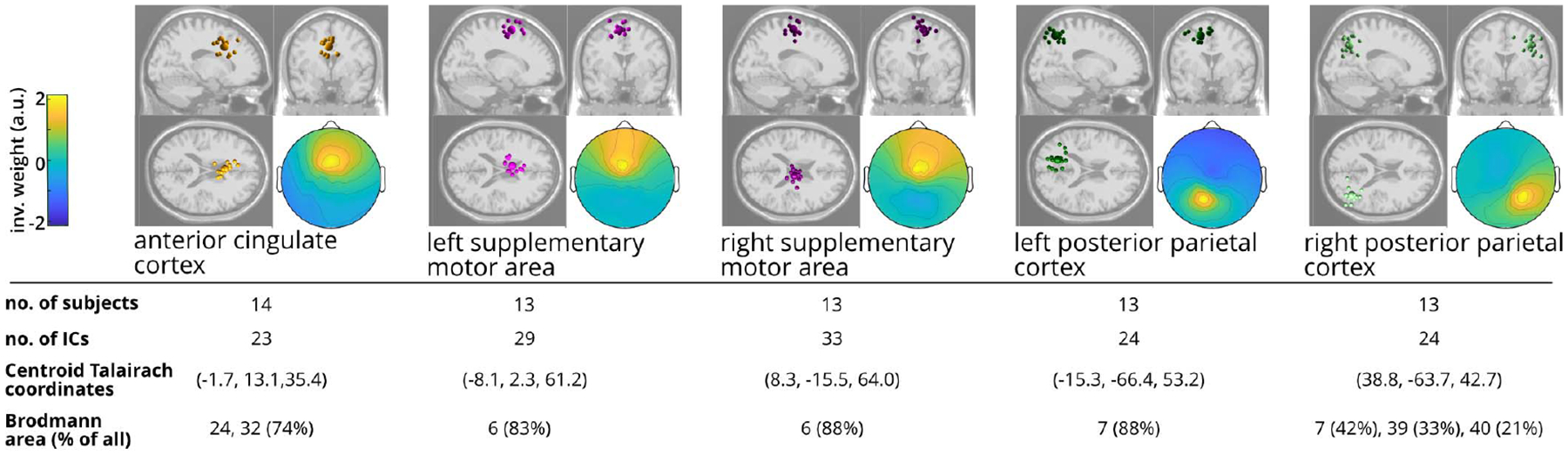
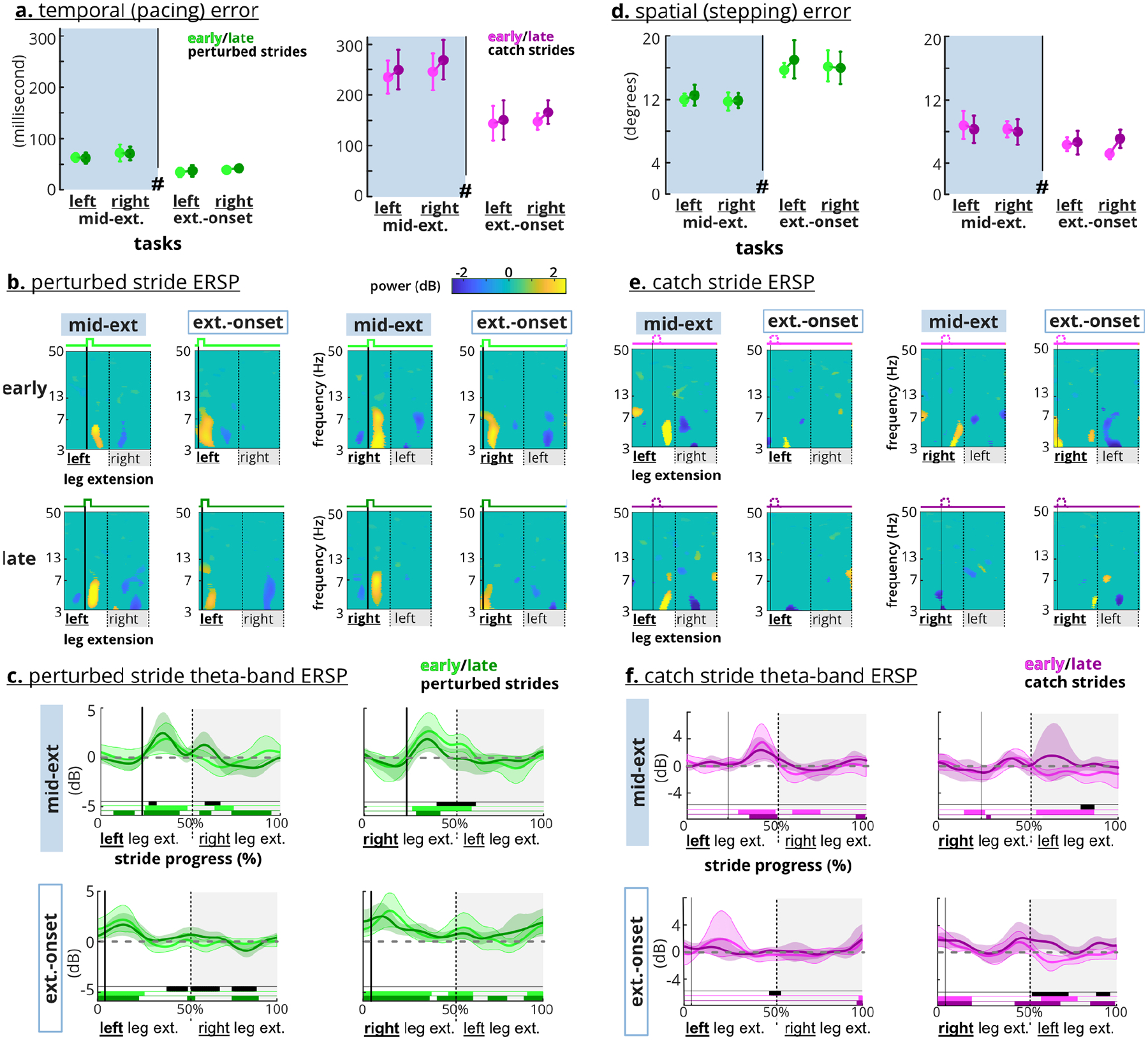
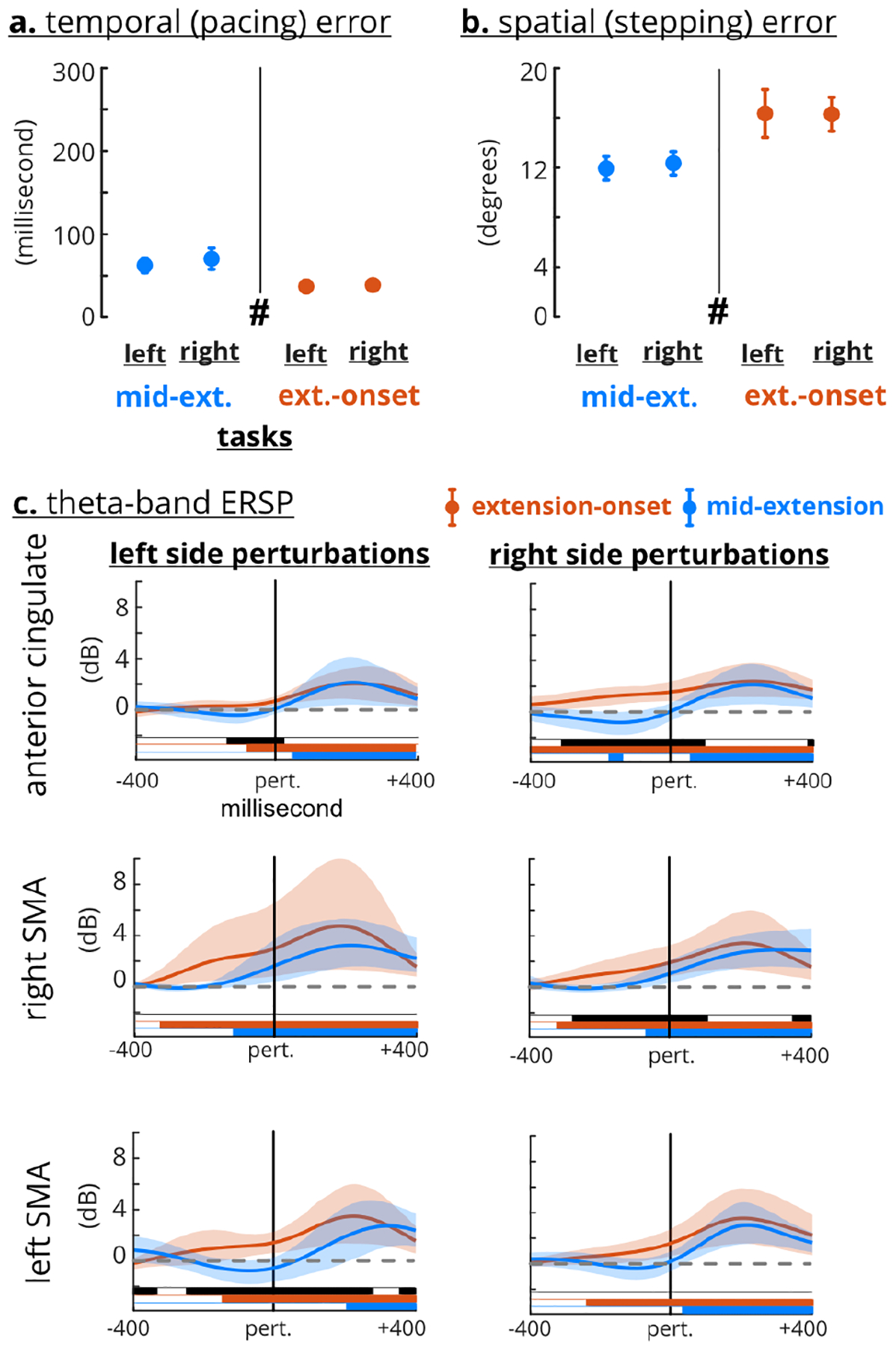
Quantifying motor and cortical responses to perturbations during seated locomotor tasks such as recumbent stepping and cycling will expand and improve the understanding of locomotor adaptation processes beyond just perturbed gait. Using a perturbed recumbent stepping protocol, we hypothesized motor errors and anterior cingulate activity would decrease with time, and perturbation timing would influence electrocortical elicitation. Young adults (n = 17) completed four 10-minute arms and legs stepping tasks, with perturbations applied at every left or right leg extension-onset or mid-extension. A random no-perturbation "catch" stride occurred in every five perturbed strides. We instructed subjects to follow a pacing cue and to step smoothly, and we quantified temporal and spatial motor errors. We used high-density electroencephalography to estimate sources of electrocortical fluctuations shared among >70% of subjects. Temporal and spatial errors did not decrease from early to late for either perturbed or catch strides. Interestingly, spatial errors post-perturbation did not return to pre-perturbation levels, suggesting use-dependent learning occurred. Theta (3-8 Hz) synchronization in the anterior cingulate cortex and left and right supplementary motor areas (SMA) emerged near the perturbation event, and extension-onset perturbations elicited greater theta-band power than mid-extension perturbations. Even though motor errors did not adapt, anterior cingulate theta synchronization decreased from early to late perturbed strides, but only during the right-side tasks. Additionally, SMA mainly demonstrated specialized, not contralateral, lateralization. Overall, seated locomotor perturbations produced differential theta-band responses in the anterior cingulate and SMAs, suggesting that tuning perturbation parameters, e.g., timing, can potentially modify electrocortical responses.
量化坐姿运动任务(如卧位踏步和骑行)中受到干扰时的运动和皮质反应,将超越受干扰步态的范围,扩展和改善对运动适应过程的理解。我们使用受干扰的卧位踏步方案,假设运动误差和前扣带回活动将随时间减少,并且干扰时间会影响皮层电诱发。年轻人(n=17)完成了四个 10 分钟的手臂和腿部踏步任务,每个左或右腿部伸展开始或伸展中期应用干扰。在每五个受干扰的踏步中都会出现一个随机的无干扰“捕捉”踏步。我们指导受试者跟随节拍提示并平稳踏步,并量化了运动的时间和空间误差。我们使用高密度脑电图来估计超过 70%的受试者共同的皮层电波动源。无论是受干扰还是捕捉踏步,时间和空间误差都没有从早期到晚期减少。有趣的是,干扰后的空间误差没有恢复到干扰前的水平,这表明发生了依赖使用的学习。前扣带回皮层和左右辅助运动区(SMA)中的θ(3-8 Hz)同步在干扰事件附近出现,并且伸展开始的干扰比伸展中期的干扰引起更大的θ频段功率。即使运动误差没有适应,前扣带回皮层的θ同步性也从早期到晚期的受干扰踏步减少,但仅在右侧任务中。此外,SMA 主要表现出专门的、非对侧的偏侧化。总的来说,坐姿运动干扰在扣带回和 SMA 中产生了不同的θ频段反应,这表明调整干扰参数,例如时间,可以潜在地改变皮层电反应。