Instituto de Ciencias del Mar, Centro Superior de Investigaciones Científicas (ICM, CSIC), Passeig Marítim de la Barceloneta, 37-49, E-08003 Barcelona, Spain.
C/Maria Aurèlia Capmany 69, Institute of Aquatic Ecology, University of Girona, E-17003 Girona, Spain.
Mar Drugs. 2021 Feb 2;19(2):83. doi: 10.3390/md19020083.
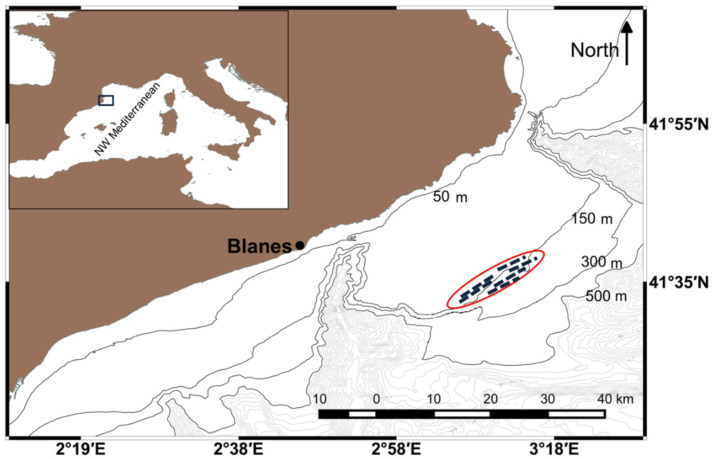
Although knowledge of the bioactive compounds produced by species inhabiting coastal waters is increasing, little is known about the bioactive potential produced by marine species occupying deeper habitats with high biodiversity and productivity. Here, we investigate about the bioactive potential of molecules produced by species that inhabit the crinoid beds, a poorly known essential fish habitat affected by trawling, wherein large amounts of commercial and noncommercial species are discarded. Based on a trawl survey conducted in 2019, 14% of the 64 species discarded on crinoid beds produce molecules with some type of bioactive potential, including; soft corals (); tunicates (); bony fish, such as horse mackerel (); European hake (); and chondrichthyans, such as small-spotted catshark (). In addition, 16% of the discarded species had congeneric species that produce compounds with bioactive potential, indicating that such species might also possess similar types of bioactive molecules. Molecules with antioxidant, antitumour, antihypertensive, and antibacterial properties were the most frequent, which could provide the basis for future research aiming to discover new marine-based drugs and compounds for other human uses. Among all species or genera that produce compounds with bioactive potential, 68% presented medium or high vulnerability to trawling. Results show that the discarded catch contains many species, which produce different bioactive compounds that represent an added-value resource. These results highlight the importance of manage properly crinoid beds, to ensure that species that produce molecules with bioactive potential inhabiting these habitats are protected.
尽管人们对栖息在沿海水域的物种产生的生物活性化合物的了解在不断增加,但对于生活在生物多样性和生产力高的深海栖息地的海洋物种所产生的生物活性潜力却知之甚少。在这里,我们研究了栖息在海百合床(一种鲜为人知的重要鱼类栖息地,受到拖网捕捞的影响,其中大量商业和非商业物种被丢弃)的物种产生的分子的生物活性潜力。基于 2019 年进行的拖网调查,在丢弃在海百合床上的 64 种物种中,有 14%产生具有某种生物活性潜力的分子,包括软珊瑚();被囊动物();硬骨鱼,如鲭鱼();欧洲无须鳕();和软骨鱼,如小斑猫鲨()。此外,丢弃的物种中有 16%的物种具有产生具有生物活性潜力的化合物的同属物种,这表明这些物种也可能具有类似的生物活性分子。具有抗氧化、抗肿瘤、抗高血压和抗菌特性的分子最为常见,这可为未来的研究提供基础,旨在发现新的基于海洋的药物和化合物,用于其他人类用途。在具有生物活性潜力的化合物的所有物种或属中,有 68%对拖网捕捞具有中度或高度脆弱性。结果表明,丢弃的渔获物包含许多产生不同生物活性化合物的物种,这些化合物是一种附加值资源。这些结果强调了妥善管理海百合床的重要性,以确保栖息在这些栖息地的产生具有生物活性潜力的分子的物种得到保护。