Amrutkar Manoj, Gladhaug Ivar P
Department of Pharmacology, Institute of Clinical Medicine, University of Oslo, 0316 Oslo, Norway.
Department of Hepato-Pancreato-Biliary Surgery, Institute of Clinical Medicine, University of Oslo, 0318 Oslo, Norway.
Cancers (Basel). 2021 Feb 3;13(4):601. doi: 10.3390/cancers13040601.
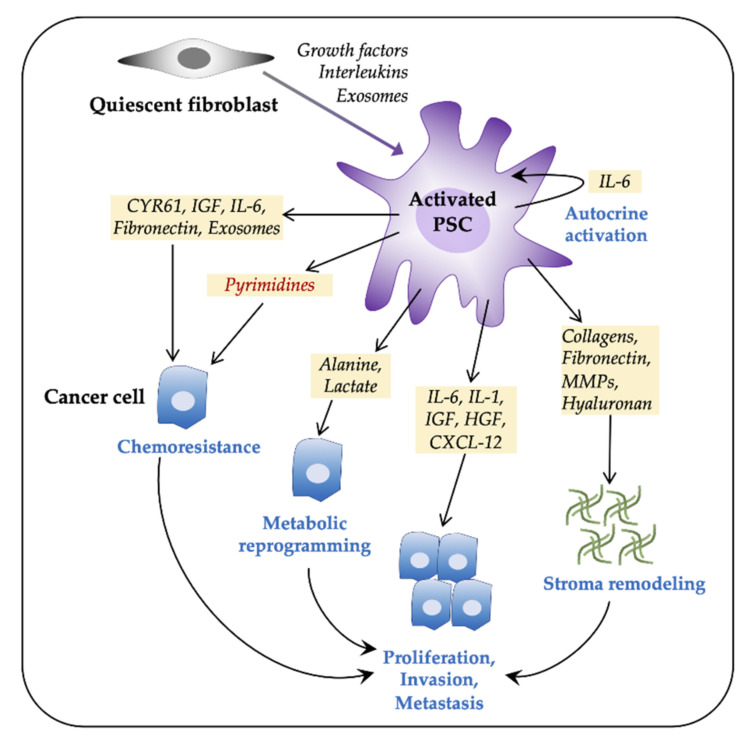
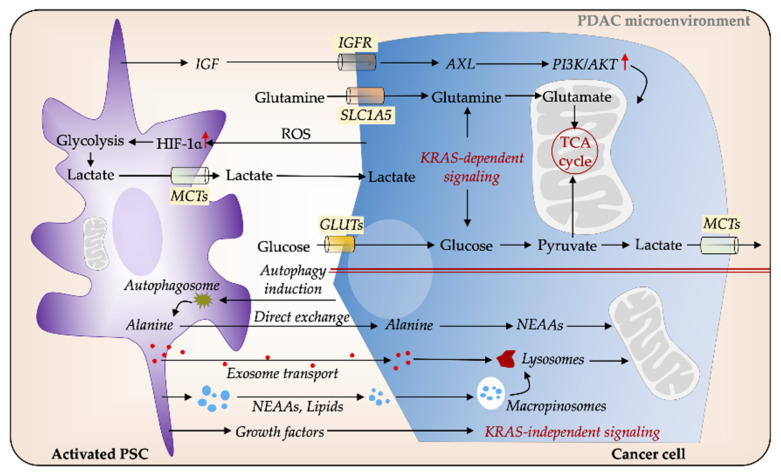
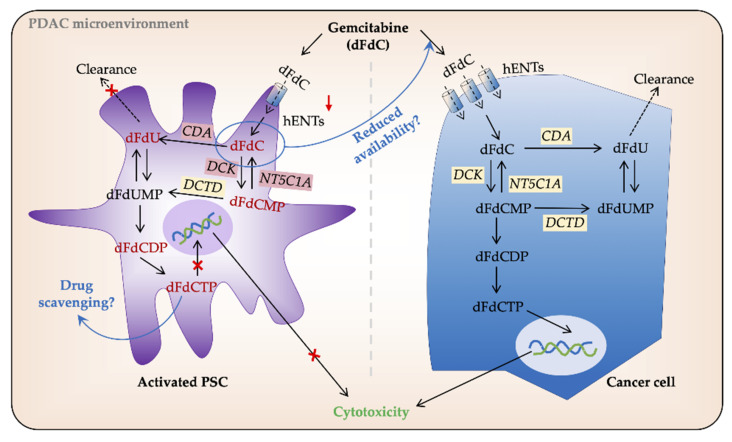
Pancreatic ductal adenocarcinoma (PDAC), also known as pancreatic cancer (PC), is characterized by an overall poor prognosis and a five-year survival that is less than 10%. Characteristic features of the tumor are the presence of a prominent desmoplastic stromal response, an altered metabolism, and profound resistance to cancer drugs including gemcitabine, the backbone of PDAC chemotherapy. The pancreatic stellate cells (PSCs) constitute the major cellular component of PDAC stroma. PSCs are essential for extracellular matrix assembly and form a supportive niche for tumor growth. Various cytokines and growth factors induce activation of PSCs through autocrine and paracrine mechanisms, which in turn promote overall tumor growth and metastasis and induce chemoresistance. To maintain growth and survival in the nutrient-poor, hypoxic environment of PDAC, tumor cells fulfill their high energy demands via several unconventional ways, a process generally referred to as metabolic reprogramming. Accumulating evidence indicates that activated PSCs not only contribute to the therapy-resistant phenotype of PDAC but also act as a nutrient supplier for the tumor cells. However, the precise molecular links between metabolic reprogramming and an acquired therapy resistance in PDAC remain elusive. This review highlights recent findings indicating the importance of PSCs in aiding growth-permissive metabolic reprogramming and gemcitabine chemoresistance in PDAC.
胰腺导管腺癌(PDAC),也称为胰腺癌(PC),其特点是总体预后较差,五年生存率低于10%。该肿瘤的特征包括显著的促纤维增生性基质反应、代谢改变以及对包括吉西他滨(PDAC化疗的主要药物)在内的抗癌药物具有高度耐药性。胰腺星状细胞(PSC)是PDAC基质的主要细胞成分。PSC对细胞外基质组装至关重要,并为肿瘤生长形成支持性微环境。多种细胞因子和生长因子通过自分泌和旁分泌机制诱导PSC活化,进而促进肿瘤整体生长和转移,并诱导化疗耐药。为了在PDAC营养匮乏、缺氧的环境中维持生长和存活,肿瘤细胞通过几种非常规方式满足其高能量需求,这一过程通常称为代谢重编程。越来越多的证据表明,活化的PSC不仅有助于PDAC的治疗耐药表型,还可作为肿瘤细胞的营养供应者。然而,PDAC中代谢重编程与获得性治疗耐药之间的确切分子联系仍不清楚。本综述重点介绍了近期的研究结果,这些结果表明PSC在促进PDAC中允许生长的代谢重编程和吉西他滨化疗耐药方面具有重要作用。