Faculty of Nursing and Health Sciences, Nord University, 8049 Bodø, Norway.
Int J Environ Res Public Health. 2021 Feb 3;18(4):1423. doi: 10.3390/ijerph18041423.
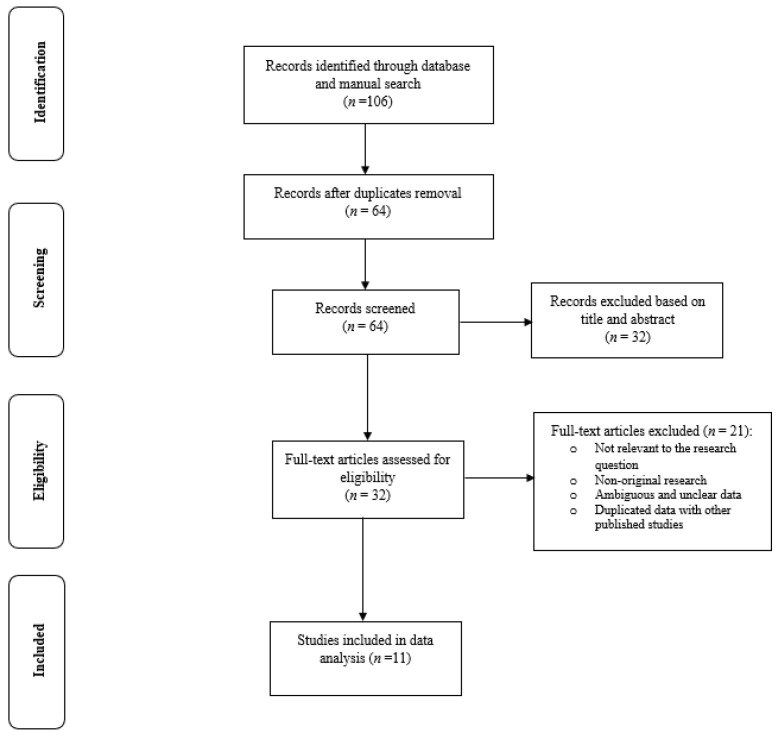
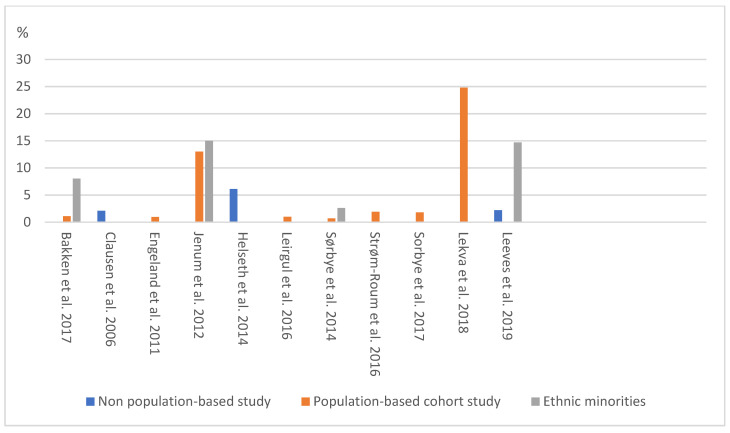
Gestational diabetes mellitus (GDM) is a major public health problem and a threat to maternal and child health. There is a lack of integrated and systematically synthesized knowledge about the prevalence GDM in Norway. Therefore, this systemic review aimed to present the best available peer-reviewed published evidence from the past 20 years about the prevalence of GDM in Norway. A comprehensive literature search was performed on online databases consisting of PubMed (including Medline), Web of Science, and Scopus to retrieve original research articles published on the prevalence of GDM up to August 2020. Also, databases of Norart and SveMed in the Norwegian language were searched to enhance the search coverage. Data were extracted using a standardized protocol and data collection form and were presented narratively. A total of 11 studies were selected to include for data analysis and synthesis with the total sample size of 2,314,191 pregnant women. The studies included heterogenous populations and mostly reported the prevalence of GDM in healthy mothers with singleton pregnancies. The prevalence of GDM in population registered-based studies in Norway was reported to be lower than 2%, using the World Health Organization (WHO) 1999 criteria. However, studies on high-risk populations such as the non-European ethnicity reported prevalence rates ranging from 8% to 15%. Given the evidence from available literature that reported trends in the prevalence of GDM, an increase in the prevalence of GDM across most racial/ethnic groups studied in Norway was observed. Overall, the prevalence of GDM in the low risk population of Norway is fairly low, but the available literature supports the perspective that the prevalence of GDM has shown an increasing trend in recent decades. This finding is very important for health service planning and evaluation, policy development, and research in Norway. Large-scale prospective studies, using the national data, are warranted to provide firm evidence over coming years. Our review findings can help policy makers devise appropriate strategies for improving women's reproductive health.
妊娠期糖尿病(GDM)是一个主要的公共卫生问题,也是威胁母婴健康的一个因素。目前,挪威 GDM 患病率的综合和系统综合知识还很缺乏。因此,本系统综述旨在介绍过去 20 年中,关于挪威 GDM 患病率的最佳现有同行评审出版证据。在在线数据库中进行了全面的文献检索,这些数据库包括 PubMed(包括 Medline)、Web of Science 和 Scopus,以检索截至 2020 年 8 月关于 GDM 患病率的原始研究文章。还搜索了挪威语数据库 Norart 和 SveMed,以增强搜索覆盖范围。使用标准化协议和数据收集表提取数据,并进行叙述性呈现。共选择了 11 项研究进行数据分析和综合,总样本量为 2314191 名孕妇。这些研究纳入的人群存在异质性,且大多数报告了健康单胎母亲的 GDM 患病率。挪威基于人群注册的研究报告的 GDM 患病率使用世界卫生组织(WHO)1999 标准低于 2%。然而,对于非欧洲裔等高危人群的研究报告的患病率在 8%至 15%之间。鉴于现有文献报告了 GDM 患病率的趋势,观察到挪威大多数研究种族/族裔群体的 GDM 患病率呈上升趋势。总体而言,挪威低危人群的 GDM 患病率相当低,但现有文献支持这样一种观点,即 GDM 的患病率在最近几十年呈上升趋势。这一发现对挪威的卫生服务规划和评估、政策制定以及研究非常重要。需要使用国家数据进行大规模前瞻性研究,以在未来几年提供确凿的证据。我们的综述结果可以帮助决策者制定改善妇女生殖健康的适当策略。