Laboratory of Animal Fat Deposition and Muscle Development, Key Laboratory of Animal Genetics, Breeding and Reproduction of Shaanxi Province, College of Animal Science and Technology, Northwest A&F University, Yangling, Shaanxi, China.
Laboratory of Animal Fat Deposition and Muscle Development, Key Laboratory of Animal Genetics, Breeding and Reproduction of Shaanxi Province, College of Animal Science and Technology, Northwest A&F University, Yangling, Shaanxi, China.
J Biol Chem. 2021 Jan-Jun;296:100376. doi: 10.1016/j.jbc.2021.100376. Epub 2021 Feb 4.
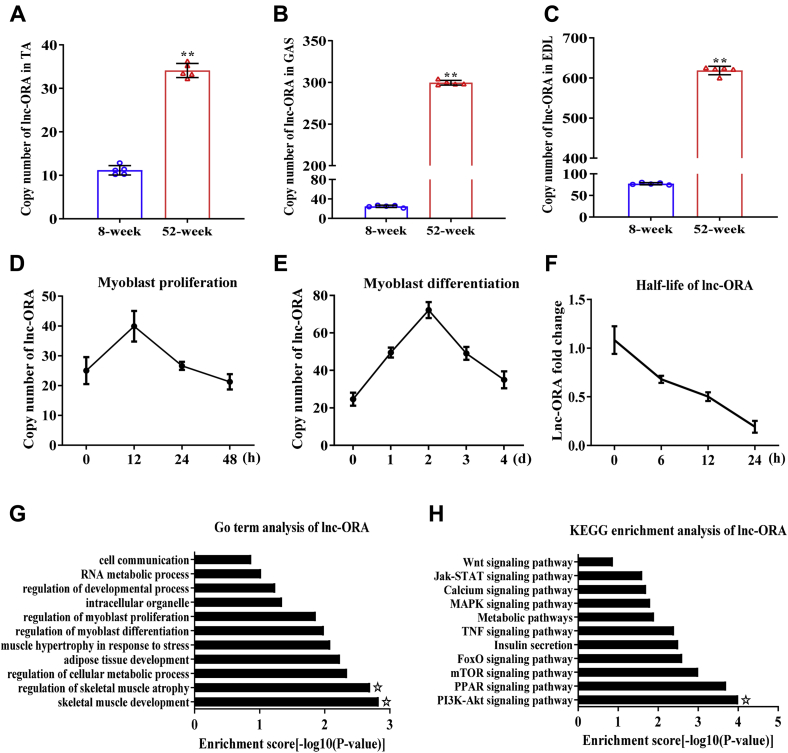
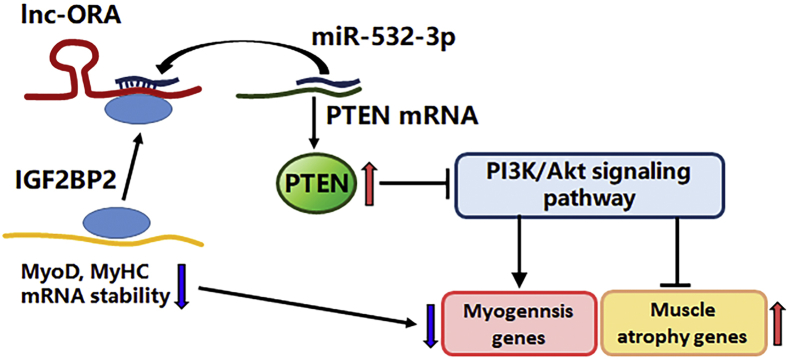
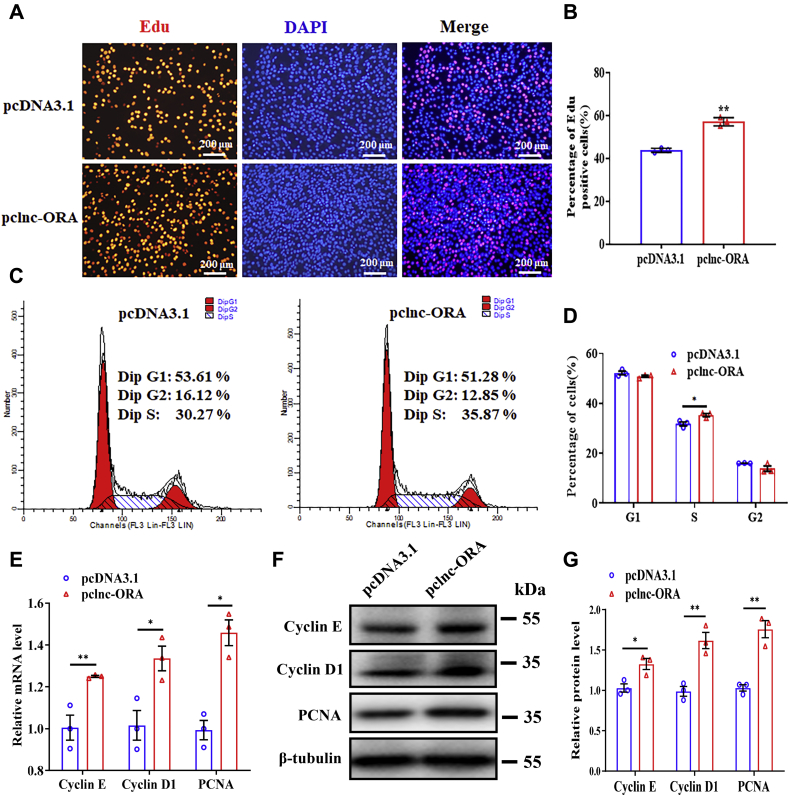
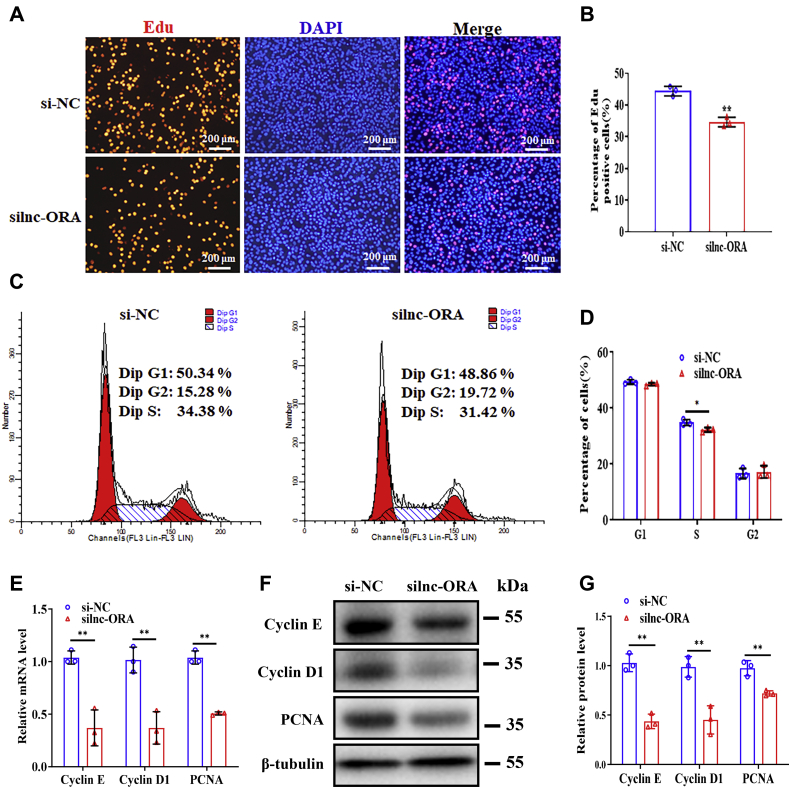
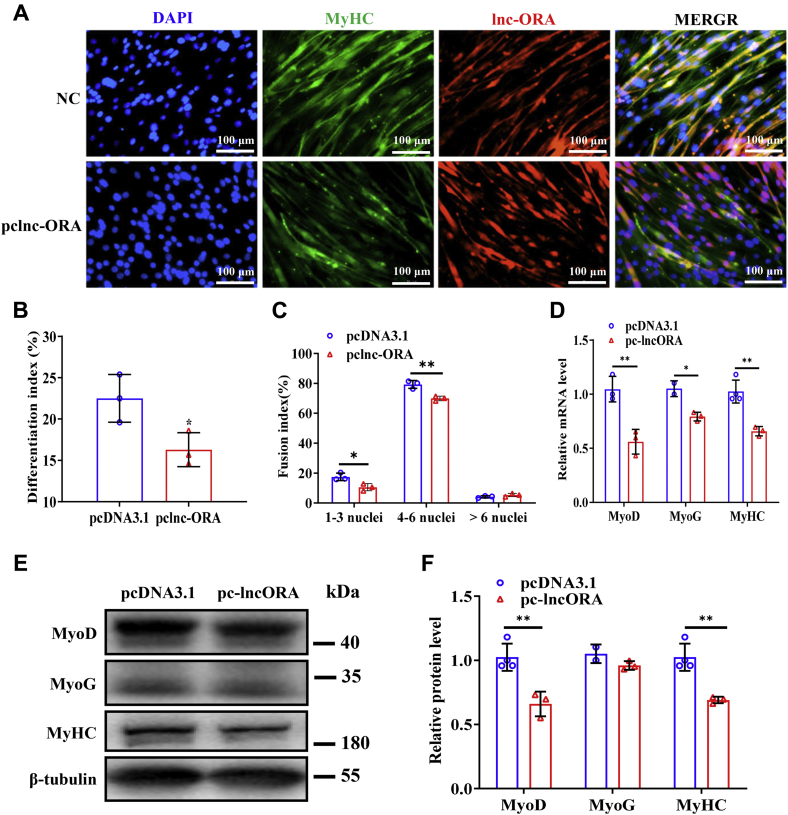
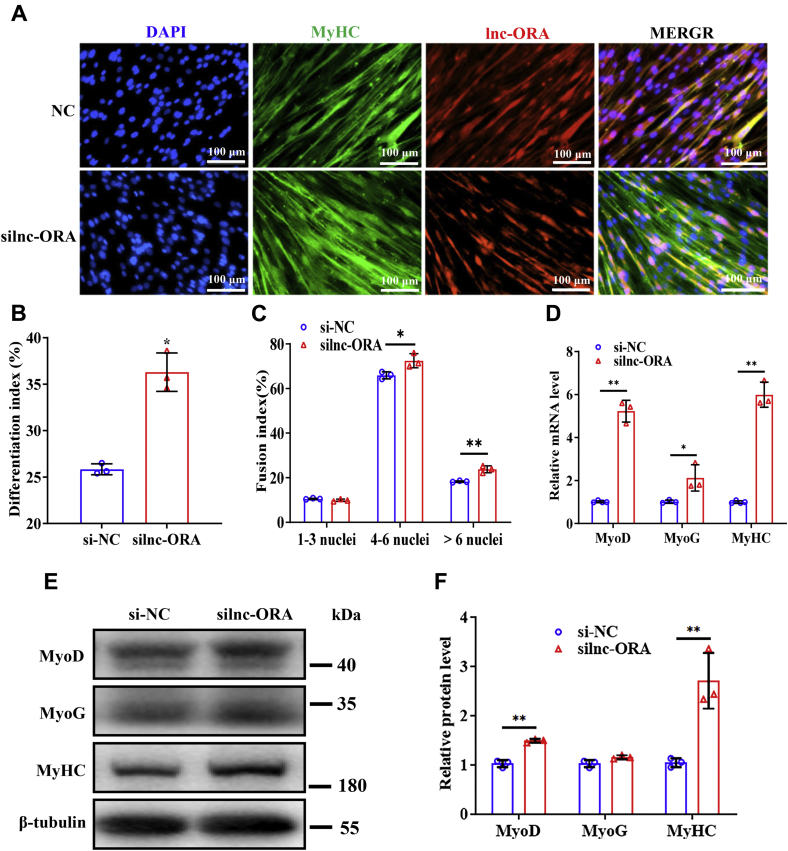
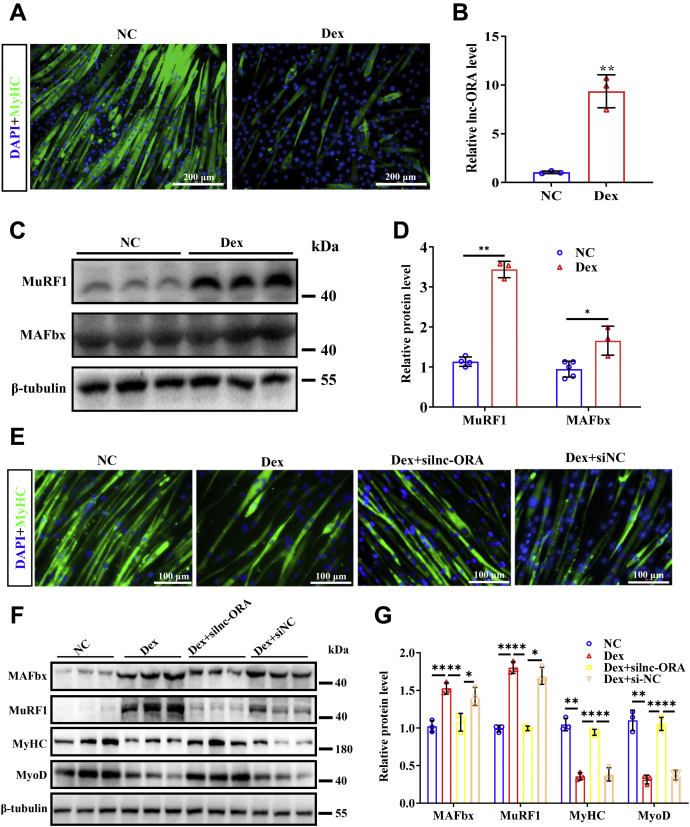
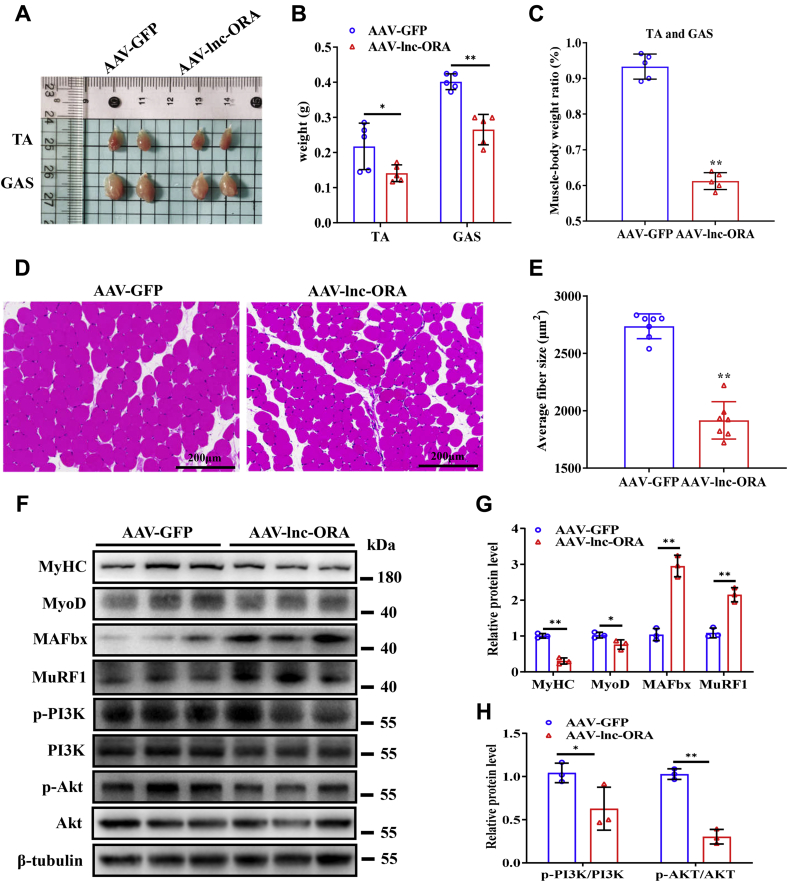
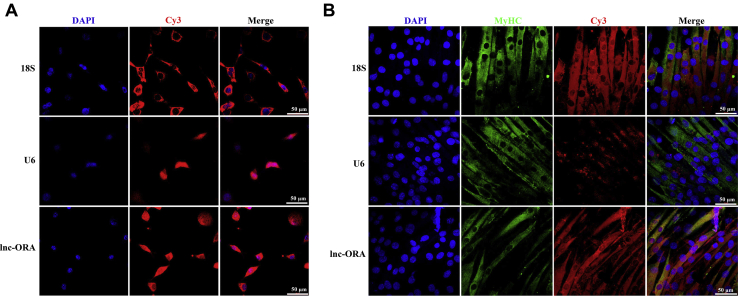
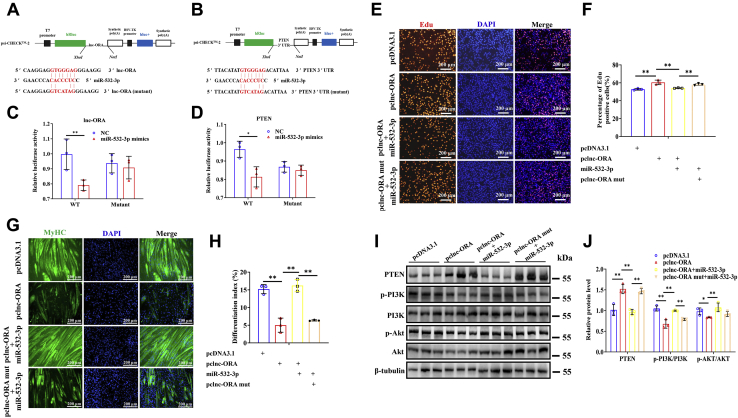
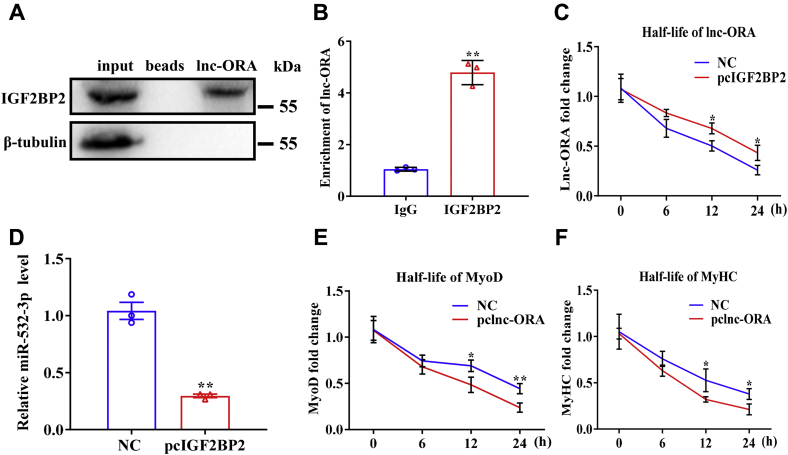
Skeletal muscle is one of the most important organs of the animal body. Long noncoding RNAs play a crucial role in the regulation of skeletal muscle development via several mechanisms. We recently identified obesity-related lncRNA (lnc-ORA) in a search for long noncoding RNAs that influence adipogenesis, finding it impacted adipocyte differentiation by regulating the PI3K/protein kinase B/mammalian target of rapamycin pathway. However, whether lnc-ORA has additional roles, specifically in skeletal muscle myogenesis, is not known. Here, we found that lnc-ORA was significantly differentially expressed with age in mouse skeletal muscle tissue and predominantly located in the cytoplasm. Overexpression of lnc-ORA promoted C2C12 myoblast proliferation and inhibited myoblast differentiation. In contrast, lnc-ORA knockdown repressed myoblast proliferation and facilitated myoblast differentiation. Interestingly, silencing of lnc-ORA rescued dexamethasone-induced muscle atrophy in vitro. Furthermore, adeno-associated virus 9-mediated overexpression of lnc-ORA decreased muscle mass and the cross-sectional area of muscle fiber by upregulating the levels of muscle atrophy-related genes and downregulating the levels of myogenic differentiation-related genes in vivo. Mechanistically, lnc-ORA inhibited skeletal muscle myogenesis by acting as a sponge of miR-532-3p, which targets the phosphatase and tensin homolog gene; the resultant changes in phosphatase and tensin homolog suppressed the PI3K/protein kinase B signaling pathway. In addition, lnc-ORA interacted with insulin-like growth factor 2 mRNA-binding protein 2 and reduced the stability of myogenesis genes, such as myogenic differentiation 1 and myosin heavy chain. Collectively, these findings indicate that lnc-ORA could be a novel underlying regulator of skeletal muscle development.
骨骼肌是动物体最重要的器官之一。长链非编码 RNA 通过几种机制在调节骨骼肌发育中发挥关键作用。我们最近在寻找影响脂肪生成的长链非编码 RNA 时,发现了肥胖相关 lncRNA(lnc-ORA),发现它通过调节 PI3K/蛋白激酶 B/雷帕霉素靶蛋白途径影响脂肪细胞分化。然而,lnc-ORA 是否具有其他作用,特别是在骨骼肌成肌分化中,尚不清楚。在这里,我们发现 lnc-ORA 在小鼠骨骼肌组织中随年龄的增长而显著差异表达,主要位于细胞质中。lnc-ORA 的过表达促进 C2C12 成肌细胞增殖,抑制成肌细胞分化。相反,lnc-ORA 的敲低抑制成肌细胞增殖,促进成肌细胞分化。有趣的是,沉默 lnc-ORA 可挽救体外地塞米松诱导的肌肉萎缩。此外,腺相关病毒 9 介导的 lnc-ORA 过表达通过上调肌肉萎缩相关基因的水平和下调肌生成分化相关基因的水平,减少肌肉质量和肌肉纤维的横截面积,从而减少体内肌肉质量和肌肉纤维的横截面积。在机制上,lnc-ORA 通过作为 miR-532-3p 的海绵起作用来抑制骨骼肌成肌分化,miR-532-3p 靶向磷酸酶和张力蛋白同源基因;磷酸酶和张力蛋白同源物的变化抑制了 PI3K/蛋白激酶 B 信号通路。此外,lnc-ORA 与胰岛素样生长因子 2 mRNA 结合蛋白 2 相互作用,降低了肌生成基因(如肌生成分化 1 和肌球蛋白重链)的稳定性。总之,这些发现表明 lnc-ORA 可能是骨骼肌发育的一种新的潜在调节因子。