Luo Yin, Liu Yitong, Wang Chengkun, Gan Runliang
Cancer Research Institute, Medical School, University of South China, Chang Sheng Xi Avenue 28, Hengyang, 421001, Hunan, People's Republic of China.
Cancer Cell Int. 2021 Feb 6;21(1):93. doi: 10.1186/s12935-021-01793-3.
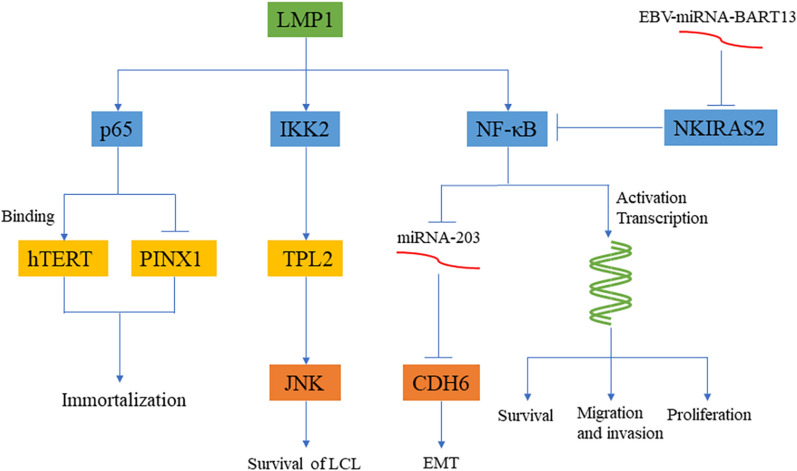
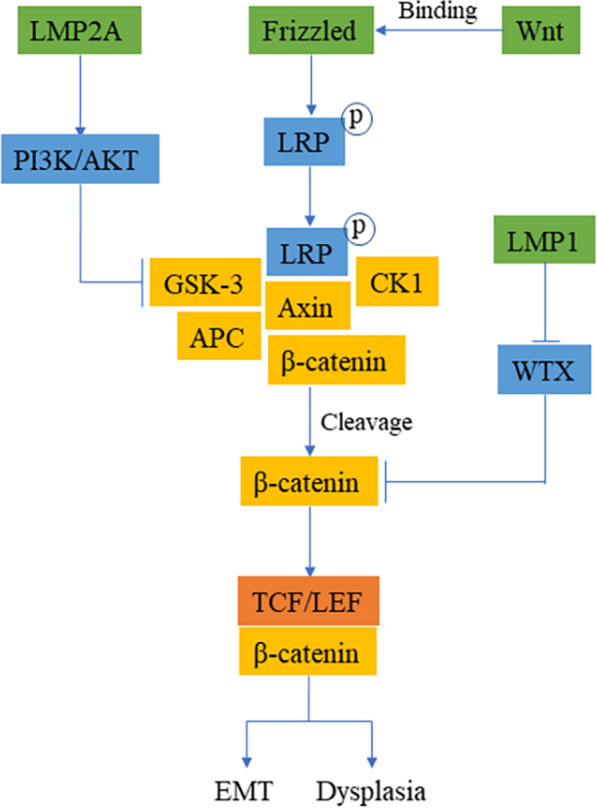
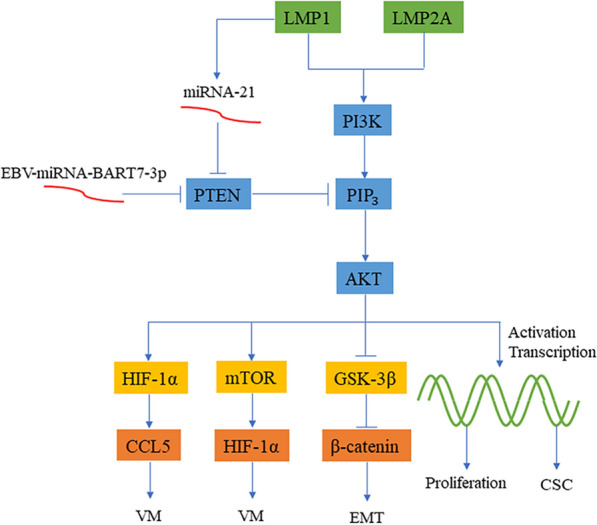
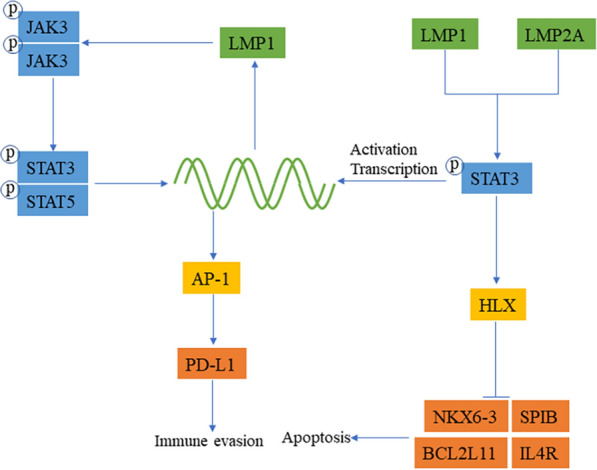
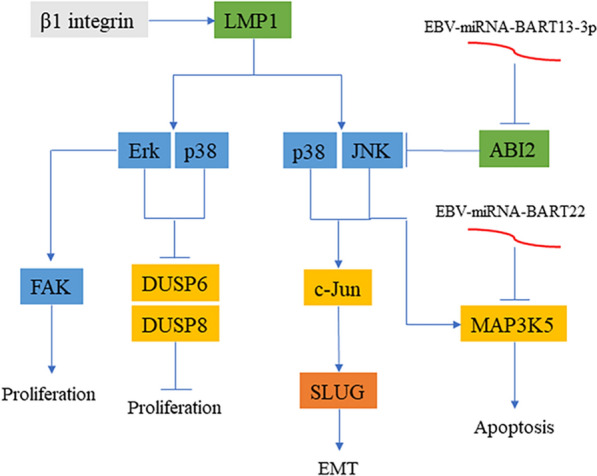
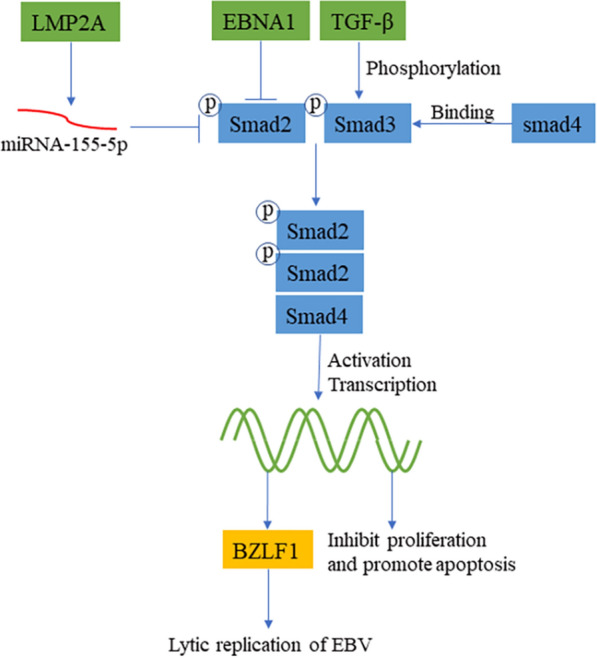
Epstein-Barr virus (EBV) is closely associated with multiple human cancers. EBV-associated cancers are mainly lymphomas derived from B cells and T cells (Hodgkin lymphoma, Burkitt lymphoma, NK/T-cell lymphoma, and posttransplant lymphoproliferative disorder (PTLD)) and carcinomas derived from epithelial cells (nasopharyngeal carcinoma and gastric carcinoma). EBV can induce oncogenesis in its host cell by activating various signaling pathways, such as nuclear factor-κB (NF-κB), phosphoinositide-3-kinase/protein kinase B (PI3K/AKT), Janus kinase/signal transducer and transcription activator (JAK/STAT), mitogen-activated protein kinase (MAPK), transforming growth factor-β (TGF-β), and Wnt/β-catenin, which are regulated by EBV-encoded proteins and noncoding RNA. In this review, we focus on the oncogenic roles of EBV that are mediated through the aforementioned signaling pathways.
爱泼斯坦-巴尔病毒(EBV)与多种人类癌症密切相关。EBV相关癌症主要是源自B细胞和T细胞的淋巴瘤(霍奇金淋巴瘤、伯基特淋巴瘤、NK/T细胞淋巴瘤和移植后淋巴增殖性疾病(PTLD))以及源自上皮细胞的癌(鼻咽癌和胃癌)。EBV可通过激活各种信号通路在其宿主细胞中诱导肿瘤发生,如核因子-κB(NF-κB)、磷酸肌醇-3-激酶/蛋白激酶B(PI3K/AKT)、Janus激酶/信号转导子和转录激活子(JAK/STAT)、丝裂原活化蛋白激酶(MAPK)、转化生长因子-β(TGF-β)和Wnt/β-连环蛋白,这些信号通路受EBV编码的蛋白质和非编码RNA调控。在本综述中,我们重点关注EBV通过上述信号通路介导的致癌作用。