Faculty of Medicine, Department of Anesthesiology, School of Health Sciences, University of Thessaly, Larisa, Greece.
Department of Pharmacy, Mayo Clinic, Rochester, MN, USA; Robert D. and Patricia E. Kern Center for the Science of Health Care Delivery, Mayo Clinic, Rochester, MN, USA.
Clin Ther. 2021 Mar;43(3):e57-e70. doi: 10.1016/j.clinthera.2021.01.004. Epub 2021 Jan 9.
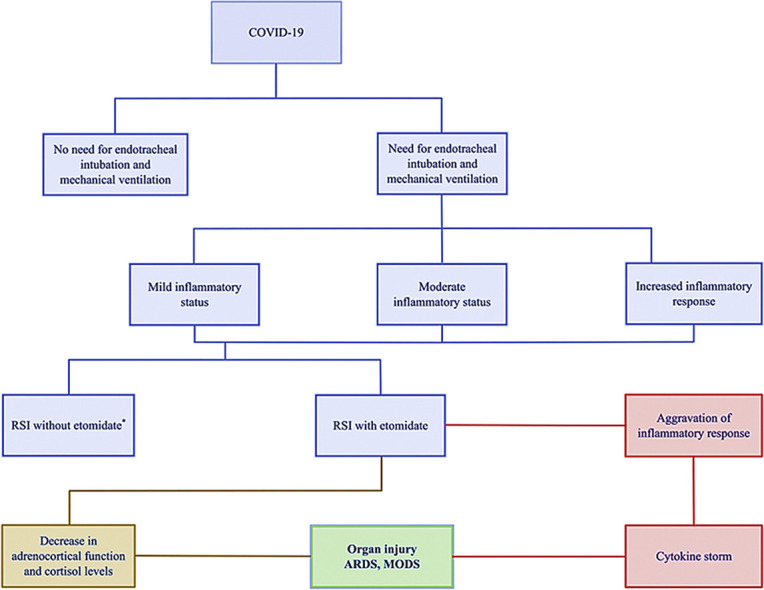
The aim of the present article was to briefly summarize current knowledge about the immunomodulatory effects of general anesthetics and the possible clinical effects of this immunomodulation in patients with COVID-19.
The PubMed, Scopus, and Google Scholar databases were comprehensively searched for relevant studies.
The novel coronavirus causes a wide spectrum of clinical manifestations, with a large absolute number of patients experiencing severe pneumonia and rapid progression to acute respiratory distress syndrome and multiple organ failure. In these patients, the equilibrium of the inflammatory response is a major determinant of survival. The impact of anesthetics on immune-system modulation may vary and includes both pro-inflammatory and anti-inflammatory effects.
Inhibition of the development of severe inflammation and/or the enhancement of inflammation resolution by anesthetics may limit organ damage and improve outcomes in patients with COVID-19.
本文旨在简要总结全身麻醉的免疫调节作用的现有知识,以及这种免疫调节在 COVID-19 患者中的可能临床效果。
全面检索了 PubMed、Scopus 和 Google Scholar 数据库中的相关研究。
新型冠状病毒引起广泛的临床表现,大量患者患有严重肺炎,并迅速发展为急性呼吸窘迫综合征和多器官衰竭。在这些患者中,炎症反应的平衡是生存的主要决定因素。麻醉对免疫系统调节的影响可能不同,包括促炎和抗炎作用。
麻醉抑制严重炎症的发展和/或增强炎症的消退,可能限制 COVID-19 患者的器官损伤并改善预后。