Chen Lei, Wang Qiang, Tang Maoyan, Zhang Xiaoli, Pan Yinghua, Yang Xinghai, Gao Guoqing, Lv Ronghua, Tao Wei, Jiang Ligeng, Liang Tianfeng
Key Laboratory of Crop Cultivation and Farming System, College of Agriculture, Guangxi University, Nanning, China.
Guangxi Academy of Agricultural Sciences/Guangxi Key Laboratory of Rice Genetics and Breeding, Rice Research Institute, Nanning, China.
Front Genet. 2021 Jan 22;11:621871. doi: 10.3389/fgene.2020.621871. eCollection 2020.
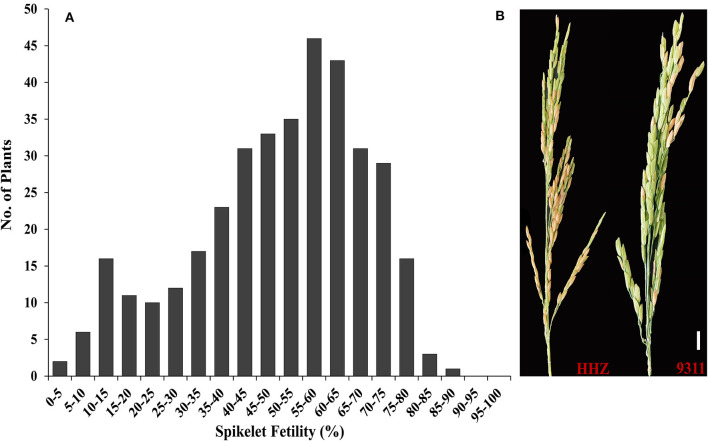
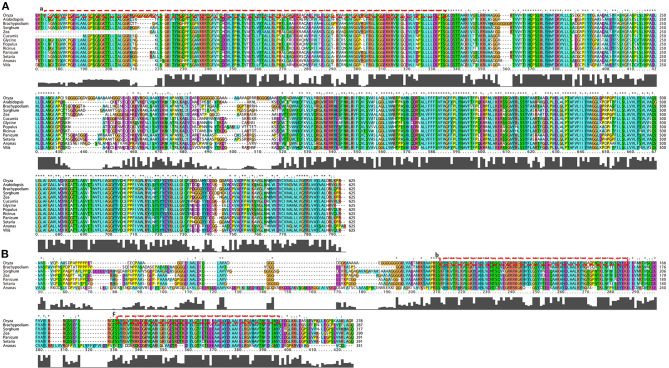
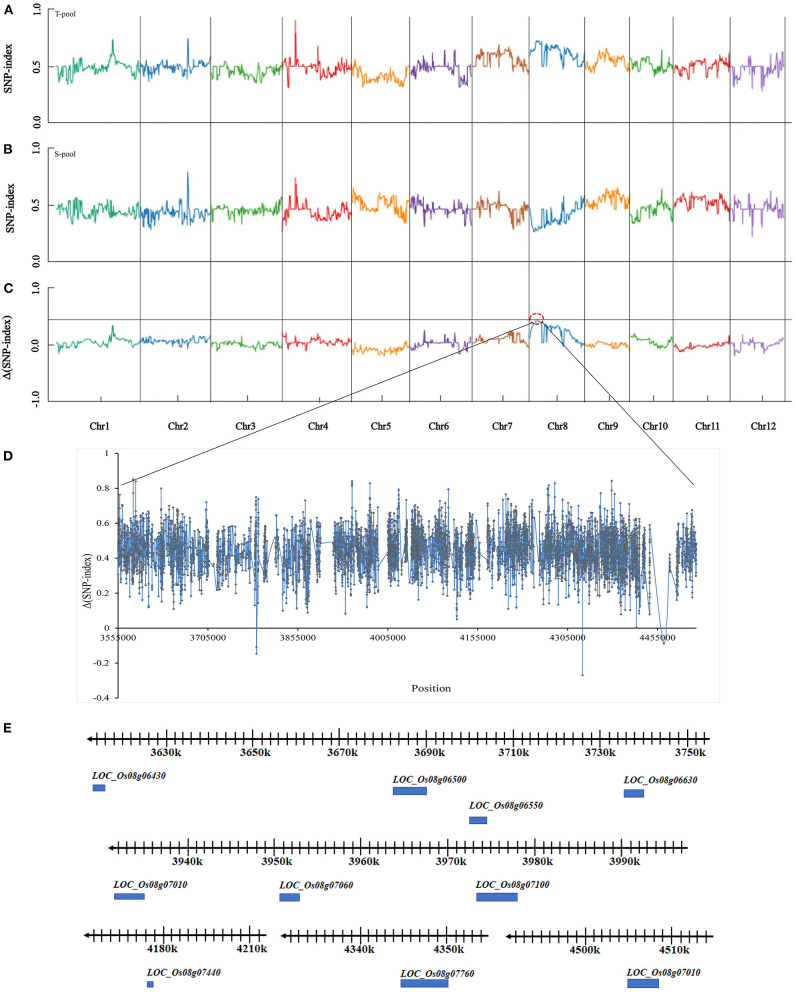
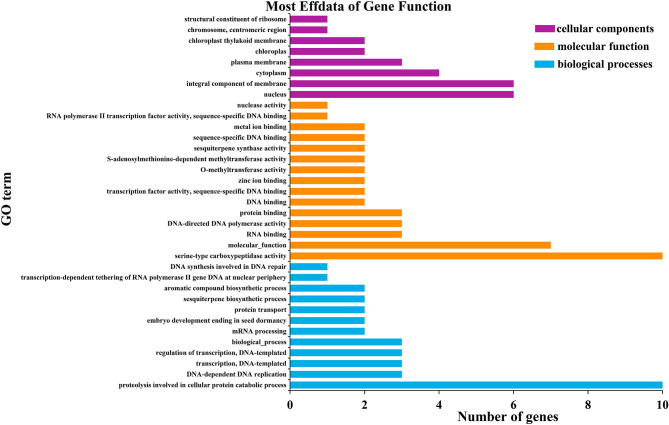
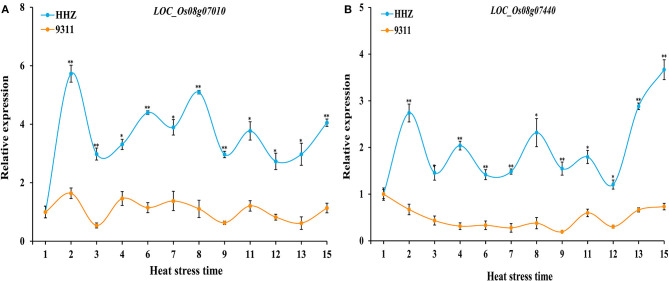
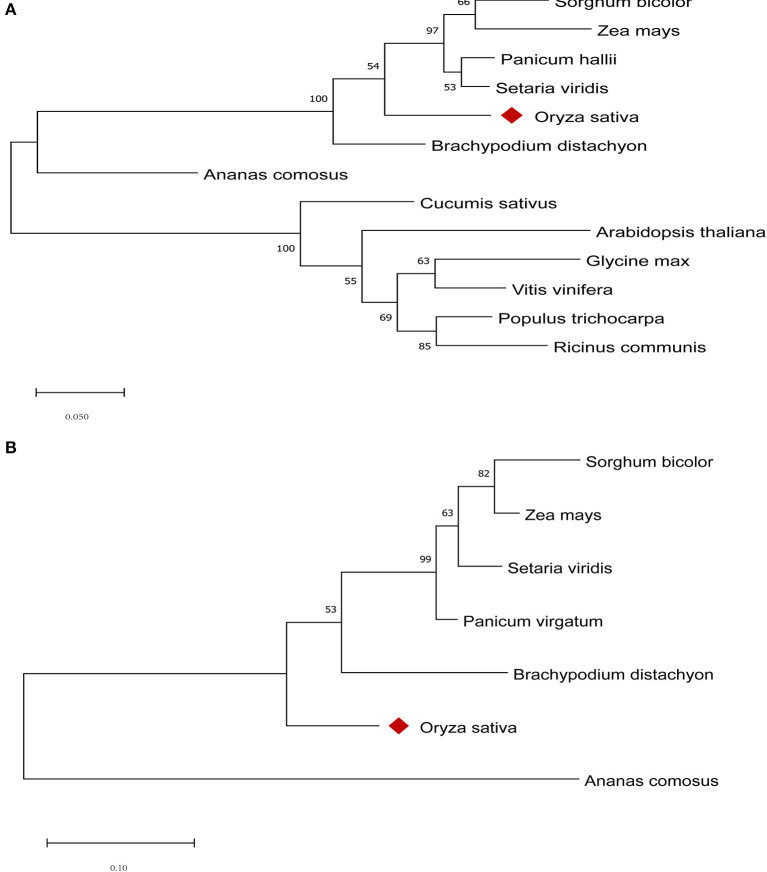
High-temperature stress can cause serious abiotic damage that limits the yield and quality of rice. Heat tolerance (HT) during the flowering stage of rice is a key trait that can guarantee a high and stable yield under heat stress. HT is a complex trait that is regulated by multiple quantitative trait loci (QTLs); however, few underlying genes have been fine mapped and cloned. In this study, the F population derived from a cross between Huanghuazhan (HHZ), a heat-tolerant cultivar, and 9311, a heat-sensitive variety, was used to map HT QTLs during the flowering stage in rice. A new major QTL, , controlling HT was identified on chromosome 8 using the bulked-segregant analysis (BSA)-seq method. The QTL was mapped into the 3,555,000-4,520,000 bp, which had a size of 0.965 Mb. The candidate region of on chromosome 8 contained 65 predicted genes, and 10 putative predicted genes were found to be associated with abiotic stress tolerance. Furthermore, qRT-PCR was performed to analyze the differential expression of these 10 genes between HHZ and 9311 under high temperature conditions. and were highly induced in HHZ compared with 9311 under heat stress. Orthologous genes of and in plants played a role in abiotic stress, suggesting that they may be the candidate genes of . Generally, the results of this study will prove useful for future efforts to clone and breed heat-tolerant varieties of rice using marker-assisted selection.
高温胁迫会导致严重的非生物损伤,从而限制水稻的产量和品质。水稻开花期的耐热性是一个关键性状,能够保证在热胁迫下实现高产稳产。耐热性是一个复杂性状,受多个数量性状位点(QTL)调控;然而,很少有潜在基因被精细定位和克隆。在本研究中,以耐热品种黄花占(HHZ)与热敏品种9311杂交衍生的F群体为材料,对水稻开花期的耐热QTL进行定位。利用混合分组分析法(BSA)-测序方法,在第8号染色体上鉴定出一个控制耐热性的新主效QTL。该QTL被定位在3555000-4520000 bp区间,大小为0.965 Mb。第8号染色体上该QTL的候选区域包含65个预测基因,其中10个推定的预测基因与非生物胁迫耐受性相关。此外,进行了qRT-PCR分析这10个基因在高温条件下HHZ和9311之间的差异表达。与9311相比,热胁迫下HHZ中 和 被高度诱导。植物中 和 的直系同源基因在非生物胁迫中发挥作用,表明它们可能是该QTL的候选基因。总体而言,本研究结果将有助于未来通过分子标记辅助选择克隆该QTL并培育耐热水稻品种。