Chen Siliang, Yang Dan, Liu Bao, Chen Yuexin, Ye We, Chen Mengyin, Zheng Yuehong
Department of Vascular Surgery, Peking Union Medical College Hospital, Chinese Academy of Medical Sciences and Peking Union Medical College, Beijing, China.
Department of Computational Biology and Bioinformatics, Institute of Medicinal Plant Development, Chinese Academy of Medical Sciences and Peking Union Medical College, Beijing, China.
Ann Transl Med. 2021 Jan;9(1):52. doi: 10.21037/atm-20-3758.
With a mortality rate of 65-85%, a ruptured abdominal aortic aneurysm (AAA) can have catastrophic consequences for patients. However, few effective pharmaceutical treatments are available to treat this condition. Therefore, elucidating the pathogenesis of AAA and finding the potential molecular targets for medical therapies are vital lines of research.
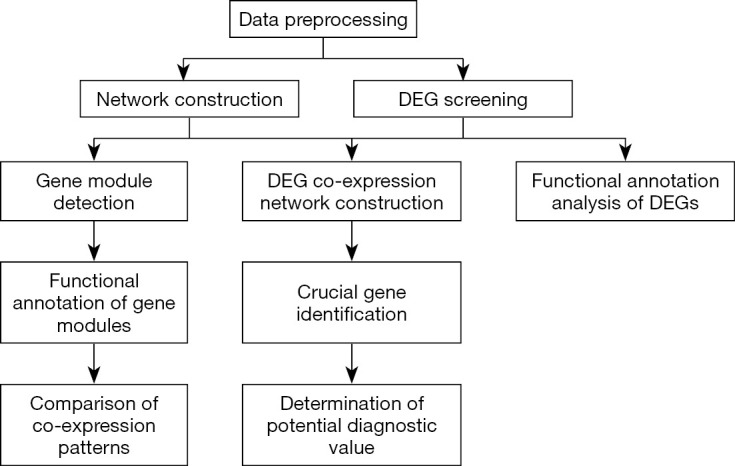
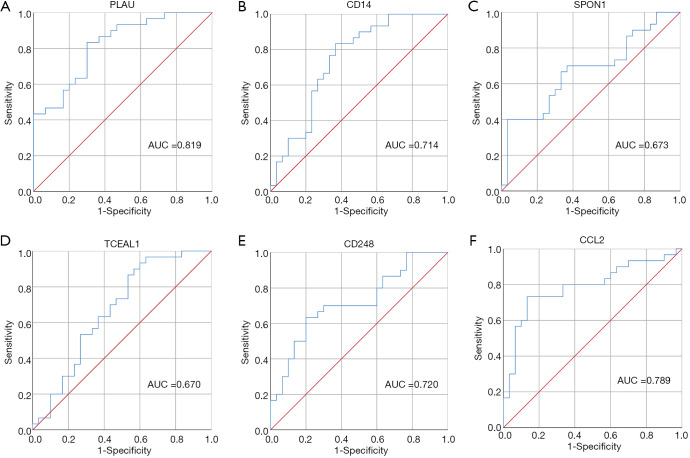
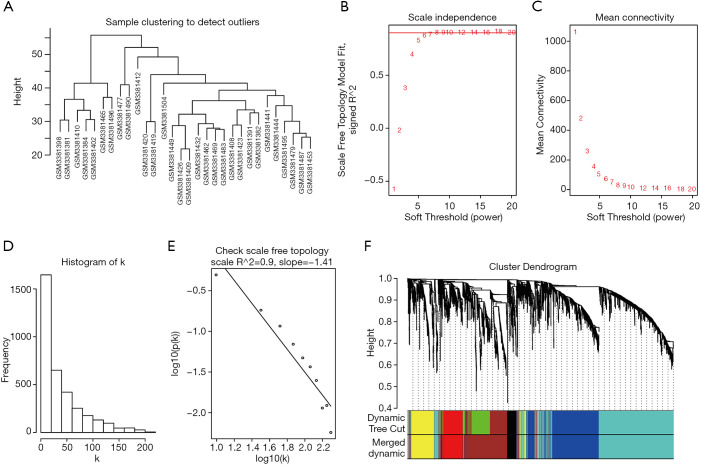
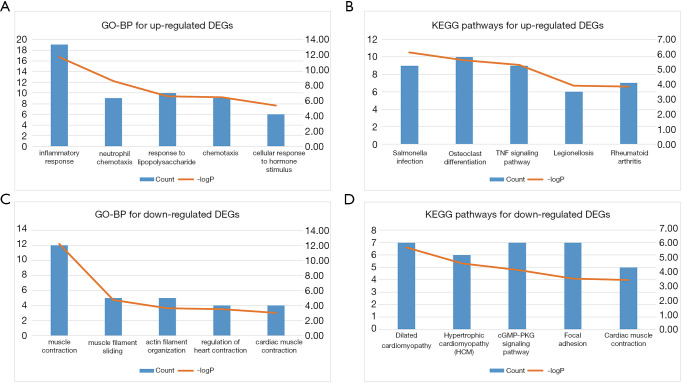
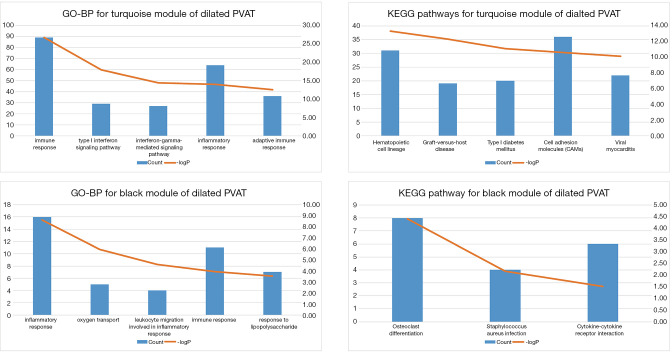
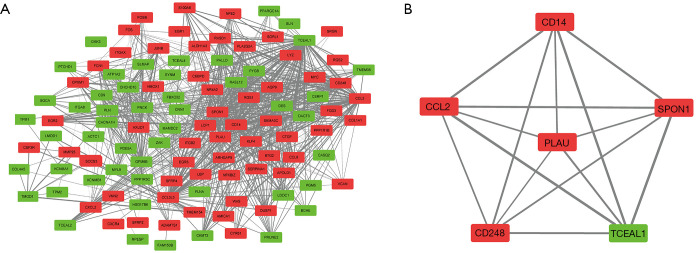
An mRNA microarray dataset of perivascular adipose tissue (PVAT) in AAA patients was downloaded and differentially expressed gene (DEG) screening was performed. Weighted gene co-expression networks for dilated and non-dilated PVAT samples were constructed via weighted correlation network analysis (WGCNA) and used to detect gene modules. Functional annotation analysis was performed for the DEGs and gene modules. We identified the hub genes of the modules and created a DEG co-expression network. We then mined crucial genes based on this network using Molecular Complex Detection (MCODE) in Cytoscape. Crucial genes with top-6 degree in the crucial gene cluster were visualized, and their potential clinical significance was determined.
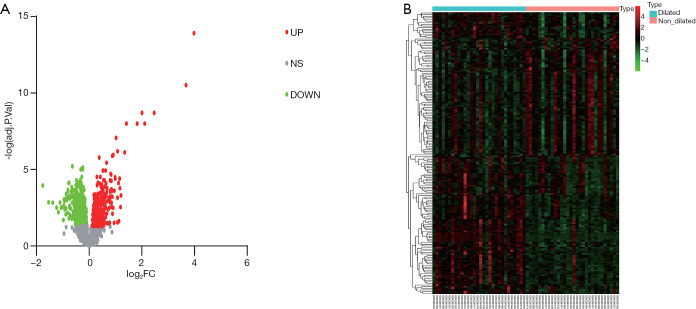
Of the 173 DEGs screened, 99 were upregulated and 74 were downregulated. Co-expression networks were built and we detected 6 and 5 modules for dilated and non-dilated PVAT samples, respectively. The turquoise and black modules for dilated PVAT samples were related to inflammation and immune response. and were the hub genes of these 2 modules, respectively. Then a DEG co-expression network with 112 nodes and 953 edges was created. was the crucial gene with the highest connectivity and showed potential clinical significance.
Using WGCNA, gene modules were detected and hub genes and crucial genes were identified. These crucial genes might be potential targets for pharmaceutic therapies and have potential clinical significance. Future and experiments are required to more comprehensively explore the biological mechanisms by which these genes affect AAA pathogenesis.
腹主动脉瘤(AAA)破裂的死亡率为65 - 85%,会给患者带来灾难性后果。然而,针对这种病症的有效药物治疗方法很少。因此,阐明AAA的发病机制并找到医学治疗的潜在分子靶点是至关重要的研究方向。
下载AAA患者血管周围脂肪组织(PVAT)的mRNA微阵列数据集并进行差异表达基因(DEG)筛选。通过加权相关网络分析(WGCNA)构建扩张型和非扩张型PVAT样本的加权基因共表达网络,并用于检测基因模块。对DEG和基因模块进行功能注释分析。我们确定了模块的枢纽基因并创建了DEG共表达网络。然后在Cytoscape中使用分子复合物检测(MCODE)基于该网络挖掘关键基因。对关键基因簇中度数排名前6的关键基因进行可视化,并确定其潜在的临床意义。
在筛选出的173个DEG中,99个上调,74个下调。构建了共表达网络,分别为扩张型和非扩张型PVAT样本检测到6个和5个模块。扩张型PVAT样本的绿松石色和黑色模块与炎症和免疫反应相关。 和 分别是这2个模块的枢纽基因。然后创建了一个具有112个节点和953条边的DEG共表达网络。 是连接性最高的关键基因,并显示出潜在的临床意义。
使用WGCNA检测到基因模块,鉴定出枢纽基因和关键基因。这些关键基因可能是药物治疗的潜在靶点,并具有潜在的临床意义。未来需要进行 和 实验,以更全面地探索这些基因影响AAA发病机制的生物学机制。