Department of Vascular Surgery, Peking Union Medical College Hospital, Chinese Academy of Medical Sciences and Peking Union Medical College, Beijing, China (mainland).
Department of Computational Biology and Bioinformatics, Institute of Medicinal Plant Development, Chinese Academy of Medical Sciences and Peking Union Medical College, Beijing, China (mainland).
Med Sci Monit. 2020 Mar 11;26:e921692. doi: 10.12659/MSM.921692.
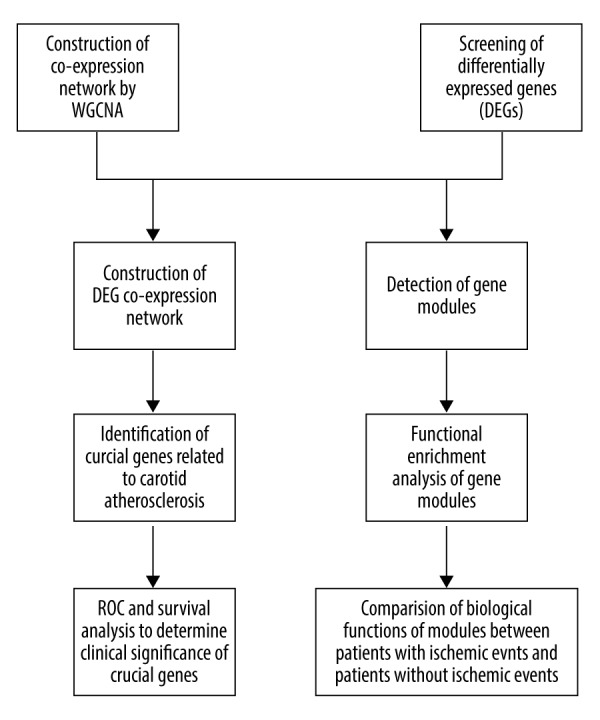
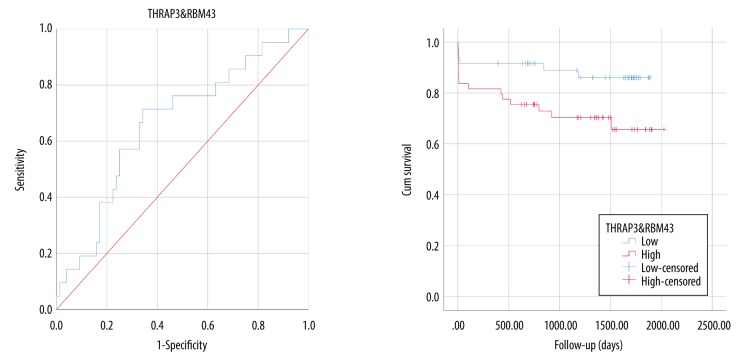
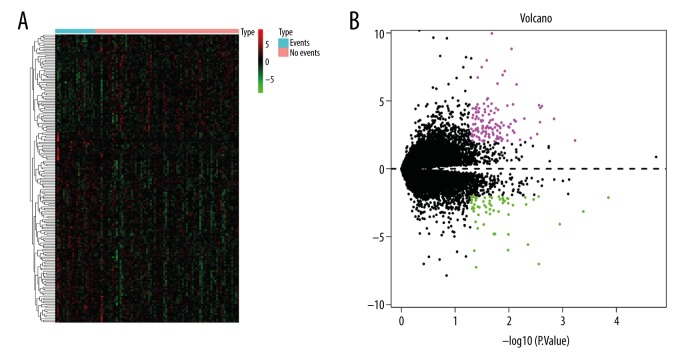
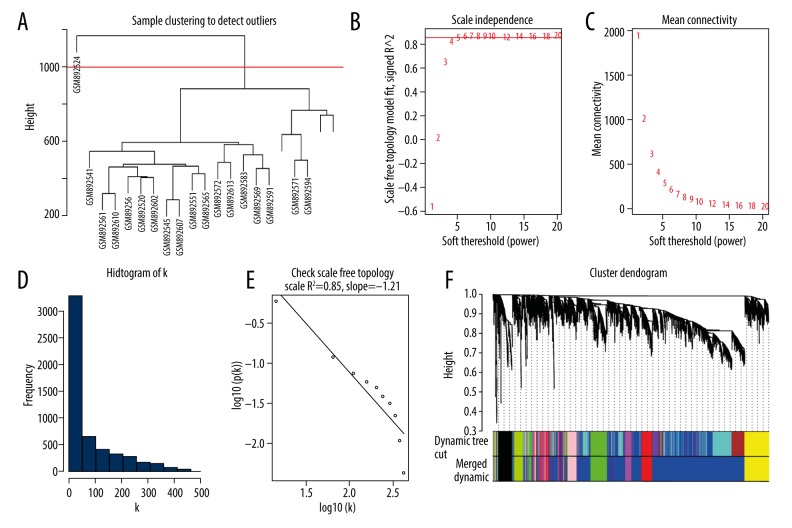
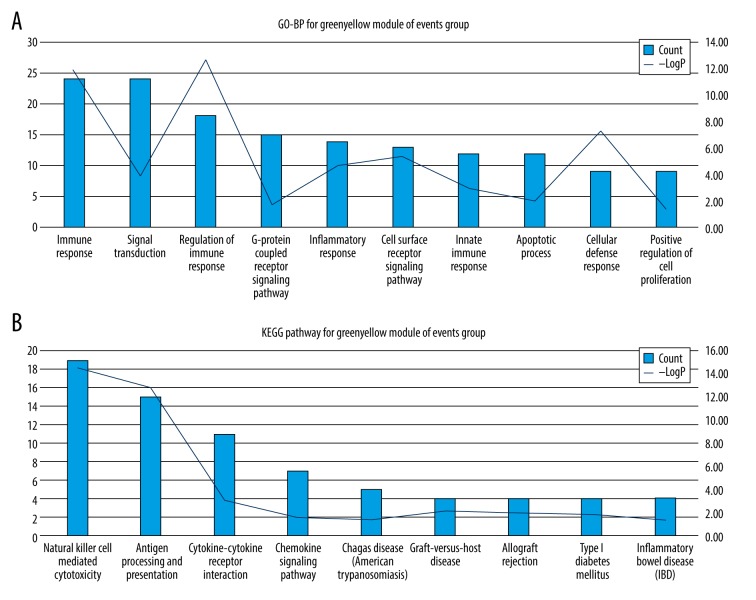
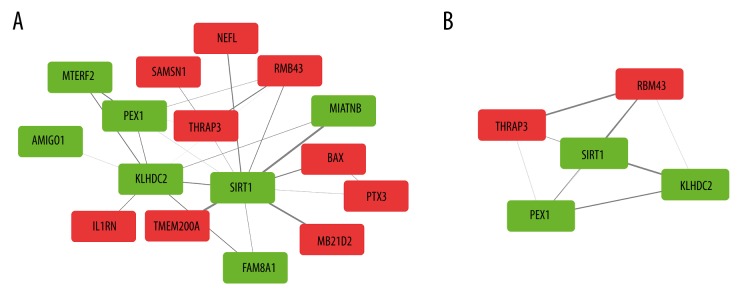
BACKGROUND Many patients are not responsive or tolerant to medical therapies for carotid atherosclerosis. Thus, elucidating the molecular mechanism for the pathogenesis and progression of carotid atherosclerosis and identifying new potential molecular targets for medical therapies that can slow progression of carotid atherosclerosis and prevent ischemic events are quite important. MATERIAL AND METHODS We downloaded the expression profiling data of PBMC in Biobank of Karolinska Endarterectomy (BiKE, GSE21545) for GEO. The WGCNA and DEG screening were conducted. The co-expression pattern between patients with ischemic events (the events group) and patients without ischemic events (the no-events group) were compared. Then, we identified hub genes of each module. Finally, the DEG co-expression network was constructed and MCODE was used to identify crucial genes based on this co-expression network. RESULTS In the study, 183 DEGs were screened and 8 and 6 modules were assessed in the events group and no-events group, respectively. Compared to the no-events group, genes associated with inflammation and immune response were clustered in the green-yellow module of the events group. The hub gene of the green-yellow module of the events group was KIR2DL5A. We obtained 1 DEG co-expression network, which has 16 nodes and 24 edges, and we detected 5 crucial genes: SIRT1, THRAP3, RBM43, PEX1, and KLHDC2. The upregulated genes (THRAP3 and RBM43) showed potential diagnostic and prognostic value for the occurrence of ischemic events. CONCLUSIONS We detected 8 modules for the events group and 6 modules for the no-events group. The hub genes for modules and crucial genes of the DEG co-expression network were also identified. These genes might serve as potential targets for medical therapies and biomarkers for diagnosis and prognosis. Further experimental and biological studies are needed to elucidate the role of these crucial genes in the progression of carotid atherosclerosis.
许多患者对颈动脉粥样硬化的医学治疗反应不佳或不耐受。因此,阐明颈动脉粥样硬化发病机制和进展的分子机制,以及确定新的潜在分子靶点,以减缓颈动脉粥样硬化的进展并预防缺血性事件,是非常重要的。
我们从 GEO 下载了 Karolinska 内膜切除术生物银行(BiKE,GSE21545)的 PBMC 表达谱数据。进行了 WGCNA 和 DEG 筛选。比较了发生缺血事件(事件组)和无缺血事件(无事件组)患者之间的共表达模式。然后,我们确定了每个模块的枢纽基因。最后,根据这个共表达网络构建了 DEG 共表达网络,并使用 MCODE 来识别关键基因。
在这项研究中,筛选出 183 个 DEG,在事件组和无事件组中分别评估了 8 个和 6 个模块。与无事件组相比,与炎症和免疫反应相关的基因在事件组的绿-黄模块中聚集。事件组绿-黄模块的枢纽基因是 KIR2DL5A。我们获得了一个 DEG 共表达网络,该网络有 16 个节点和 24 个边,检测到 5 个关键基因:SIRT1、THRAP3、RBM43、PEX1 和 KLHDC2。上调基因(THRAP3 和 RBM43)对缺血事件的发生具有潜在的诊断和预后价值。
我们检测到事件组有 8 个模块,无事件组有 6 个模块。还确定了模块的枢纽基因和 DEG 共表达网络的关键基因。这些基因可能成为医学治疗的潜在靶点,以及诊断和预后的生物标志物。需要进一步的实验和生物学研究来阐明这些关键基因在颈动脉粥样硬化进展中的作用。