Li Wei, Li Dan-Dong, Yin Bo, Lin Dong-Dong, Sheng Han-Song, Zhang Nu
Department of Neurosurgery, The Second Affiliated Hospital and Yuying Children's Hospital of Wenzhou Medical University, Wenzhou 325000, Zhejiang Province, China.
World J Clin Cases. 2021 Jan 26;9(3):651-658. doi: 10.12998/wjcc.v9.i3.651.
Pyogenic ventriculitis caused by extensively drug-resistant () is one of the most severe complications associated with craniotomy. However, limited therapeutic options exist for the treatment of ventriculitis due to the poor penetration rate of most antibiotics through the blood-brain barrier.
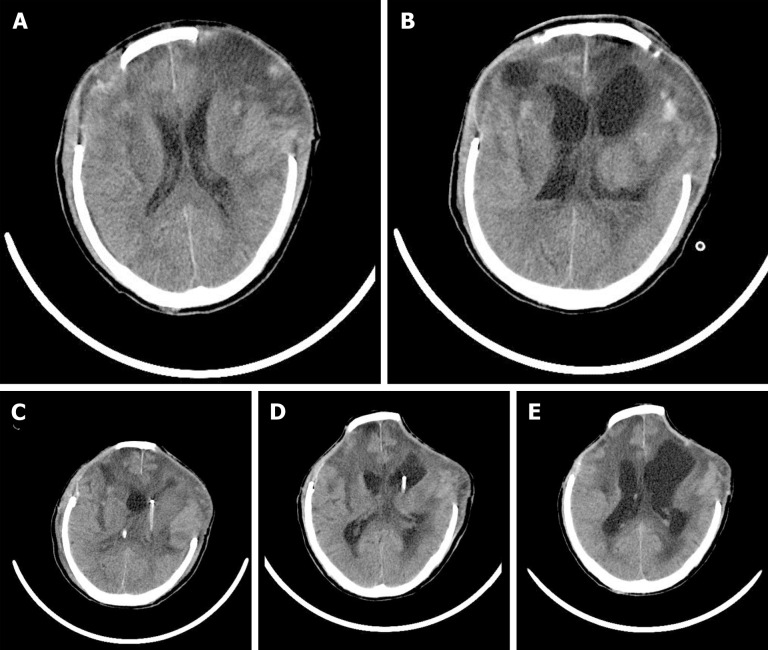
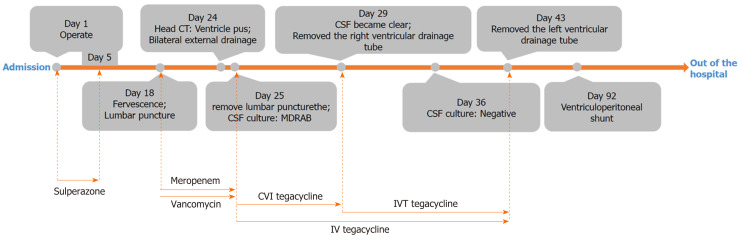
A 68-year-old male patient with severe traumatic brain injury developed pyogenic ventriculitis on postoperative day 24 caused by extensively drug-resistant susceptible to tigecycline only. Successful treatment was accomplished through multi-route administration of tigecycline, including intravenous combined with continuous ventricular irrigation plus intraventricular administration. The pus was cleared on the 3 day post-irrigation, and cerebrospinal fluid cultures were negative after 12 d.
Our findings suggest that multi-route administration of tigecycline can be a therapeutic option against pyogenic ventriculitis caused by extensively drug-resistant .
广泛耐药性()引起的化脓性脑室炎是开颅手术相关的最严重并发症之一。然而,由于大多数抗生素通过血脑屏障的渗透率低,治疗广泛耐药性脑室炎的治疗选择有限。
一名68岁重度创伤性脑损伤男性患者在术后第24天发生化脓性脑室炎,由仅对替加环素敏感的广泛耐药性引起。通过替加环素多途径给药成功完成治疗,包括静脉联合持续脑室冲洗加脑室内给药。冲洗后第3天脓液清除,12天后脑脊液培养阴性。
我们的研究结果表明,替加环素多途径给药可作为治疗广泛耐药性引起的化脓性脑室炎的一种治疗选择。