Schultebraucks Katharina, Sijbrandij Marit, Galatzer-Levy Isaac, Mouthaan Joanne, Olff Miranda, van Zuiden Mirjam
Vagelos School of Physicians and Surgeons, Department of Emergency Medicine, Columbia University Medical Center, New York, NY, United States of America; Data Science Institute, Columbia University, New York, New York, USA.
Vrije Universiteit, Department of Clinical, Neuro- and Developmental Psychology; Amsterdam Public Health Research Institute, World Health Organization Collaborating Centre for Research and Dissemination of Psychological Interventions, Amsterdam, the Netherlands.
Neurobiol Stress. 2021 Jan 18;14:100297. doi: 10.1016/j.ynstr.2021.100297. eCollection 2021 May.
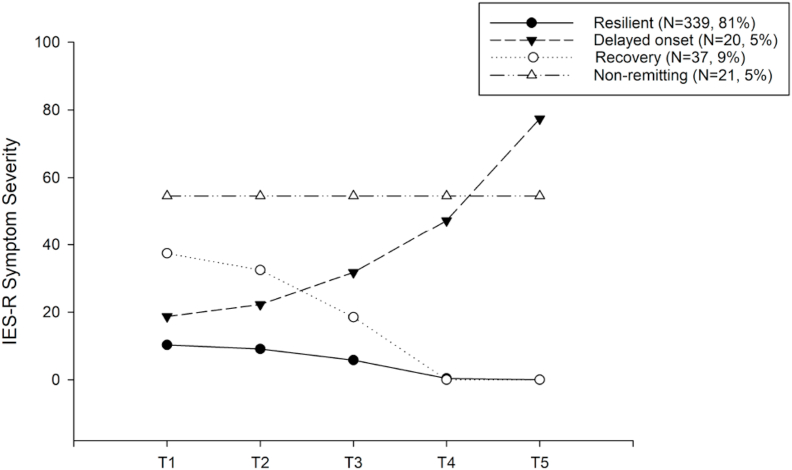
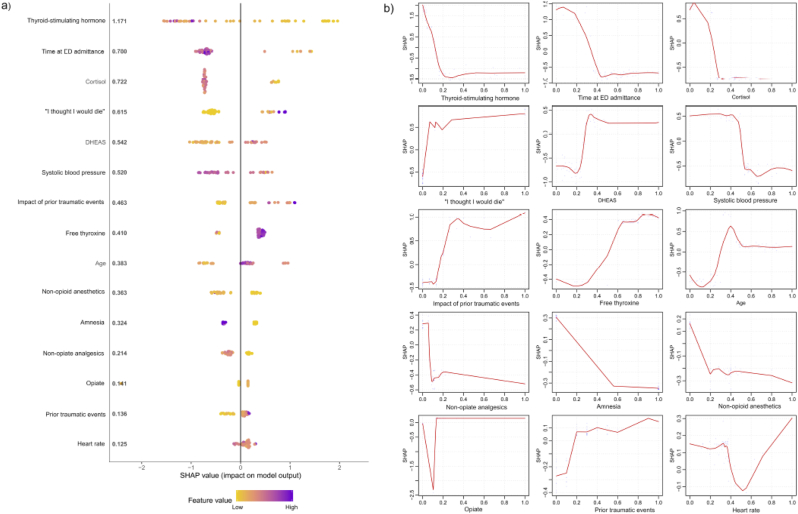
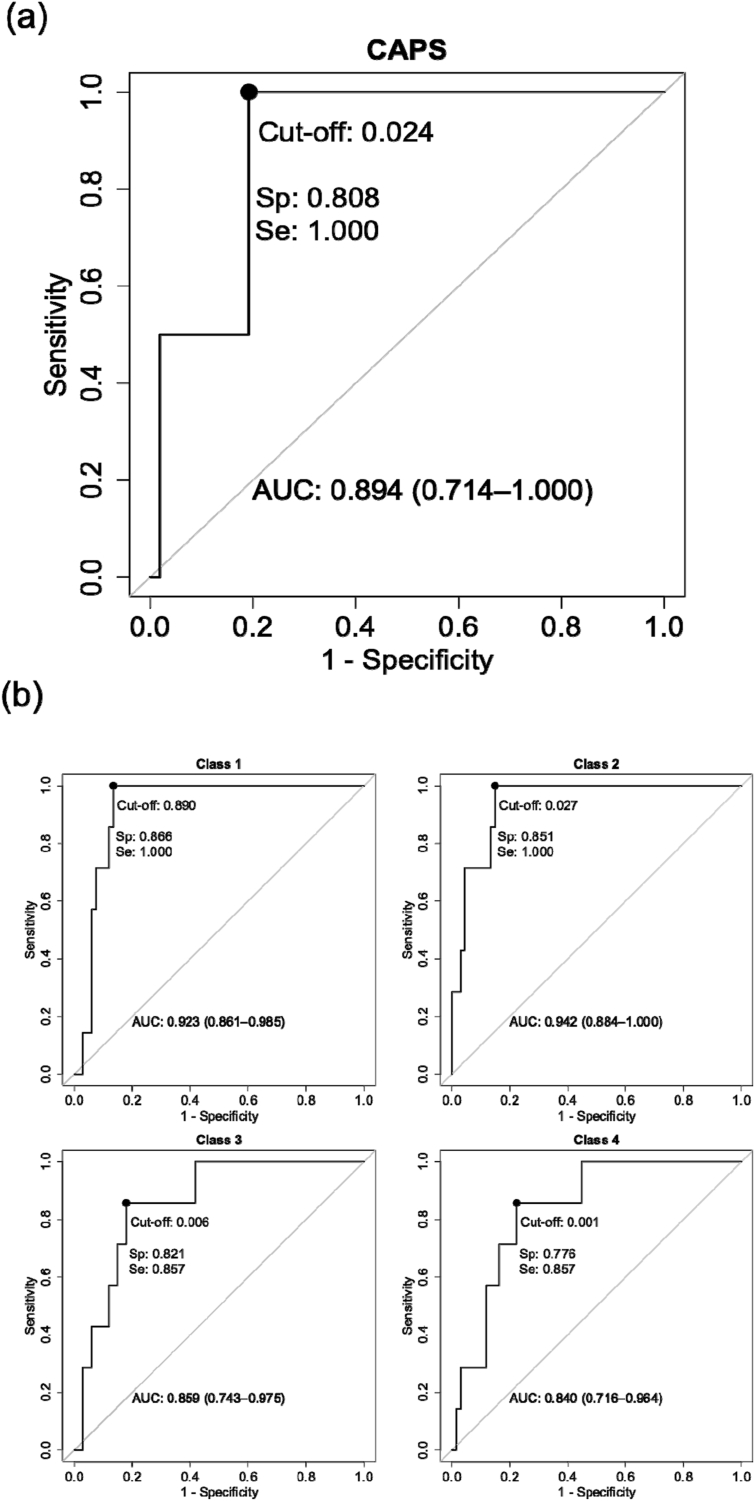
The necessary requirement of a traumatic event preceding the development of Posttraumatic Stress Disorder, theoretically allows for administering preventive and early interventions in the early aftermath of such events. Machine learning models including biomedical data to forecast PTSD outcome after trauma are highly promising for detection of individuals most in need of such interventions. In the current study, machine learning was applied on biomedical data collected within 48 h post-trauma to forecast individual risk for long-term PTSD, using a multinominal approach including the full spectrum of common PTSD symptom courses within one prognostic model for the first time. N = 417 patients (37.2% females; mean age 46.09 ± 15.88) admitted with (suspected) serious injury to two urban Academic Level-1 Trauma Centers were included. Routinely collected biomedical information (endocrine measures, vital signs, pharmacotherapy, demographics, injury and trauma characteristics) upon ED admission and subsequent 48 h was used. Cross-validated multi-nominal classification of longitudinal self-reported symptom severity (IES-R) over 12 months and bimodal classification of clinician-rated PTSD diagnosis (CAPS-IV) at 12 months post-trauma was performed using extreme Gradient Boosting and evaluated on hold-out sets. SHapley Additive exPlanations (SHAP) values were used to explain the derived models in human-interpretable form. Good prediction of longitudinal PTSD symptom trajectories (multiclass AUC = 0.89) and clinician-rated PTSD at 12 months (AUC = 0.89) was achieved. Most relevant prognostic variables to forecast both multinominal and dichotomous PTSD outcomes included acute endocrine and psychophysiological measures and hospital-prescribed pharmacotherapy. Thus, individual risk for long-term PTSD was accurately forecasted from biomedical information routinely collected within 48 h post-trauma. These results facilitate future targeted preventive interventions by enabling future early risk detection and provide further insights into the complex etiology of PTSD.
创伤后应激障碍发生之前存在创伤性事件这一必要条件,从理论上讲,使得在这类事件刚发生后就能进行预防性和早期干预。利用生物医学数据的机器学习模型来预测创伤后创伤后应激障碍的结果,对于检测最需要此类干预的个体很有前景。在当前研究中,首次采用多类别方法,将机器学习应用于创伤后48小时内收集的生物医学数据,以预测个体患长期创伤后应激障碍的风险,该多类别方法在一个预后模型中纳入了常见创伤后应激障碍症状过程的全谱。纳入了417名患者(37.2%为女性;平均年龄46.09±15.88),他们因(疑似)重伤被收治到两家城市一级学术创伤中心。使用了急诊入院时及随后48小时常规收集的生物医学信息(内分泌指标、生命体征、药物治疗、人口统计学、损伤和创伤特征)。使用极端梯度提升对12个月内纵向自我报告的症状严重程度(IES-R)进行交叉验证的多类别分类,并在创伤后12个月对临床医生评定的创伤后应激障碍诊断(CAPS-IV)进行双峰分类,并在留出集上进行评估。使用SHapley加法解释(SHAP)值以人类可解释的形式解释所得模型。实现了对纵向创伤后应激障碍症状轨迹(多类别AUC = 0.89)和创伤后12个月临床医生评定的创伤后应激障碍(AUC = 0.89)的良好预测。预测多类别和二分法创伤后应激障碍结果的最相关预后变量包括急性内分泌和心理生理指标以及医院规定的药物治疗。因此,根据创伤后48小时内常规收集的生物医学信息能够准确预测个体患长期创伤后应激障碍的风险。这些结果通过实现未来的早期风险检测,促进了未来有针对性的预防性干预,并为创伤后应激障碍的复杂病因提供了进一步的见解。