Tarapoulouzi Maria, Skiada Vasiliki, Agriopoulou Sofia, Psomiadis David, Rébufa Catherine, Roussos Sevastianos, Theocharis Charis R, Katsaris Panagiotis, Varzakas Theodoros
Department of Chemistry, Faculty of Pure and Applied Science, University of Cyprus, P.O. Box 20537, CY-1678 Nicosia, Cyprus.
Department of Food Science and Technology, Faculty of Agriculture and Food, University of the Peloponnese, Antikalamos, 24100 Kalamata, Greece.
Foods. 2021 Feb 4;10(2):336. doi: 10.3390/foods10020336.
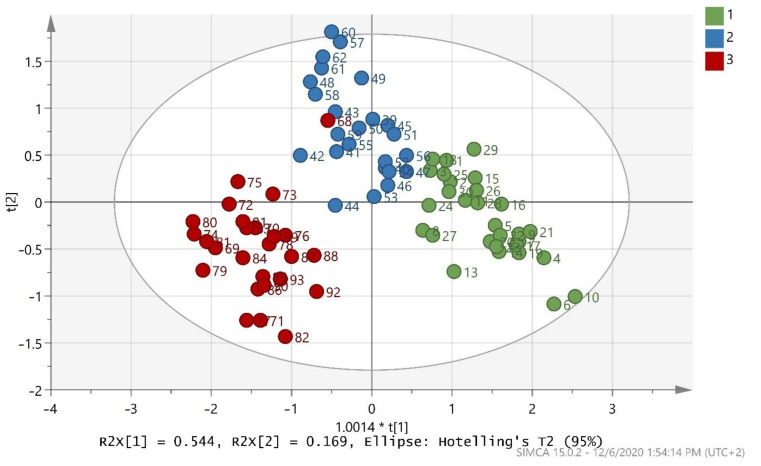
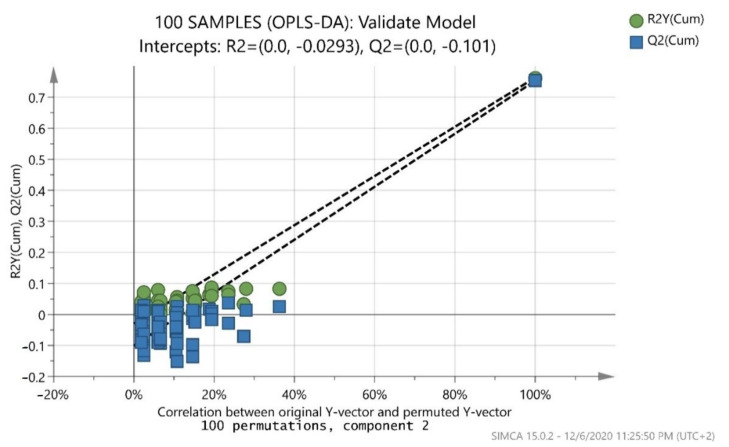
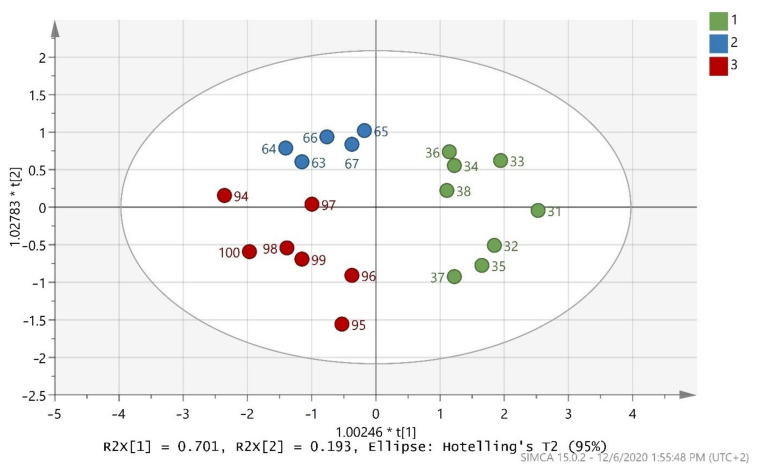
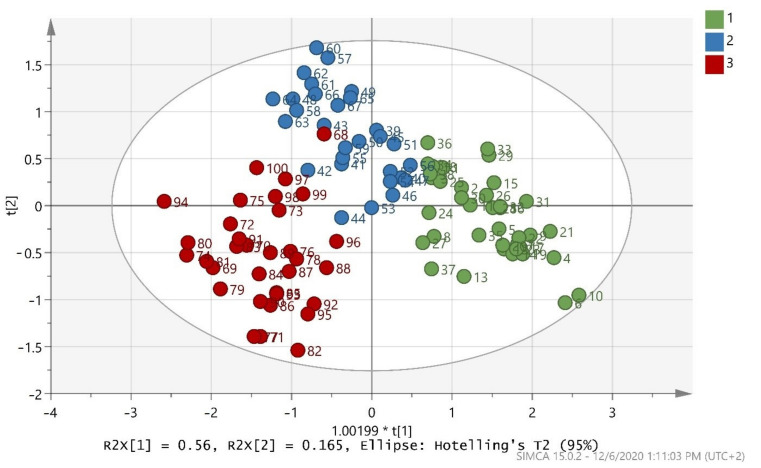
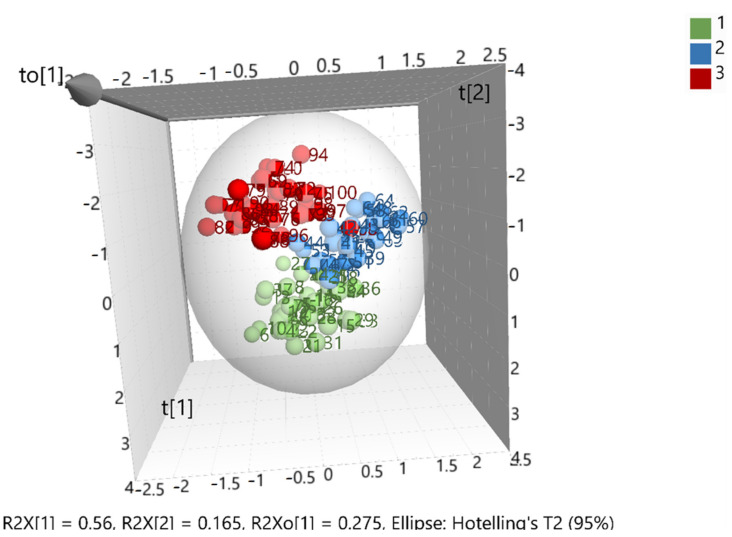
Α stable isotope ratio mass spectrometer was used for stable isotope ratio (i.e., δC, δO, and δH) measurements, achieving geographical discrimination using orthogonal projections to latent structures discriminant analysis. A total of 100 Greek monovarietal olive oil samples from three different olive cultivars (cv. Koroneiki, cv. Lianolia Kerkyras, and cv. Maurolia), derived from Central Greece and Peloponnese, were collected during the 2019-2020 harvest year aiming to investigate the effect of botanical and geographical origin on their discrimination through isotopic data. The selection of these samples was made from traditionally olive-growing areas in which no significant research has been done so far. Samples were discriminated mainly by olive cultivar and, partially, by geographical origin, which is congruent with other authors. Based on this model, correct recognition of 93.75% in the training samples and correct prediction of 100% in the test set were achieved. The overall correct classification of the model was 91%. The predictability based on the externally validated method of discrimination was good (Q (cum) = 0.681) and illustrated that δO and δH were the most important isotope markers for the discrimination of olive oil samples. The authenticity of olive oil based on the examined olive varieties can be determined using this technique.
使用稳定同位素比率质谱仪进行稳定同位素比率(即δC、δO和δH)测量,通过正交投影到潜在结构判别分析实现地理区分。在2019 - 2020收获季,从希腊中部和伯罗奔尼撒半岛采集了来自三个不同橄榄品种(科罗内基品种、凯法利尼亚岛利阿诺利亚品种和毛罗利亚品种)的100个希腊单品种橄榄油样本,旨在通过同位素数据研究植物来源和地理来源对其鉴别的影响。这些样本选自传统的橄榄种植区,目前在这些区域尚未开展大量研究。样本主要通过橄榄品种进行区分,部分通过地理来源区分,这与其他作者的研究结果一致。基于该模型,在训练样本中实现了93.75%的正确识别率,在测试集中实现了100%的正确预测率。该模型的总体正确分类率为91%。基于外部验证判别方法的可预测性良好(Q(累积)= 0.681),表明δO和δH是区分橄榄油样本最重要的同位素标记。使用该技术可以确定基于所检测橄榄品种的橄榄油的真实性。