Jiménez-Morillo Nicasio T, Palma Vera, Garcia Raquel, Dias Cristina Barrocas, Cabrita Maria João
MED-Mediterranean Institute for Agriculture, Environment and Development, Universidade de Évora, Pólo da Mitra, Ap. 94, 7006-554 Évora, Portugal.
HERCULES, Universidade de Évora, Palácio do Vimioso, 7000-089 Évora, Portugal.
Foods. 2020 Dec 12;9(12):1855. doi: 10.3390/foods9121855.
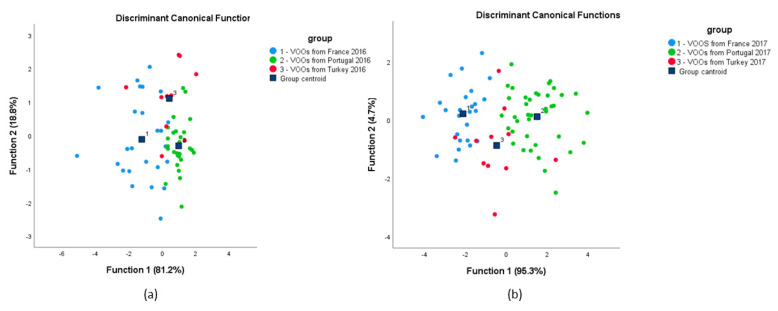
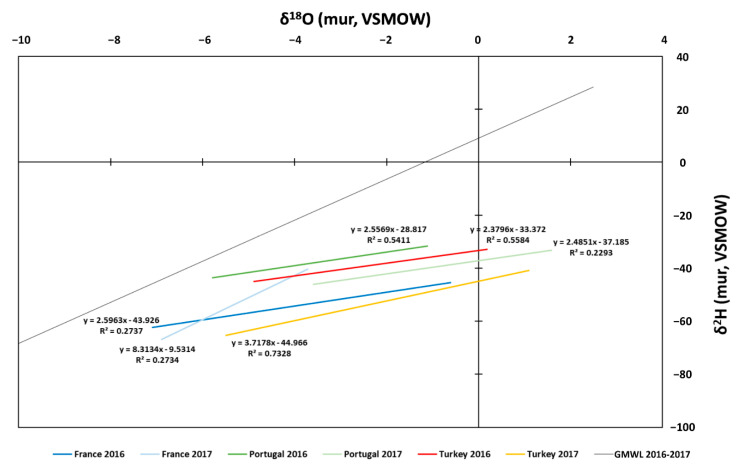
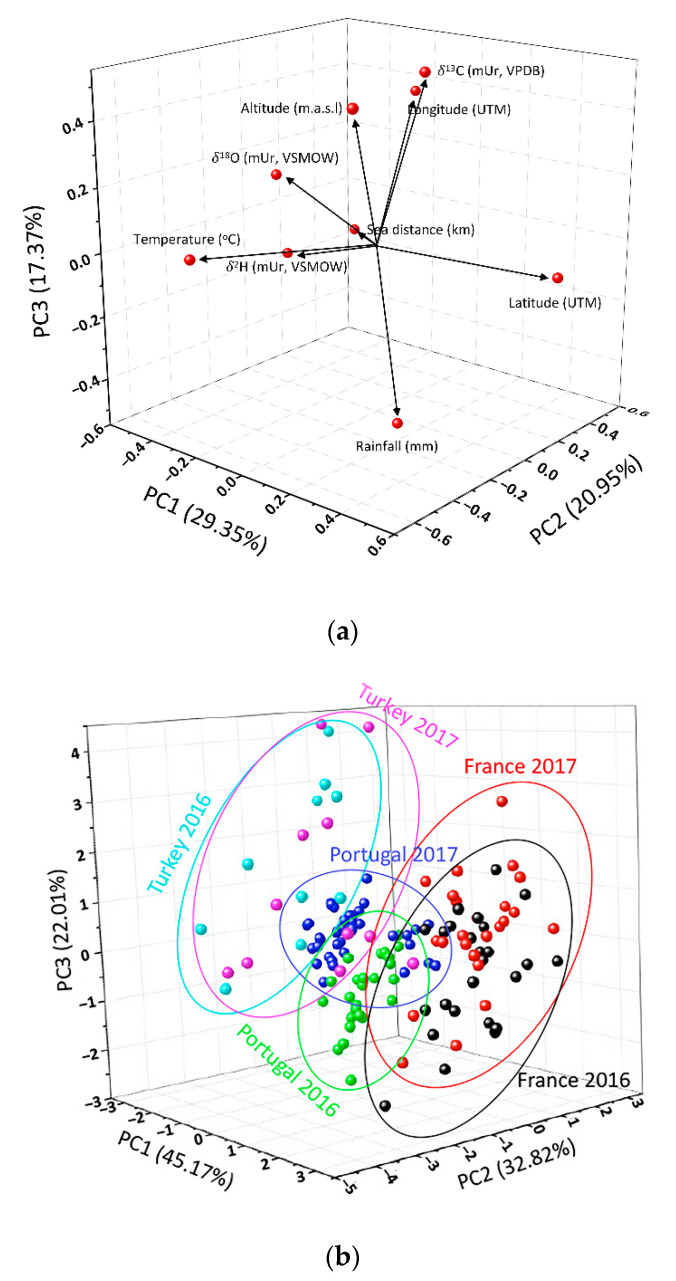
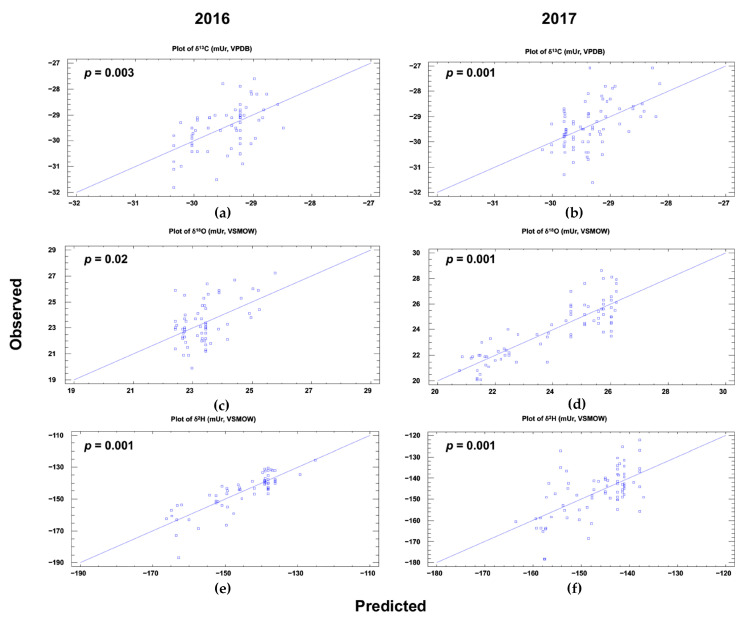
The knowledge of the isotopic composition of virgin olive oil (VOO) allows the evaluation of authenticity and geographical origin, being an important tool against fraud. This study aimed to assess if VOOs produced in three Mediterranean regions could be discriminated on the basis of multivariate statistical analysis of geoclimatic and isotopic data. A total of 138 geo-referenced VOO samples from Portugal, France and Turkey from two different cultivation years were collected. The isotopic composition (C, H and O) of VOOs was obtained using an elemental analyzer coupled to an isotope ratio mass spectrometer (EA-IRMS). One-way analysis of variance for C, H and O showed some significant differences either between crop years or geoclimatic conditions. Based on multiple regression analyses using meteorological and geographical parameters, a meteoric water line for olive oil from Portugal, France and Turkey, in two harvest years, were created to assess the impact of climate change on their H and O values. Principal component analysis and Linear Discriminant Analysis, used to sort samples according to geoclimatic origin, performed best for French and Portuguese olive oils. In light of the results, multivariate isotopic analysis of VOO samples may discriminate not only between geoclimatic regions but also among cultivation years.
了解初榨橄榄油(VOO)的同位素组成有助于评估其真伪和地理来源,是打击欺诈行为的一项重要工具。本研究旨在评估能否基于对地理气候和同位素数据的多变量统计分析来区分三个地中海地区生产的初榨橄榄油。共收集了来自葡萄牙、法国和土耳其的138个具有地理参考信息的初榨橄榄油样本,这些样本来自两个不同的种植年份。使用与同位素比率质谱仪(EA - IRMS)联用的元素分析仪获得初榨橄榄油的同位素组成(碳、氢和氧)。对碳、氢和氧的单因素方差分析表明,在作物年份或地理气候条件之间存在一些显著差异。基于使用气象和地理参数的多元回归分析,绘制了葡萄牙、法国和土耳其在两个收获年份的橄榄油的雨水线,以评估气候变化对其氢和氧值的影响。主成分分析和线性判别分析用于根据地理气候来源对样本进行分类,对法国和葡萄牙橄榄油的分类效果最佳。根据研究结果,对初榨橄榄油样本进行多变量同位素分析不仅可以区分地理气候区域,还可以区分种植年份。