Shim Eunha
Department of Mathematics, Soongsil University, Seoul 06978, Korea.
J Clin Med. 2021 Feb 4;10(4):591. doi: 10.3390/jcm10040591.
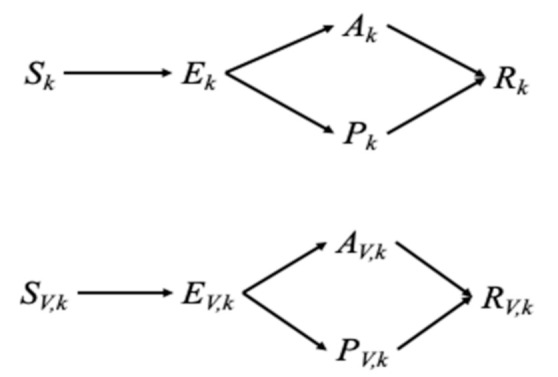
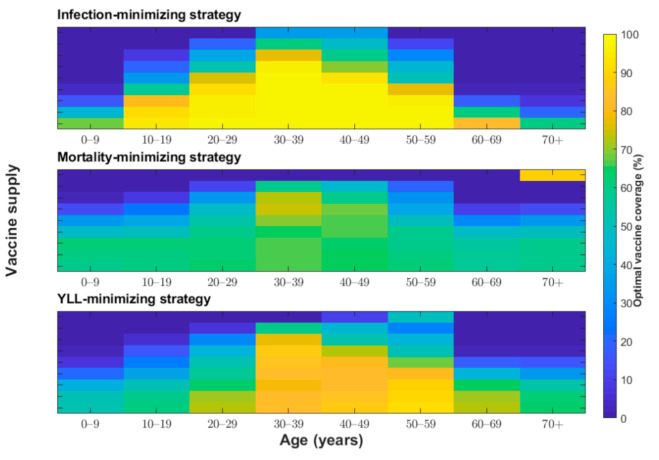
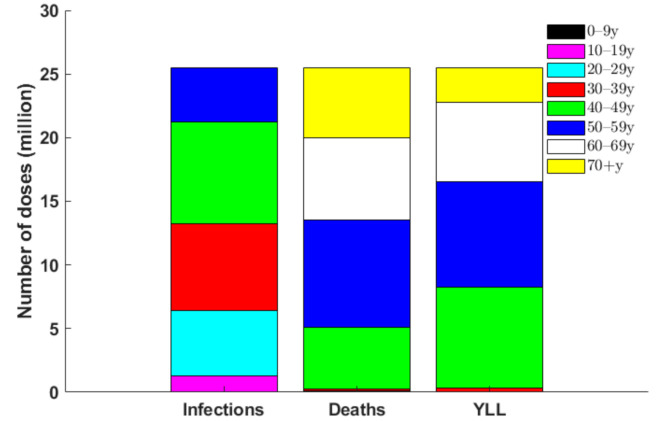
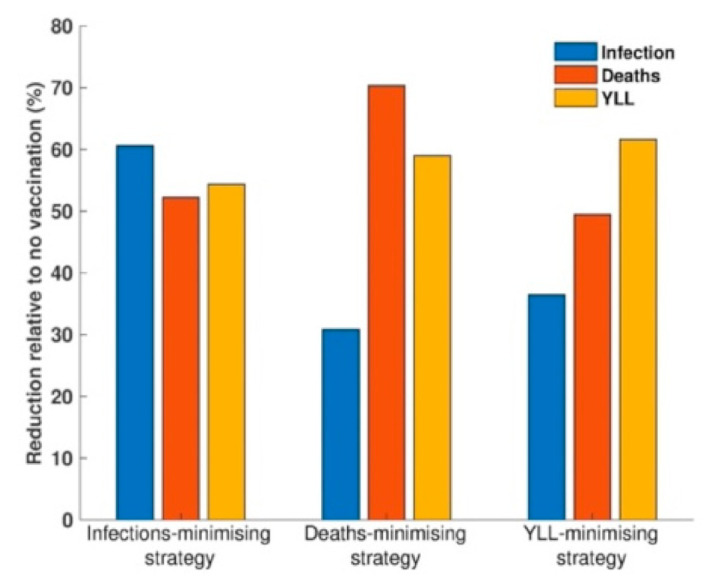
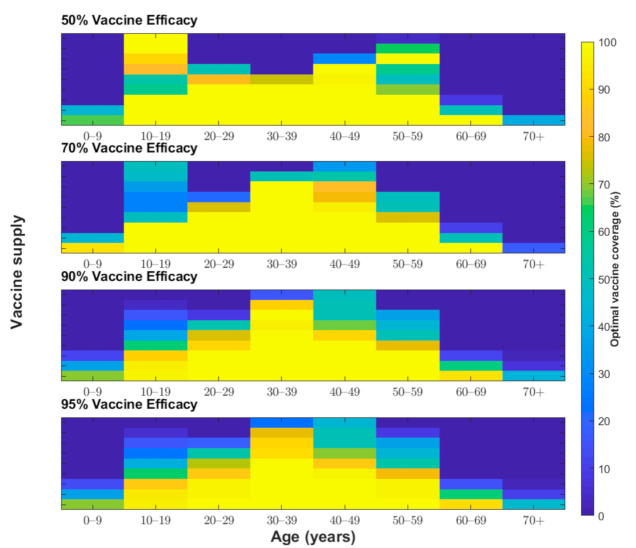
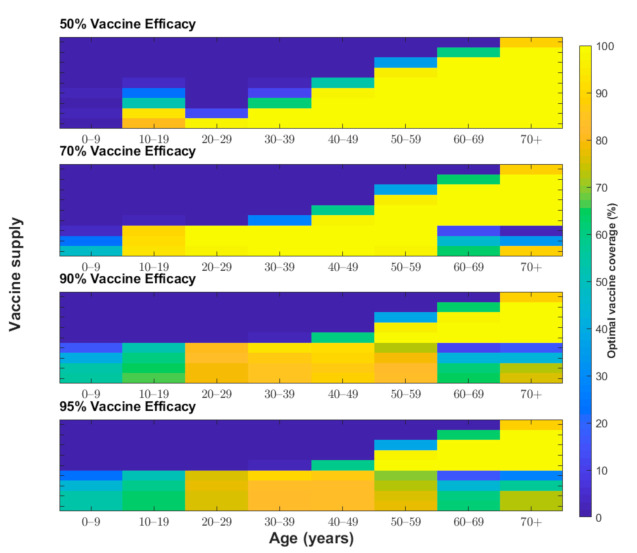
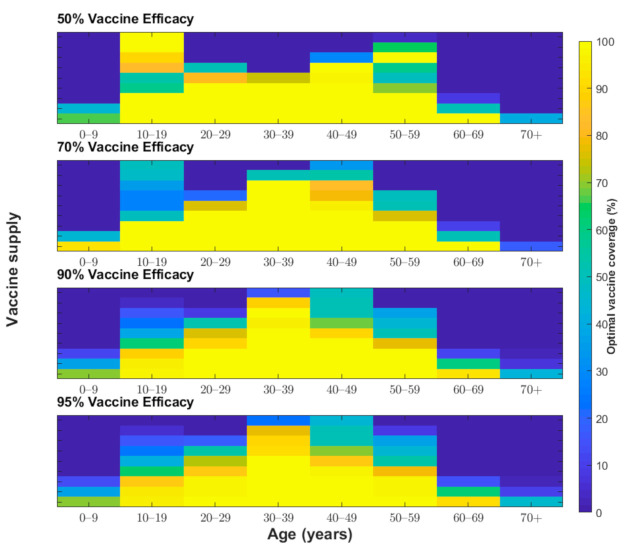
Initial supply of the coronavirus disease (COVID-19) vaccine may be limited, necessitating its effective use. Herein, an age-structured model of COVID-19 spread in South Korea is parameterized to understand the epidemiological characteristics of COVID-19. The model determines optimal vaccine allocation for minimizing infections, deaths, and years of life lost while accounting for population factors, such as country-specific age distribution and contact structure, and various levels of vaccine efficacy. A transmission-blocking vaccine should be prioritized in adults aged 20-49 years and those older than 50 years to minimize the cumulative incidence and mortality, respectively. A strategy to minimize years of life lost involves the vaccination of adults aged 40-69 years, reflecting the relatively high case-fatality rates and years of life lost in this age group. An incidence-minimizing vaccination strategy is highly sensitive to vaccine efficacy, and vaccines with lower efficacy should be administered to teenagers and adults aged 50-59 years. Consideration of age-specific contact rates and vaccine efficacy is critical to optimize vaccine allocation. New recommendations for COVID-19 vaccines under consideration by the Korean Centers for Disease Control and Prevention are mainly based on a mortality-minimizing allocation strategy.
冠状病毒病(COVID-19)疫苗的初始供应可能有限,因此必须有效使用。在此,我们对韩国COVID-19传播的年龄结构模型进行参数化,以了解COVID-19的流行病学特征。该模型确定了最佳疫苗分配方案,以在考虑特定国家年龄分布和接触结构等人口因素以及不同水平疫苗效力的情况下,尽量减少感染、死亡和生命年损失。为尽量减少累积发病率和死亡率,应优先为20至49岁的成年人以及50岁以上的人群接种阻断传播的疫苗。一种尽量减少生命年损失的策略涉及为40至69岁的成年人接种疫苗,这反映了该年龄组相对较高的病死率和生命年损失。一种将发病率降至最低的疫苗接种策略对疫苗效力高度敏感,效力较低的疫苗应接种给青少年和50至59岁的成年人。考虑特定年龄的接触率和疫苗效力对于优化疫苗分配至关重要。韩国疾病控制与预防中心正在考虑的COVID-19疫苗新建议主要基于一种将死亡率降至最低的分配策略。