Department of Public Health, College of Medicine and Health Science, Wachemo University, Hossana, Ethiopia.
Department of Public Health, College Health Science, Madda Walabu University, Bale Robe, Ethiopia.
BMC Pregnancy Childbirth. 2021 Feb 8;21(1):113. doi: 10.1186/s12884-020-03535-1.
Postpartum depression (PPD) is a serious mood disorder that affects behavioural, physical and mental health of women and newborn after childbirth. Although a wide range of research have been conducted on maternal and infant health outcomes, the effect of postpartum depression on exclusive breastfeeding practices remains ambiguous, and needs addressing. The aim of this study was to assess the effect of postpartum depression on exclusive breast feeding practices in sub-Saharan African countries.
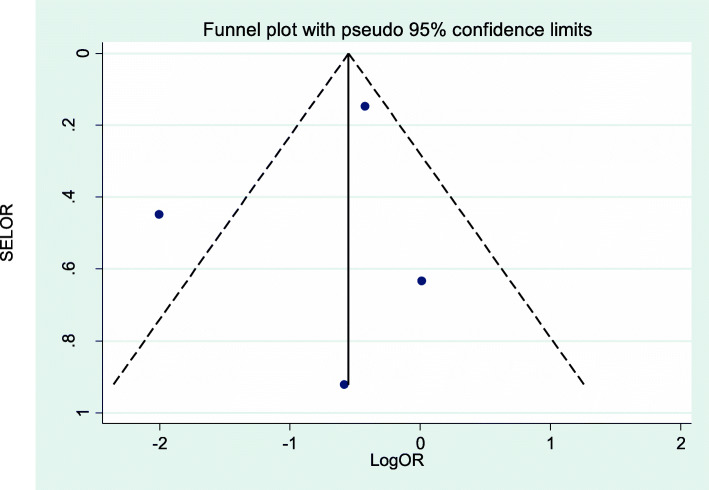
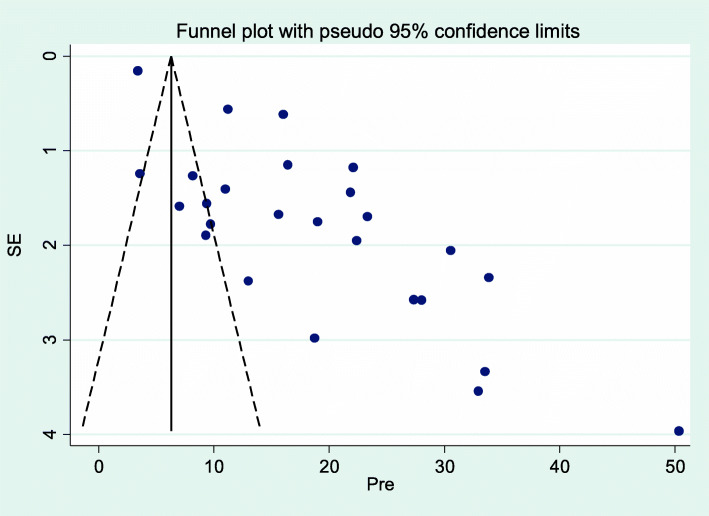
PubMed, Google Scholar, Science Direct and Cochrane Library were systematically searched for relevant articles published between 2001 and 2020. STATA version 14 was used to calculate the pooled odd ratio with 95% confidence intervals (95% CI). The DerSimonian and Laird random effects meta-analysis was used to measure the effect of postpartum depression on exclusive breast feeding practices. The heterogeneity and publication bias were assessed by using I test statistics and Egger's test, respectively. This review was reported according to the Preferred Reporting Items for Systematic Reviews and Meta-Analysis.
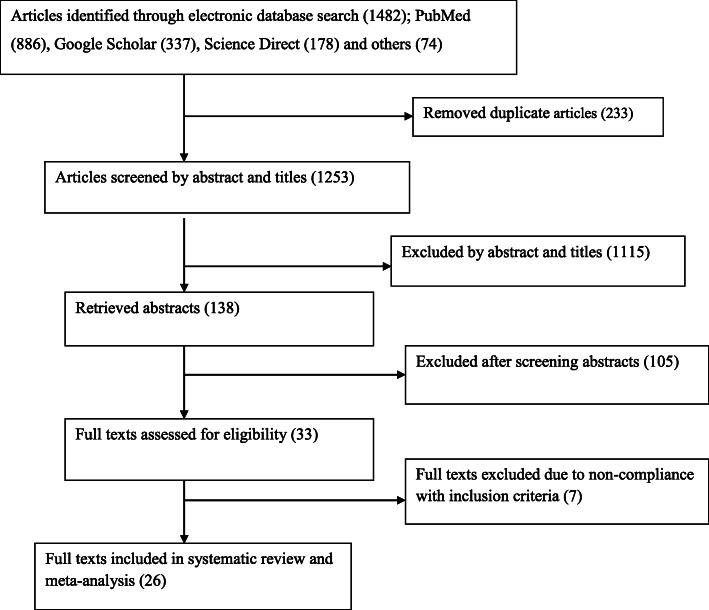
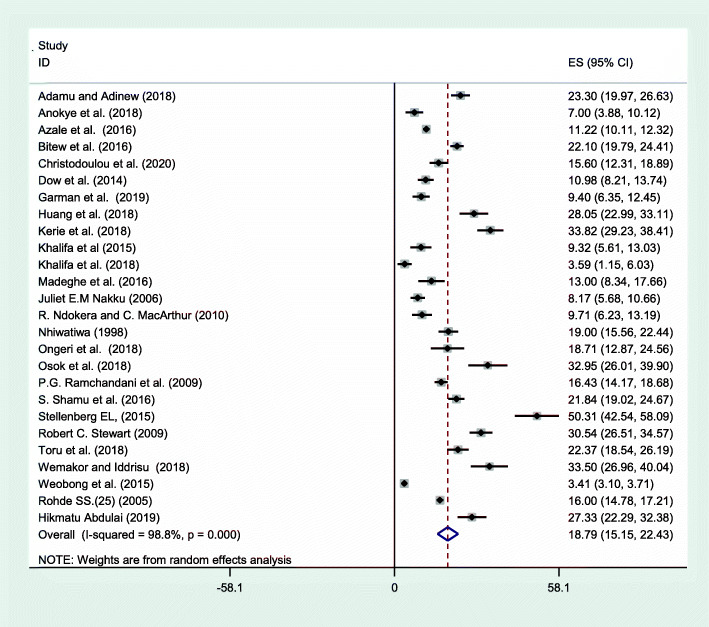
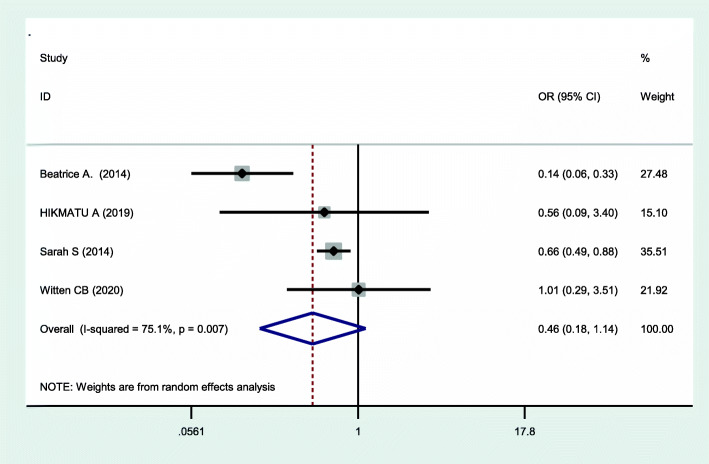
A total of 1482 published articles and gray literatures were retrieved from different databases. Additional articles were identified from the reference list of identified reports and articles. After assessment of obtained articles, studies not meeting the inclusion criteria were excluded. Twenty six studies involving 30,021 population met the inclusion criteria were included in this review. In sub Saharan Africa the overall estimated level of postpartum depression was 18.6% (95% CI: 13.8, 23.4). This review found that postpartum depression had no significant effect on exclusive breast feeding practices (OR = 0.46, 95% CI: 0.18, 1.14).
In Sub Saharan Africa, the prevalence of postpartum depression was lower than the report of World Health Organization for developing Country in 2020. This review reveled that maternal postpartum depression has no significant effect on exclusive breast feeding practices. Thus, the investigators strongly recommend the researchers to conduct primary studies using strong study design in sub-Saharan Africa.
产后抑郁症(PPD)是一种严重的情绪障碍,会影响女性和新生儿产后的行为、身体和心理健康。尽管已经对母婴健康结果进行了广泛的研究,但产后抑郁症对纯母乳喂养实践的影响仍不清楚,需要加以解决。本研究旨在评估产后抑郁症对撒哈拉以南非洲国家纯母乳喂养实践的影响。
系统检索了 2001 年至 2020 年期间发表的相关文章,检索数据库包括 PubMed、Google Scholar、Science Direct 和 Cochrane Library。使用 STATA 版本 14 计算合并的优势比及其 95%置信区间(95%CI)。采用 DerSimonian 和 Laird 随机效应荟萃分析来衡量产后抑郁症对纯母乳喂养实践的影响。使用 I 检验统计量和 Egger 检验分别评估异质性和发表偏倚。本综述按照系统评价和荟萃分析的首选报告项目进行报告。
从不同数据库共检索到 1482 篇已发表文章和灰色文献。还从确定报告和文章的参考文献中确定了其他文章。对获得的文章进行评估后,排除不符合纳入标准的文章。共有 26 项研究涉及 30021 人符合纳入标准,纳入本综述。在撒哈拉以南非洲,产后抑郁症的总体估计水平为 18.6%(95%CI:13.8,23.4)。本综述发现,产后抑郁症对纯母乳喂养实践没有显著影响(OR=0.46,95%CI:0.18,1.14)。
在撒哈拉以南非洲,产后抑郁症的患病率低于 2020 年世界卫生组织对发展中国家的报告。本综述表明,产妇产后抑郁症对纯母乳喂养实践没有显著影响。因此,研究人员强烈建议研究人员在撒哈拉以南非洲进行使用强大研究设计的初级研究。