Cheng Yanfei, Zhu Hui, Du Zhengda, Guo Xuena, Zhou Chenyao, Wang Zhaoyue, He Xiuping
CAS Key Laboratory of Microbial Physiological and Metabolic Engineering, State Key Laboratory of Mycology, Institute of Microbiology, Chinese Academy of Sciences, Beijing, 100101, China.
College of Life Sciences, University of Chinese Academy of Sciences, Beijing, 100049, China.
Biotechnol Biofuels. 2021 Feb 8;14(1):38. doi: 10.1186/s13068-021-01885-2.
Saccharomyces cerevisiae is well-known as an ideal model system for basic research and important industrial microorganism for biotechnological applications. Acetic acid is an important growth inhibitor that has deleterious effects on both the growth and fermentation performance of yeast cells. Comprehensive understanding of the mechanisms underlying S. cerevisiae adaptive response to acetic acid is always a focus and indispensable for development of robust industrial strains. eIF5A is a specific translation factor that is especially required for the formation of peptide bond between certain residues including proline regarded as poor substrates for slow peptide bond formation. Decrease of eIF5A activity resulted in temperature-sensitive phenotype of yeast, while up-regulation of eIF5A protected transgenic Arabidopsis against high temperature, oxidative or osmotic stress. However, the exact roles and functional mechanisms of eIF5A in stress response are as yet largely unknown.
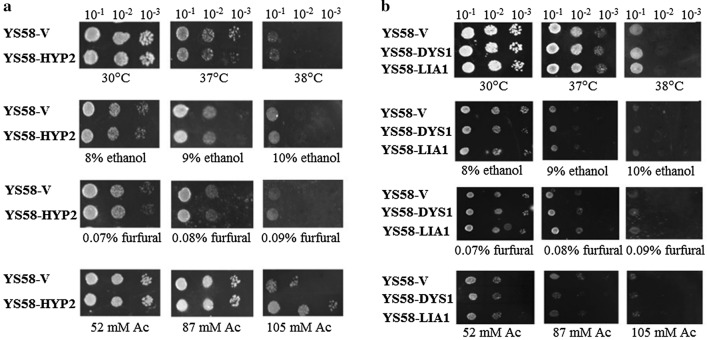
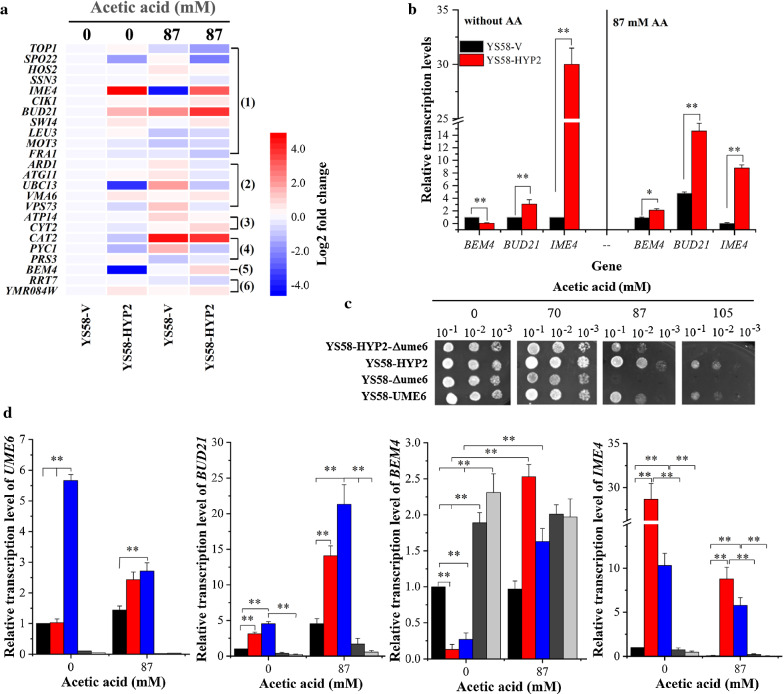
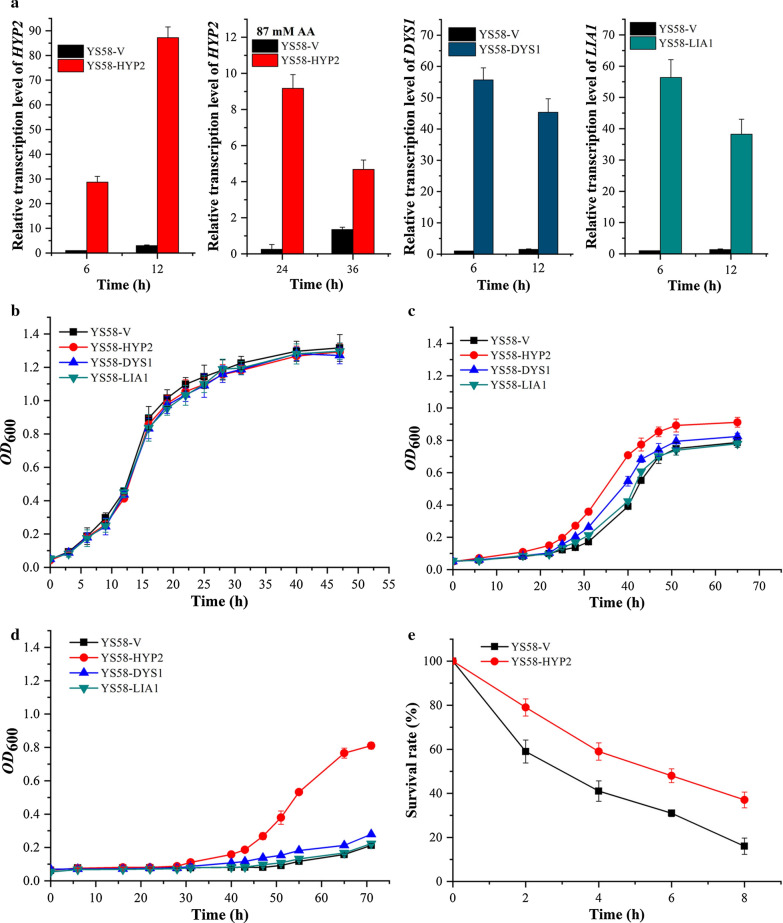
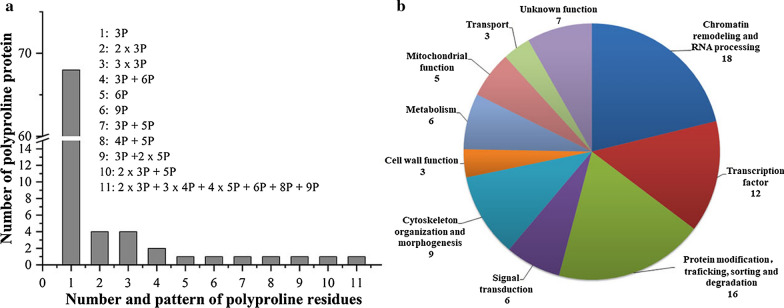
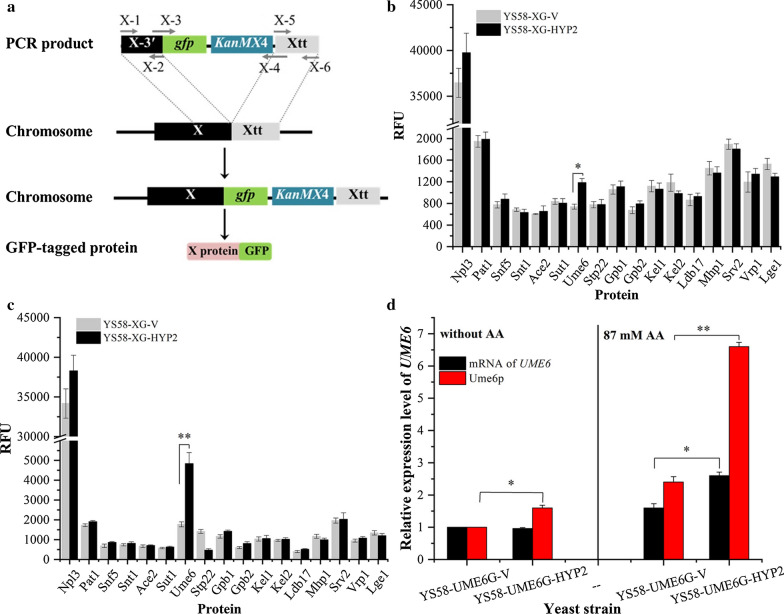
In this research, we compared cell growth between the eIF5A overexpressing and the control S. cerevisiae strains under various stressed conditions. Improvement of acetic acid tolerance by enhanced eIF5A activity was observed all in spot assay, growth profiles and survival assay. eIF5A prompts the synthesis of Ume6p, a pleiotropic transcriptional factor containing polyproline motifs, mainly in a translational related way. As a consequence, BEM4, BUD21 and IME4, the direct targets of Ume6p, were up-regulated in eIF5A overexpressing strain, especially under acetic acid stress. Overexpression of UME6 results in similar profiles of cell growth and target genes transcription to eIF5A overexpression, confirming the role of Ume6p and its association between eIF5A and acetic acid tolerance.
Translation factor eIF5A protects yeast cells against acetic acid challenge by the eIF5A-Ume6p-Bud21p/Ime4p/Bem4p axles, which provides new insights into the molecular mechanisms underlying the adaptive response and tolerance to acetic acid in S. cerevisiae and novel targets for construction of robust industrial strains.
酿酒酵母是基础研究的理想模型系统,也是生物技术应用中重要的工业微生物。乙酸是一种重要的生长抑制剂,对酵母细胞的生长和发酵性能均有有害影响。全面了解酿酒酵母对乙酸适应性反应的潜在机制一直是一个重点,也是开发健壮工业菌株不可或缺的。真核生物翻译起始因子5A(eIF5A)是一种特定的翻译因子,在某些包括脯氨酸(被视为形成缓慢肽键的不良底物)的残基之间形成肽键时尤其需要。eIF5A活性降低导致酵母出现温度敏感表型,而eIF5A的上调则保护转基因拟南芥免受高温、氧化或渗透胁迫。然而,eIF5A在应激反应中的确切作用和功能机制在很大程度上仍不清楚。
在本研究中,我们比较了在各种应激条件下eIF5A过表达的酿酒酵母菌株和对照菌株之间的细胞生长情况。在点样试验、生长曲线和存活试验中均观察到增强eIF5A活性可提高乙酸耐受性。eIF5A主要以翻译相关的方式促进Ume6p的合成,Ume6p是一种含有多聚脯氨酸基序的多效转录因子。因此,Ume6p的直接靶标BEM4、BUD21和IME4在eIF5A过表达菌株中上调,尤其是在乙酸胁迫下。UME6的过表达导致细胞生长和靶基因转录谱与eIF5A过表达相似,证实了Ume6p的作用及其与eIF5A和乙酸耐受性之间的关联。
翻译因子eIF5A通过eIF5A-Ume6p-Bud21p/Ime4p/Bem4p轴保护酵母细胞免受乙酸挑战,这为酿酒酵母对乙酸适应性反应和耐受性的分子机制提供了新见解,也为构建健壮工业菌株提供了新靶点。