Department of Medical Rehabilitation, Guangdong Women and Children Hospital, Guangzhou, China.
Key Laboratory of Regenerative Biology, Guangzhou Institutes of Biomedicine and Health, Chinese Academy of Sciences, Guangzhou, China.
Childs Nerv Syst. 2021 Jul;37(7):2197-2205. doi: 10.1007/s00381-021-05068-0. Epub 2021 Feb 9.
Cerebral palsy (CP) is the most common neuromuscular disease in children, and currently, there is no cure. Several studies have reported the benefits of umbilical cord blood (UCB) cell treatment for CP. However, these studies either examined the effects of UCB cell fraction with a short experimental period or used neonatal rat models for a long-term study which displayed an insufficient immunological reaction and clearance of human stem cells. Here, we developed a CP model by hypoxia-ischemic injury (HI) using immunodeficient mice and examined the effects of human UCB CD34 hematopoietic stem cells (HSCs) on CP therapy over a period of 8 weeks.
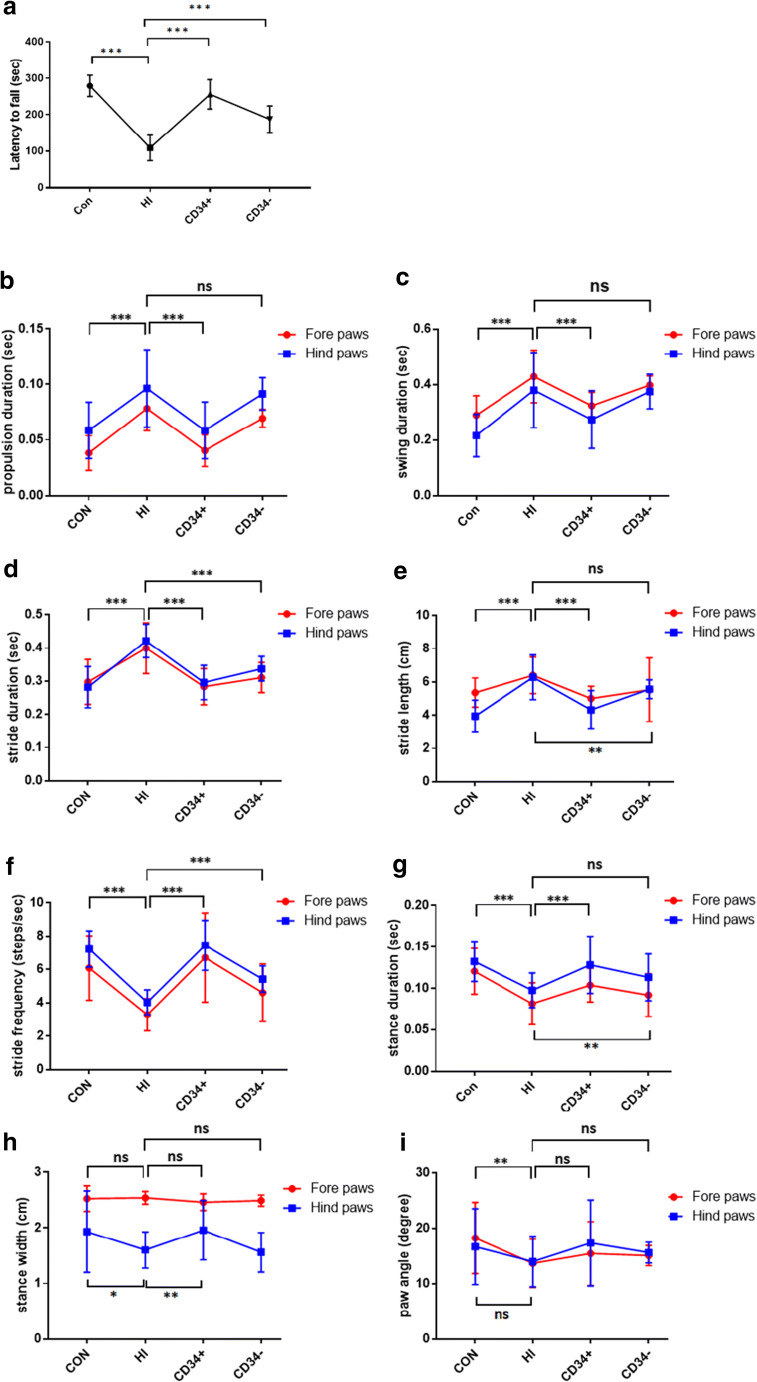
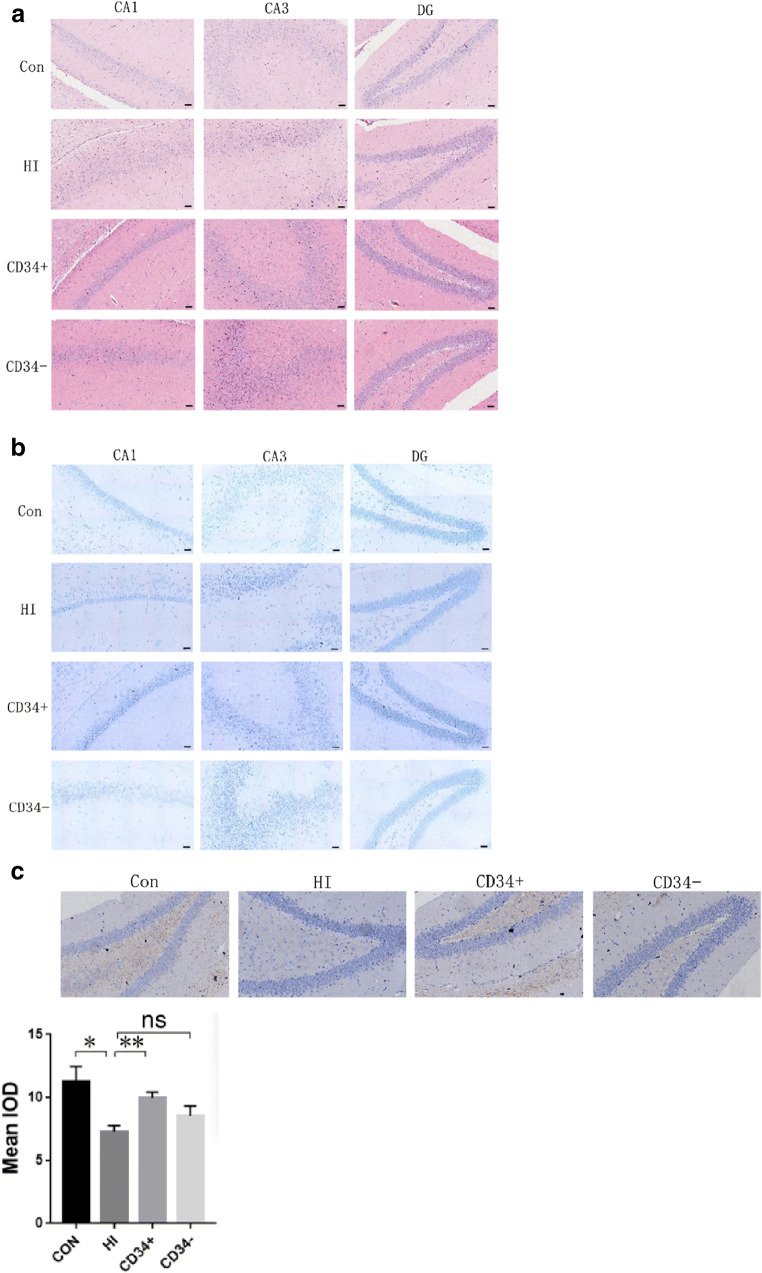
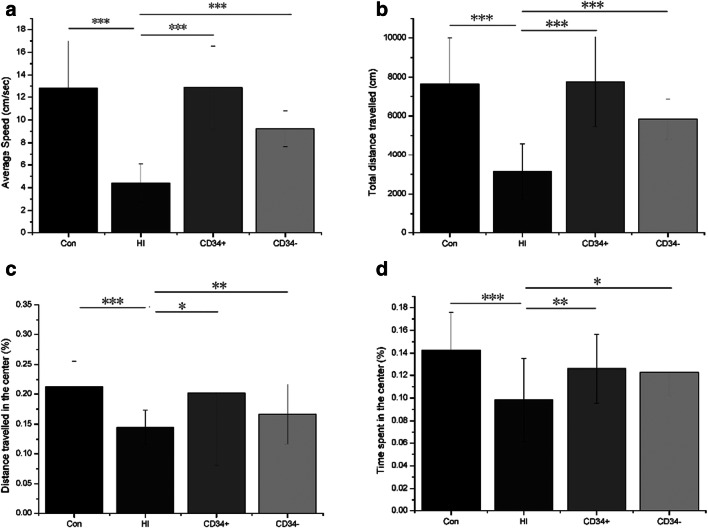
Sixty postnatal day-9 (P9) mouse pups were randomly divided into 4 groups (n = 15/group) as follows: (1) sham operation (control group), (2) HI-induced CP model, (3) CP model with CD34 HSC transplantation, and (4) CP model with CD34 cell transplantation. Eight weeks after insult, the sensorimotor performance was analyzed by rotarod treadmill, gait dynamic, and open field assays. The pathological changes in brain tissue of mice were determined by HE staining, Nissl staining, and MBP immunohistochemistry of the hippocampus in the mice.
HI brain injury in mice pups resulted in significant behavioral deficits and loss of neurons. Both CD34 HSCs and CD34 cells improved the neurobehavioral statuses and alleviated the pathological brain injury. In comparison with CD34 cells, the CD34 HSC compartments were more effective.
These findings indicate that CD34 HSC transplantation was neuroprotective in neonatal mice and could be an effective therapy for CP.
脑瘫(CP)是儿童中最常见的神经肌肉疾病,目前尚无治愈方法。有几项研究报告了脐带血(UCB)细胞治疗 CP 的益处。然而,这些研究要么检查了 UCB 细胞分数的影响,实验周期短,要么使用新生大鼠模型进行长期研究,显示出免疫反应不足和人干细胞清除。在这里,我们使用免疫缺陷小鼠通过缺氧缺血损伤(HI)建立 CP 模型,并在 8 周的时间内检查人 UCB CD34 造血干细胞(HSC)对 CP 治疗的影响。
将 60 只出生后 9 天(P9)的幼鼠随机分为 4 组(每组 n = 15):(1)假手术(对照组)、(2)HI 诱导的 CP 模型、(3)CD34 HSC 移植的 CP 模型和(4)CD34 细胞移植的 CP 模型。损伤后 8 周,通过转棒跑步机、步态动力学和旷场试验分析感觉运动性能。通过 HE 染色、Nissl 染色和海马 MBP 免疫组化测定小鼠脑组织的病理变化。
HI 脑损伤导致幼鼠行为缺陷明显,神经元丧失。CD34 HSCs 和 CD34 细胞均改善了神经行为状态并减轻了病理性脑损伤。与 CD34 细胞相比,CD34 HSC 区室更有效。
这些发现表明 CD34 HSC 移植对新生小鼠具有神经保护作用,可能是 CP 的有效治疗方法。