Substrate Metabolism Laboratory, School of Kinesiology, University of Michigan, Ann Arbor, Michigan, USA.
Faculty of Kinesiology and Physical Education, University of Toronto, Toronto, Ontario, Canada.
Exp Physiol. 2021 Apr;106(4):820-827. doi: 10.1113/EP089272. Epub 2021 Feb 17.
What is the central question of this study? Does exercise training modify tissue iron storage in adults with obesity? What is the main finding and its importance? Twelve weeks of moderate-intensity exercise or high-intensity interval training lowered whole-body iron stores, decreased the abundance of the key iron storage protein in skeletal muscle (ferritin) and tended to lower hepatic iron content. These findings show that exercise training can reduce tissue iron storage in adults with obesity and might have important implications for obese individuals with dysregulated iron homeostasis.
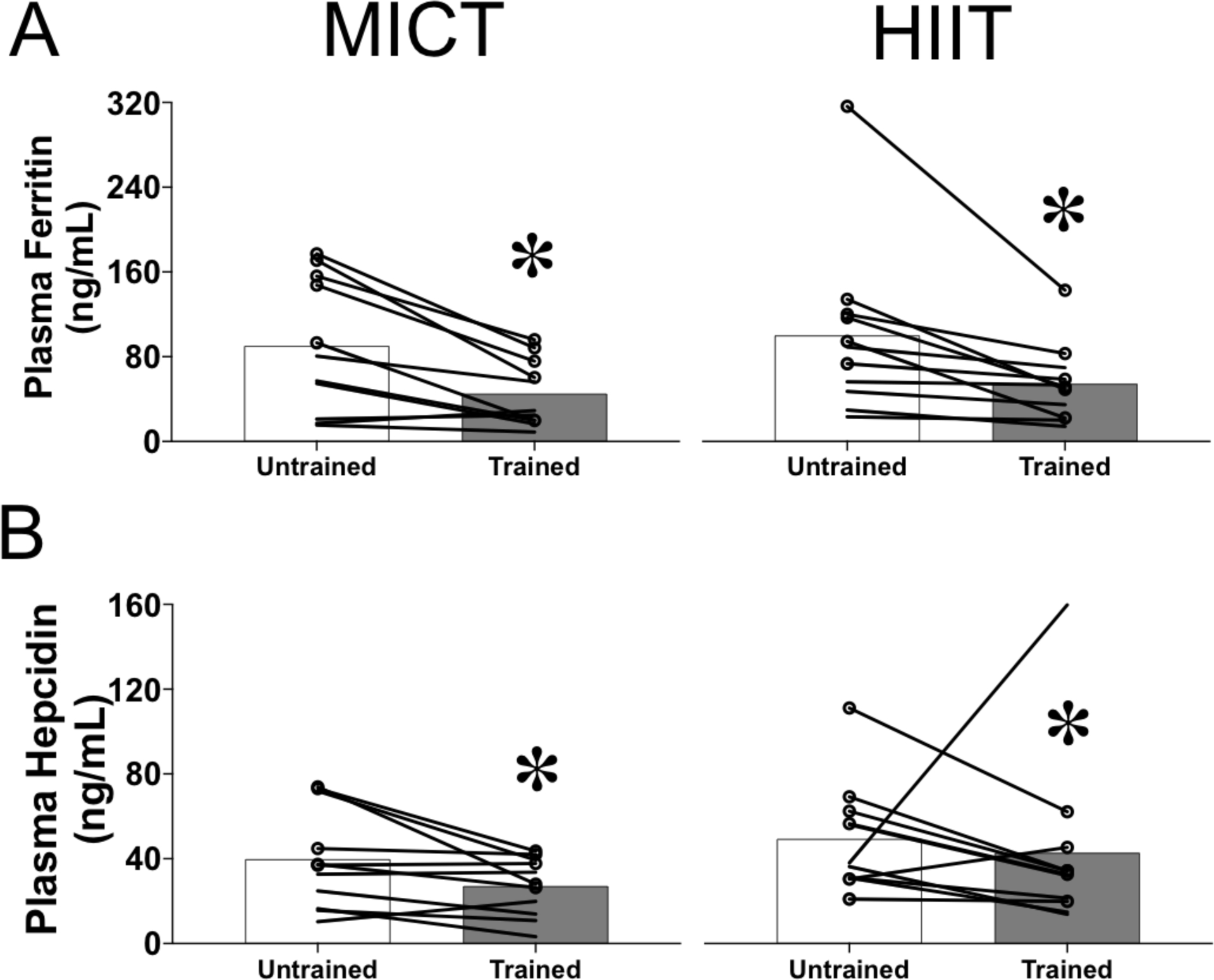
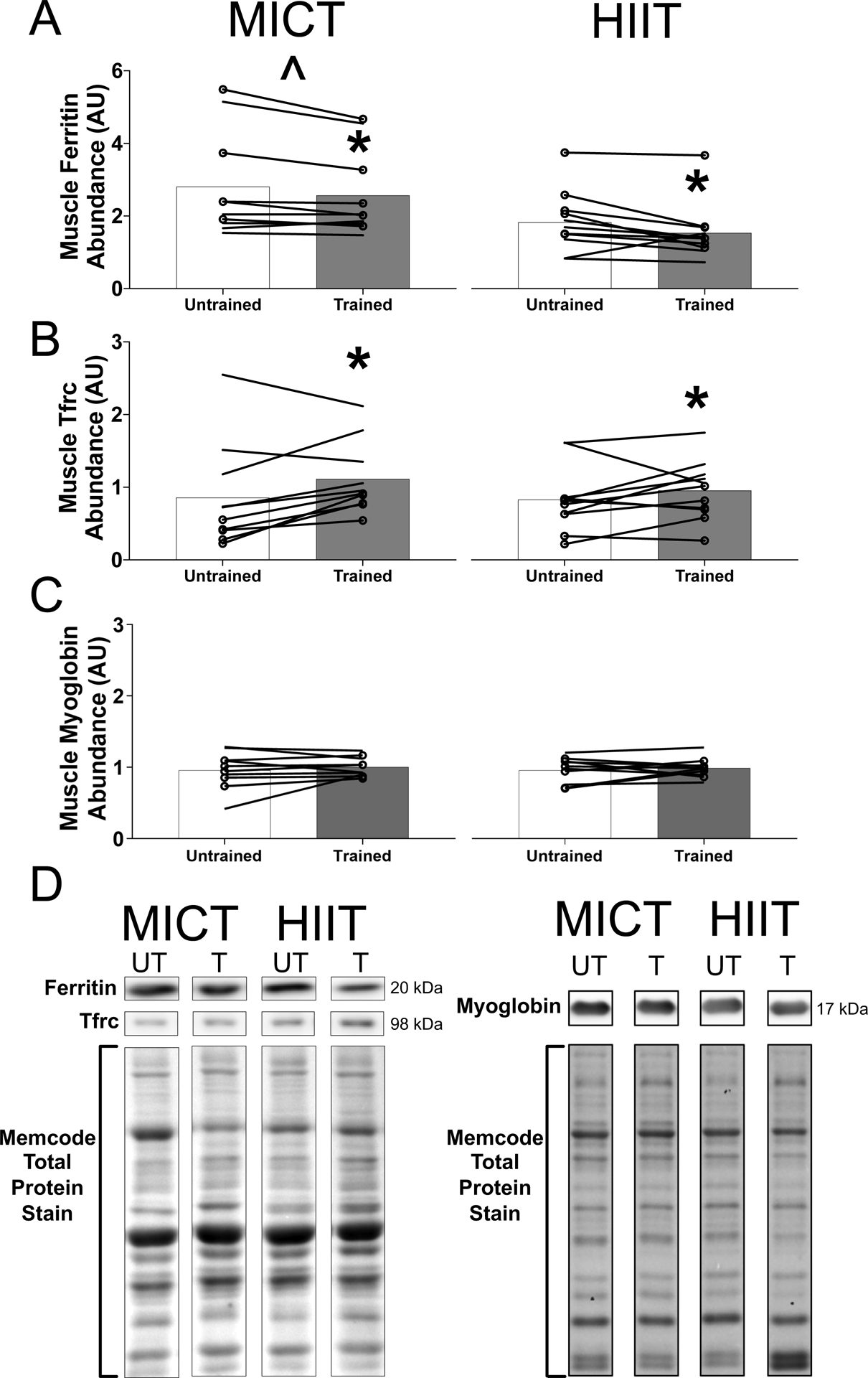
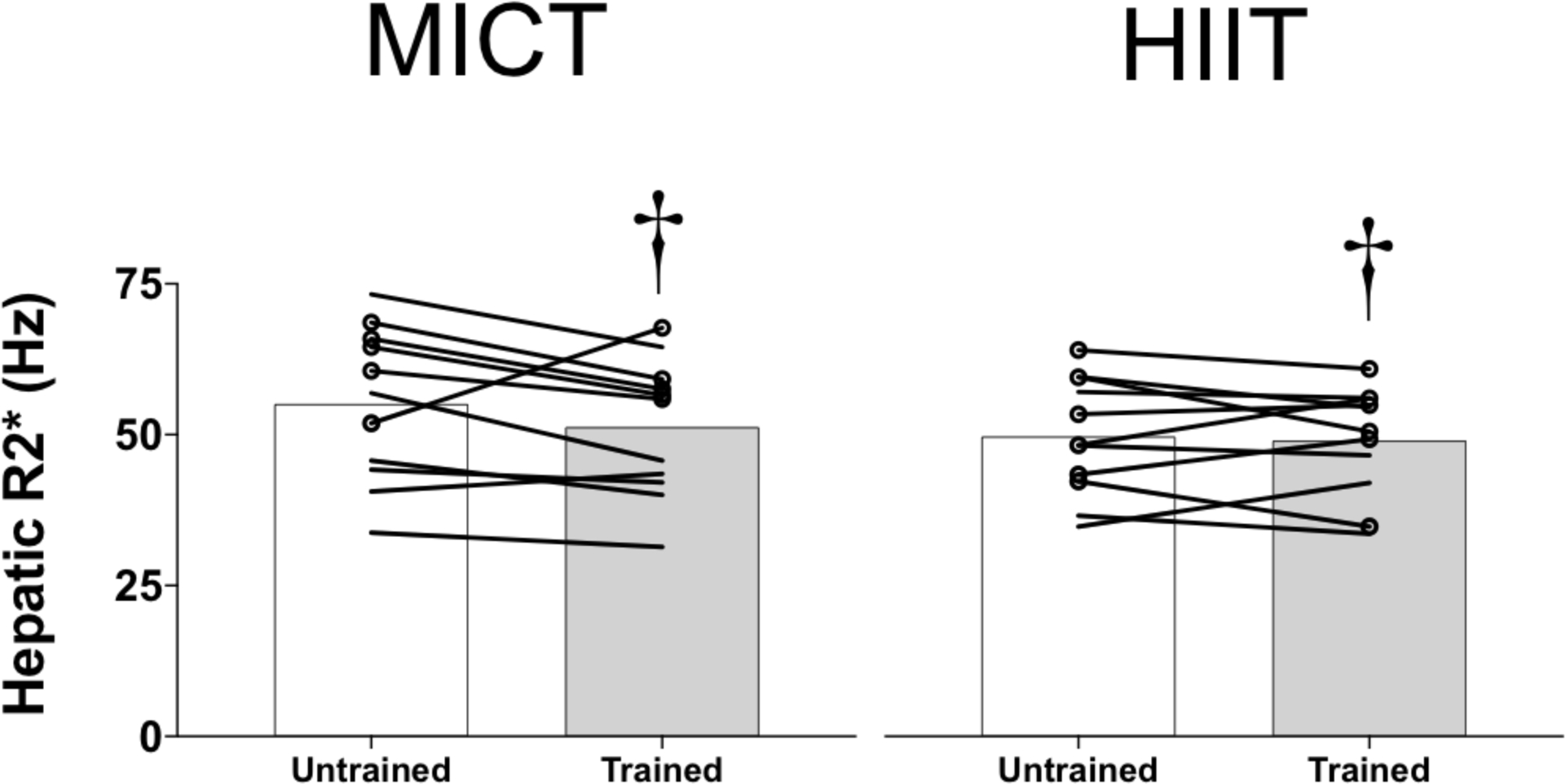
The regulation of iron storage is crucial to human health, because both excess and deficient iron storage have adverse consequences. Recent studies suggest altered iron storage in adults with obesity, with increased iron accumulation in their liver and skeletal muscle. Exercise training increases iron use for processes such as red blood cell production and can lower whole-body iron stores in humans. However, the effects of exercise training on liver and muscle iron stores in adults with obesity have not been assessed. The aim of this study was to determine the effects of 12 weeks of exercise training on whole-body iron stores, liver iron content and the abundance of ferritin (the key iron storage protein) in skeletal muscle in adults with obesity. Twenty-two inactive adults (11 women and 11 men; age, 31 ± 6 years; body mass index, 33 ± 3 kg/m ) completed 12 weeks (four sessions/week) of either moderate-intensity continuous training (MICT; 45 min at 70% of maximal heart rate; n = 11) or high-intensity interval training (HIIT; 10 × 1 min at 90% of maximal heart rate, interspersed with 1 min active recovery; n = 11). Whole-body iron stores were lower after training, as indicated by decreased plasma concentrations of ferritin (P = 3 × 10 ) and hepcidin (P = 0.02), without any change in C-reactive protein. Hepatic R2*, an index of liver iron content, was 6% lower after training (P = 0.06). Training reduced the skeletal muscle abundance of ferritin by 10% (P = 0.03), suggesting lower muscle iron storage. Interestingly, these adaptations were similar in MICT and HIIT groups. Our findings indicate that exercise training decreased iron storage in adults with obesity, which might have important implications for obese individuals with dysregulated iron homeostasis.
本研究的核心问题是什么?运动训练是否会改变肥胖成年人的组织铁储存?主要发现及其重要性是什么?12 周的中等强度运动或高强度间歇训练降低了全身铁储存,减少了骨骼肌中铁储存蛋白(铁蛋白)的丰度,并降低了肝铁含量。这些发现表明,运动训练可以减少肥胖成年人的组织铁储存,对铁代谢失调的肥胖个体可能具有重要意义。
铁储存的调节对人类健康至关重要,因为铁储存过多和过少都有不良后果。最近的研究表明,肥胖成年人的铁储存发生改变,其肝脏和骨骼肌中铁的积累增加。运动训练可增加铁在红细胞生成等过程中的利用,并可降低人体的全身铁储存。然而,运动训练对肥胖成年人的肝和肌肉铁储存的影响尚未得到评估。本研究旨在确定 12 周运动训练对肥胖成年人的全身铁储存、肝铁含量和骨骼肌中铁蛋白(关键铁储存蛋白)丰度的影响。22 名不活跃的成年人(11 名女性和 11 名男性;年龄 31±6 岁;体重指数 33±3kg/m )完成了 12 周(每周 4 次)的中等强度连续训练(MICT;70%最大心率持续 45 分钟;n=11)或高强度间歇训练(HIIT;10×1 分钟 90%最大心率,间隔 1 分钟主动恢复;n=11)。训练后全身铁储存降低,表现为铁蛋白(P=3×10)和hepcidin(P=0.02)的血浆浓度降低,而 C 反应蛋白没有变化。肝 R2*,肝铁含量的指标,训练后降低 6%(P=0.06)。训练使骨骼肌中铁蛋白丰度降低 10%(P=0.03),提示肌肉铁储存减少。有趣的是,这些适应在 MICT 和 HIIT 组中相似。我们的发现表明,运动训练降低了肥胖成年人的铁储存,这对铁代谢失调的肥胖个体可能具有重要意义。