Pačnik Klavdija, Ogrizović Mojca, Diepold Matthias, Eisenberg Tobias, Žganjar Mia, Žun Gašper, Kužnik Beti, Gostinčar Cene, Curk Tomaž, Petrovič Uroš, Natter Klaus
Institute of Molecular Biosciences, NAWI Graz, University of Graz, Graz, Austria.
Department of Molecular and Biomedical Sciences, Jožef Stefan Institute, Ljubljana, Slovenia.
BMC Genomics. 2021 Feb 9;22(1):110. doi: 10.1186/s12864-021-07417-4.
The accumulation of intracellular fat depots is a polygenic trait. Therefore, the extent of lipid storage in the individuals of a species covers a broad range and is determined by many genetic factors. Quantitative trait loci analysis can be used to identify those genetic differences between two strains of the same species that are responsible for the differences in a given phenotype. We used this method and complementary approaches to identify genes in the yeast Saccharomyces cerevisiae that are involved in neutral lipid storage.
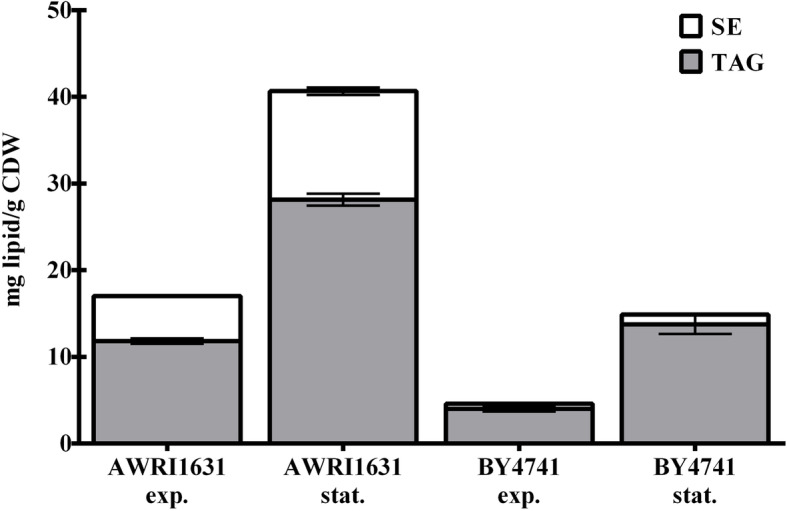
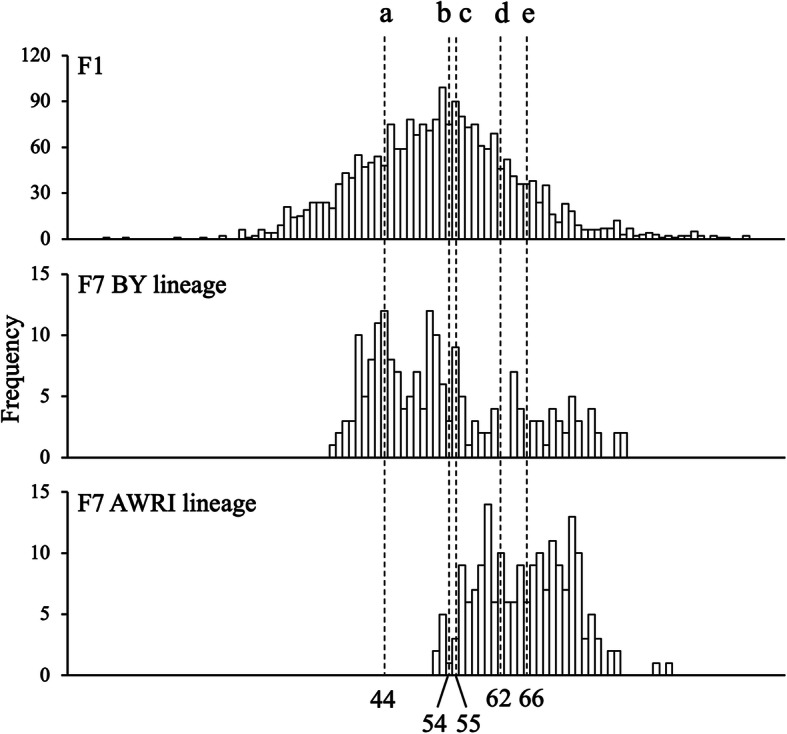
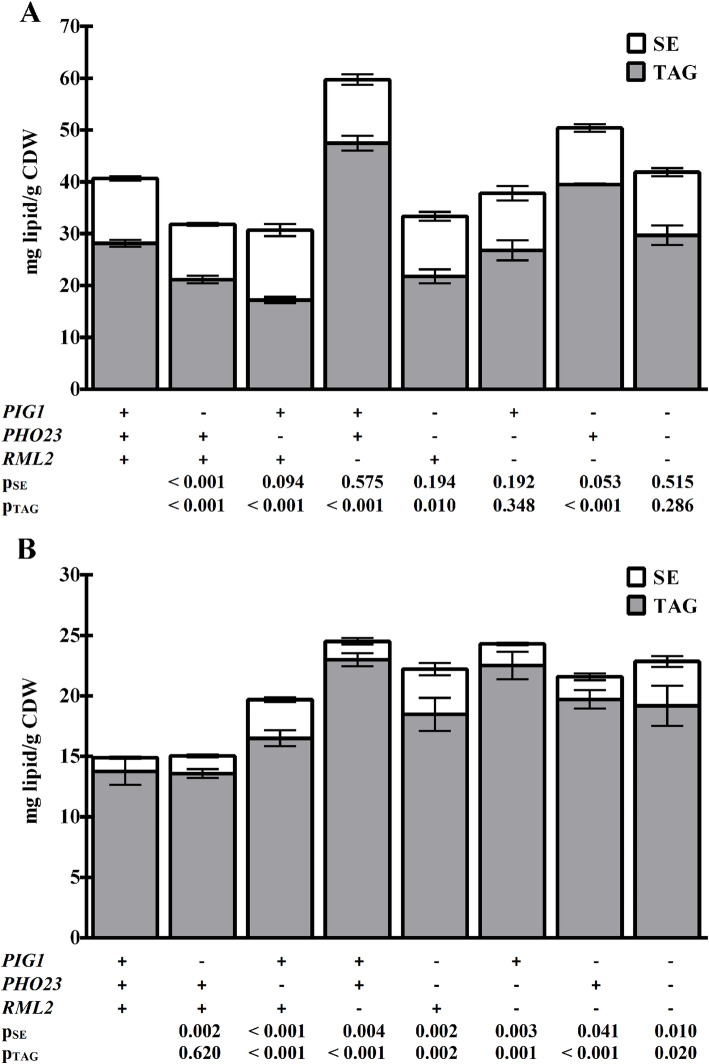
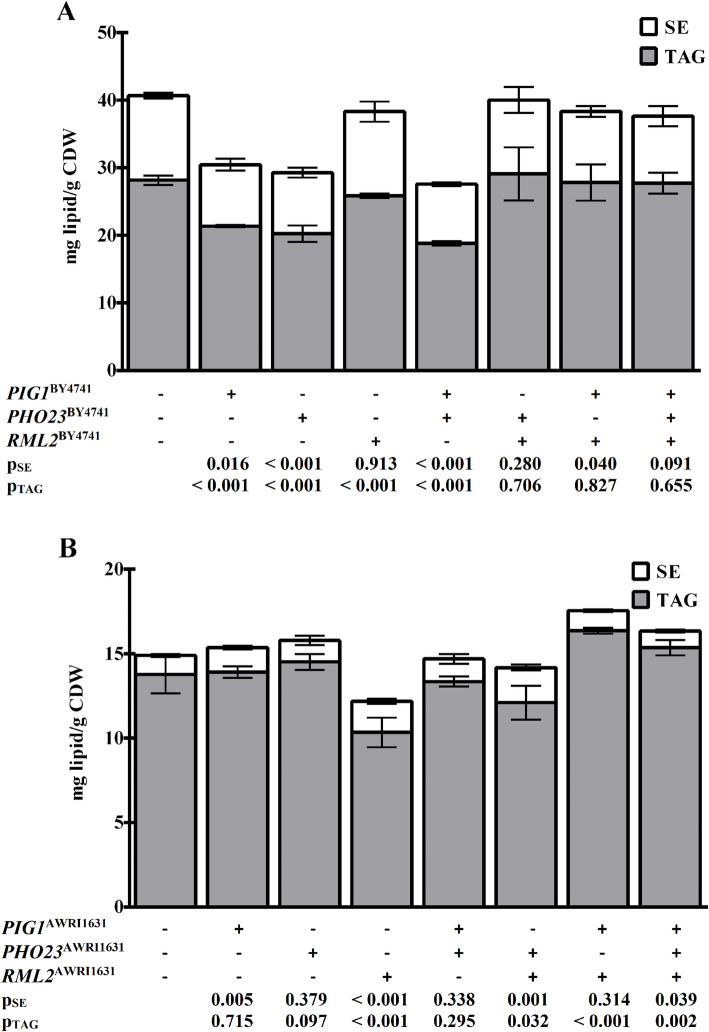
We selected two yeast strains, the laboratory strain BY4741 and the wine yeast AWRI1631, with a more than two-fold difference in neutral lipid content. After crossing, sporulation and germination, we used fluorescence activated cell sorting to isolate a subpopulation of cells with the highest neutral lipid content from the pool of segregants. Whole genome sequencing of this subpopulation and of the unsorted pool of segregants implicated several loci that are involved in lipid accumulation. Three of the identified genes, PIG1, PHO23 and RML2, were investigated in more detail. Deletions of these genes and the exchange of the alleles between the two parental strains confirmed that the encoded proteins contribute to neutral lipid storage in S. cerevisiae and that PIG1, PHO23 and RML2 are the major causative genes. Backcrossing of one of the segregants with the parental strains for seven generations revealed additional regions in the genomes of both strains with potential causative genes for the high lipid accumulation phenotype.
We identified several genes that contribute to the phenotype of lipid accumulation in an allele-specific manner. Surprisingly, no allelic variations of genes with known functions in lipid metabolism were found, indicating that the level of storage lipid accumulation is determined by many cellular processes that are not directly related to lipid metabolism.
细胞内脂肪储存库的积累是一种多基因性状。因此,一个物种个体中的脂质储存程度涵盖范围很广,并且由许多遗传因素决定。数量性状基因座分析可用于识别同一物种的两个品系之间导致给定表型差异的那些遗传差异。我们使用这种方法及补充方法来鉴定酿酒酵母中参与中性脂质储存的基因。
我们选择了两个酵母菌株,实验室菌株BY4741和葡萄酒酵母AWRI1631,它们的中性脂质含量相差两倍多。杂交、孢子形成和萌发后,我们使用荧光激活细胞分选技术从分离群体中分离出中性脂质含量最高的细胞亚群。对该亚群和未分选的分离群体进行全基因组测序,发现了几个与脂质积累有关的基因座。对其中三个已鉴定的基因PIG1、PHO23和RML2进行了更详细的研究。这些基因的缺失以及两个亲本菌株之间等位基因的交换证实,编码的蛋白质有助于酿酒酵母中的中性脂质储存,并且PIG1、PHO23和RML2是主要的致病基因。将其中一个分离株与亲本菌株回交七代,揭示了两个菌株基因组中其他具有导致高脂质积累表型潜在致病基因的区域。
我们鉴定了几个以等位基因特异性方式促成脂质积累表型的基因。令人惊讶的是,未发现脂质代谢中已知功能基因的等位基因变异,这表明储存脂质积累水平由许多与脂质代谢不直接相关的细胞过程决定。