Godoy Marcos G, Kibenge Molly J T, Kibenge Frederick S B
Centro de Investigaciones Biológicas Aplicadas (CIBA), Lago Panguipulli 1390, Puerto Montt, Chile.
Laboratorio de Biotecnología Aplicada, Facultad de Medicina Veterinaria, Sede De La Patagonia, Lago Panguipulli 1390, Puerto Montt, 5480000, Chile.
Aquaculture. 2021 Apr 15;536:736460. doi: 10.1016/j.aquaculture.2021.736460. Epub 2021 Feb 4.
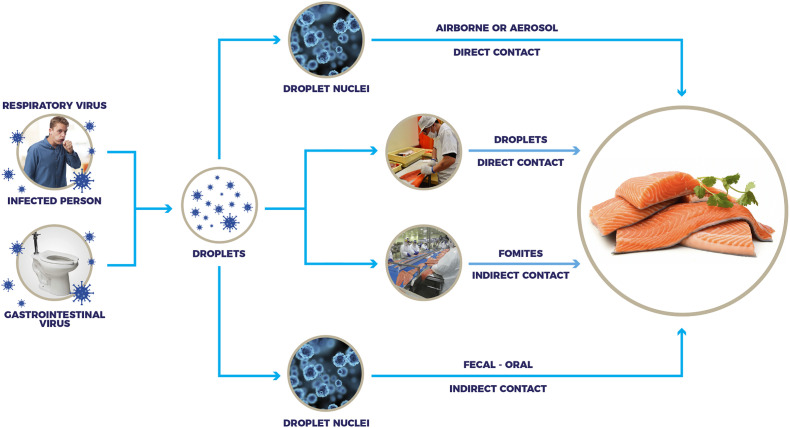
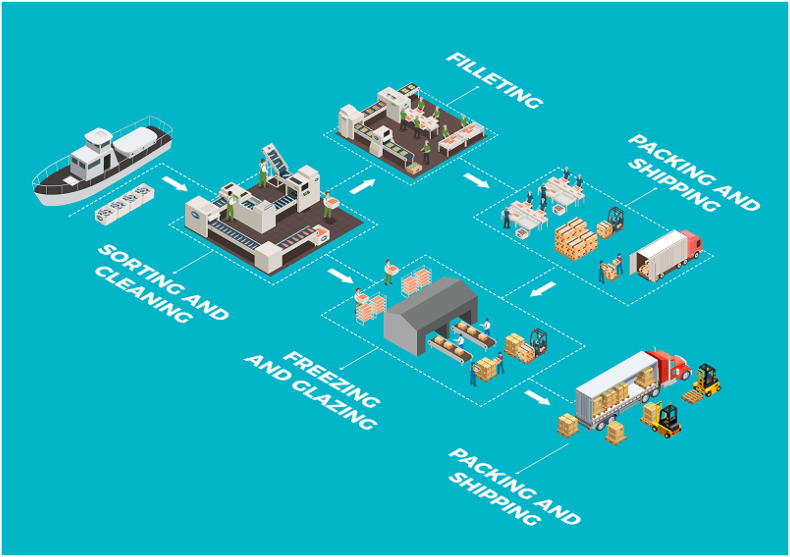
Outbreaks of COVID-19 (coronavirus disease 2019) have been reported in workers in fish farms and fish processing plants arising from person-to-person transmission, raising concerns about aquatic animal food products' safety. A better understanding of such incidents is important for the aquaculture industry's sustainability, particularly with the global trade in fresh and frozen aquatic animal food products where contaminating virus could survive for some time. Despite a plethora of COVID-19-related scientific publications, there is a lack of reports on the risk of contact with aquatic food animal species or their products. This review aimed to examine the potential for Severe Acute Respiratory Syndrome-Coronavirus-2 (SARS-CoV-2) contamination and the potential transmission via aquatic food animals or their products and wastewater effluents. The extracellular viability of SARS-CoV-2 and how the virus is spread are reviewed, supporting the understanding that contaminated cold-chain food sources may introduce SAR-CoV-2 via food imports although the virus is unlikely to infect humans through consumption of aquatic food animals or their products or drinking water; i.e., SARS-CoV-2 is not a foodborne virus and should not be managed as such but instead through strong, multifaceted public health interventions including physical distancing, rapid contact tracing, and testing, enhanced hand and respiratory hygiene, frequent disinfection of high-touch surfaces, isolation of infected workers and their contacts, as well as enhanced screening protocols for international seafood trade.
据报道,新冠病毒病(COVID-19)在养鱼场和鱼类加工厂的工人中出现了人际传播疫情,这引发了人们对水生动物食品安全性的担忧。更好地了解此类事件对于水产养殖业的可持续发展至关重要,特别是在新鲜和冷冻水生动物食品全球贸易的背景下,因为污染病毒可能会在其中存活一段时间。尽管有大量与COVID-19相关的科学出版物,但缺乏关于接触水生食用动物物种或其产品风险的报告。本综述旨在研究严重急性呼吸综合征冠状病毒2(SARS-CoV-2)污染的可能性以及通过水生食用动物或其产品及废水排放物的潜在传播情况。对SARS-CoV-2的细胞外生存能力以及病毒的传播方式进行了综述,支持了这样一种认识,即受污染的冷链食品来源可能通过食品进口引入SARS-CoV-2,尽管该病毒不太可能通过食用水生食用动物或其产品或饮用水感染人类;也就是说,SARS-CoV-2不是食源性病毒,不应如此管理,而应通过强有力的多方面公共卫生干预措施进行管理,包括保持社交距离、快速接触者追踪和检测、加强手部和呼吸道卫生、频繁对高频接触表面进行消毒、隔离感染工人及其接触者,以及加强国际海鲜贸易的筛查方案。