Chen Chao, Yu Xuecong, Belkacem Abdelkader Nasreddine, Lu Lin, Li Penghai, Zhang Zufeng, Wang Xiaotian, Tan Wenjun, Gao Qiang, Shin Duk, Wang Changming, Sha Sha, Zhao Xixi, Ming Dong
Key Laboratory of Complex System Control Theory and Application, Tianjin University of Technology, Tianjin, 300384 China.
Academy of Medical Engineering and Translational Medicine, Tianjin University, Tianjin, 300072 China.
J Med Biol Eng. 2021;41(2):155-164. doi: 10.1007/s40846-020-00596-7. Epub 2021 Feb 5.
Anxiety disorder is one of the psychiatric disorders that involves extreme fear or worry, which can change the balance of chemicals in the brain. To the best of our knowledge, the evaluation of anxiety state is still based on some subjective questionnaires and there is no objective standard assessment yet. Unlike other methods, our approach focuses on study the neural changes to identify and classify the anxiety state using electroencephalography (EEG) signals.
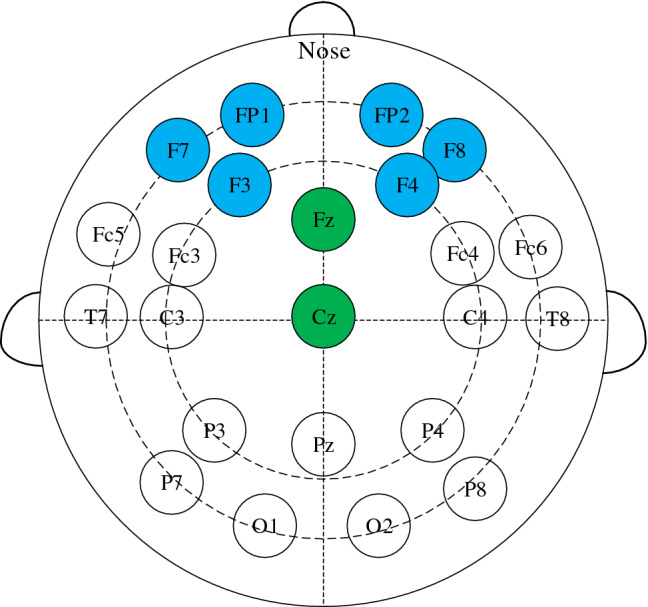
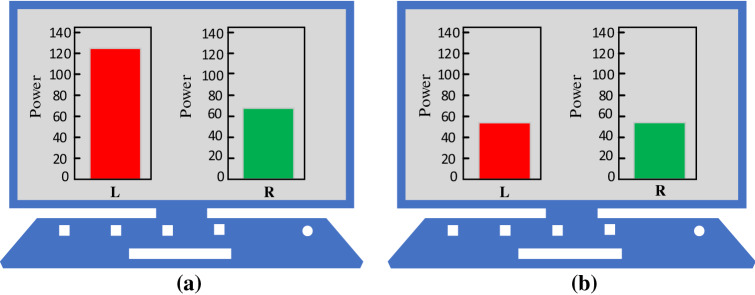
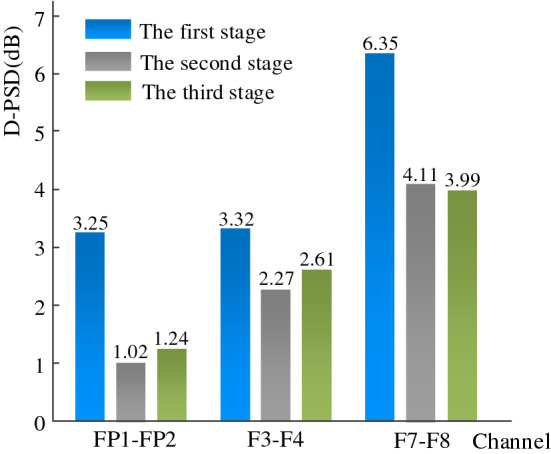
We designed a closed neurofeedback experiment that contains three experimental stages to adjust subjects' mental state. The EEG resting state signal was recorded from thirty-four subjects in the first and third stages while EEG-based mindfulness recording was recorded in the second stage. At the end of each stage, the subjects were asked to fill a Visual Analogue Scale (VAS). According to their VAS score, the subjects were classified into three groups: non-anxiety, moderate or severe anxiety groups.
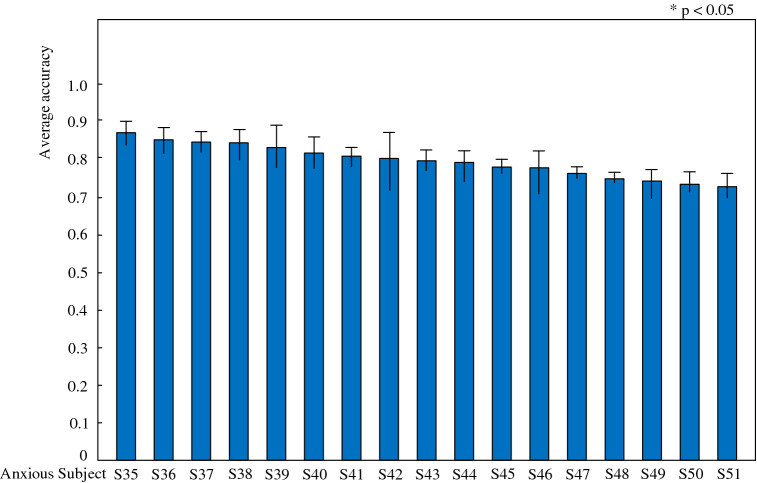
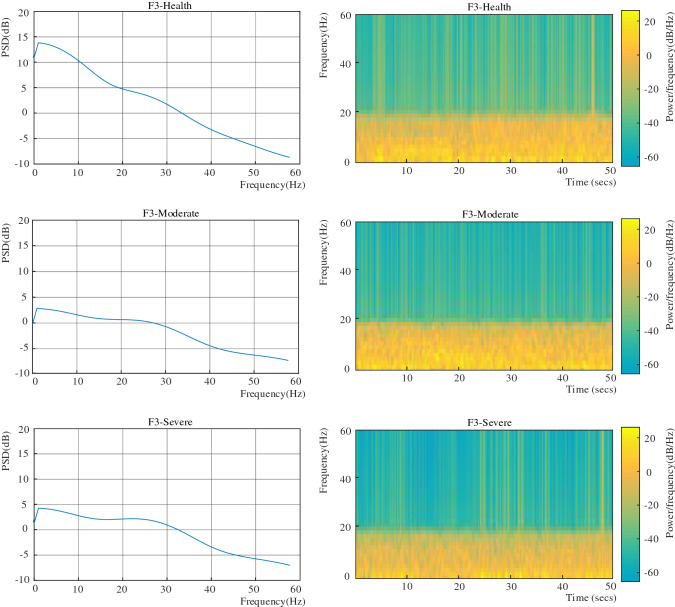
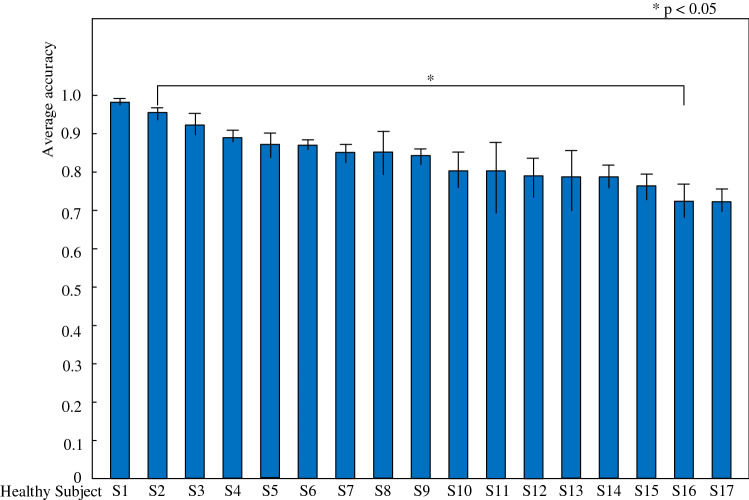
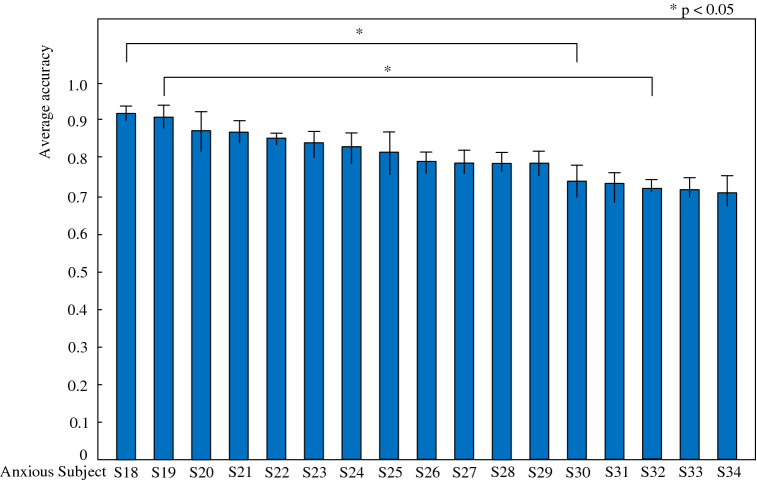
After processing the EEG data of each group, support vector machine (SVM) classifiers were able to classify and identify two mental states (non-anxiety and anxiety) using the Power Spectral Density (PSD) as patterns. The highest classification accuracies using Gaussian kernel function and polynomial kernel function are 92.48 ± 1.20% and 88.60 ± 1.32%, respectively. The highest average of the classification accuracies for healthy subjects is 95.31 ± 1.97% and for anxiety subjects is 87.18 ± 3.51%.
The results suggest that our proposed EEG neurofeedback-based classification approach is efficient for developing affective BCI system for detection and evaluation of anxiety disorder states.
焦虑症是一种涉及极度恐惧或担忧的精神疾病,它会改变大脑中的化学物质平衡。据我们所知,焦虑状态的评估仍基于一些主观问卷,尚无客观的标准评估方法。与其他方法不同,我们的方法侧重于研究神经变化,以使用脑电图(EEG)信号识别和分类焦虑状态。
我们设计了一个封闭的神经反馈实验,该实验包含三个实验阶段以调节受试者的心理状态。在第一阶段和第三阶段记录了34名受试者的脑电图静息状态信号,而在第二阶段记录了基于脑电图的正念记录。在每个阶段结束时,要求受试者填写视觉模拟量表(VAS)。根据他们的VAS分数,将受试者分为三组:非焦虑组、中度或重度焦虑组。
在处理了每组的脑电图数据后,支持向量机(SVM)分类器能够使用功率谱密度(PSD)作为模式来分类和识别两种心理状态(非焦虑和焦虑)。使用高斯核函数和多项式核函数的最高分类准确率分别为92.48±1.20%和88.60±1.32%。健康受试者的最高分类准确率平均值为95.31±1.97%,焦虑受试者的最高分类准确率平均值为87.18±3.51%。
结果表明,我们提出的基于脑电图神经反馈的分类方法对于开发用于检测和评估焦虑症状态的情感脑机接口系统是有效的。