Section of Cell and Developmental Biology, Division of Biological Sciences, University of California, San Diego, La Jolla, CA 92093.
Department of Medicine, University of California, San Diego, La Jolla, CA 92093.
Mol Biol Cell. 2021 Apr 1;32(7):521-537. doi: 10.1091/mbc.E20-11-0720. Epub 2021 Feb 10.
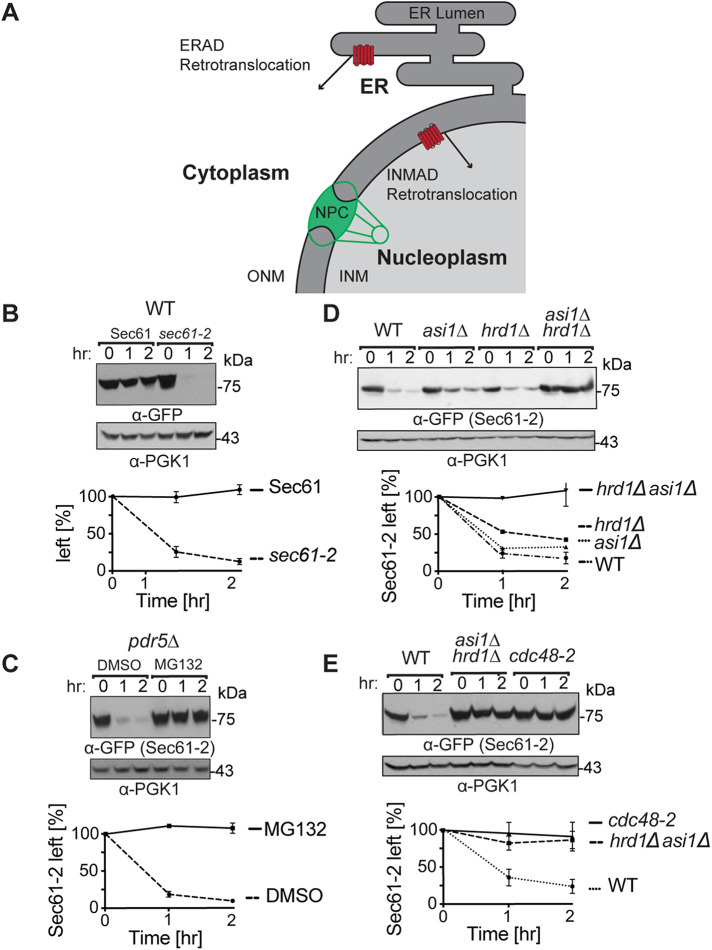
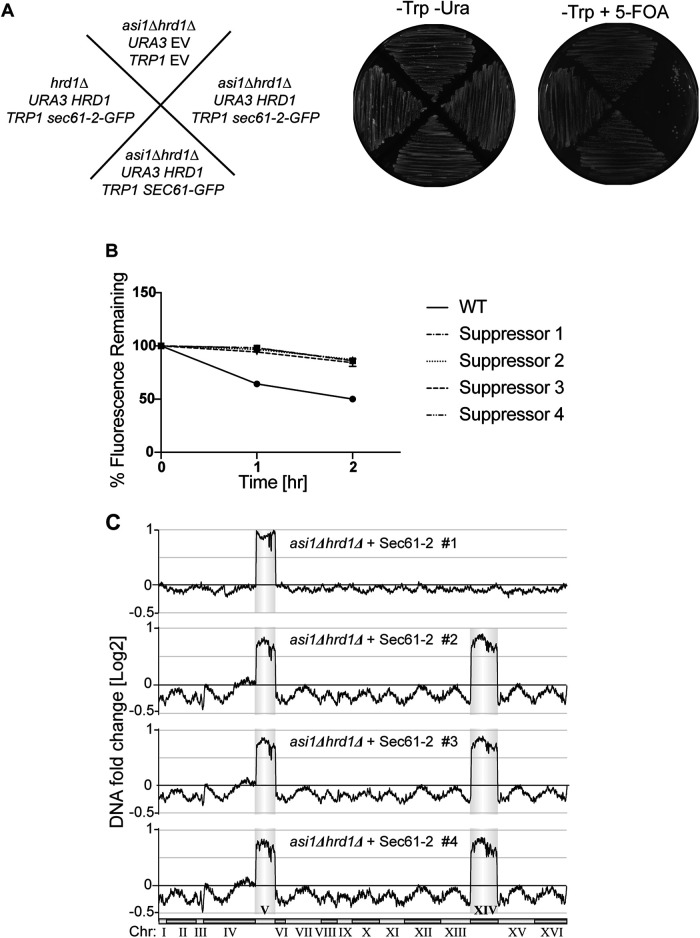
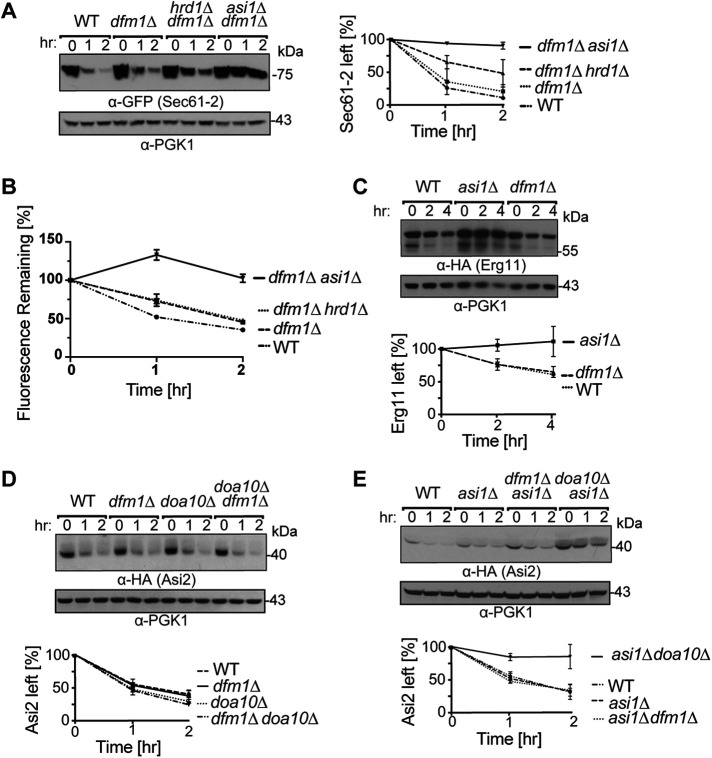
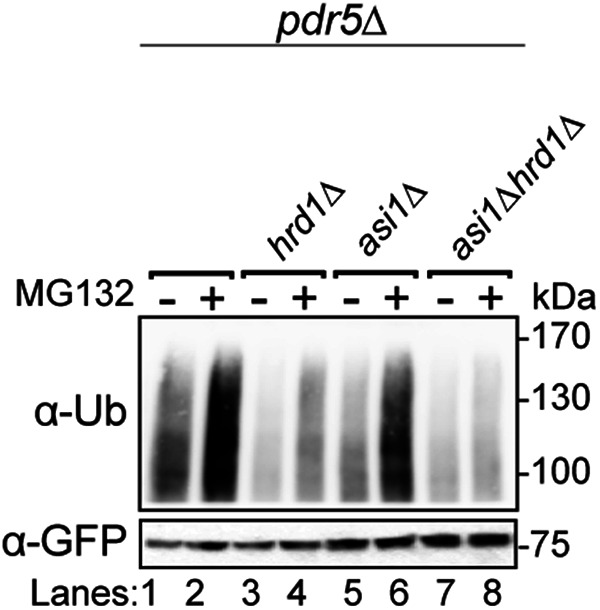
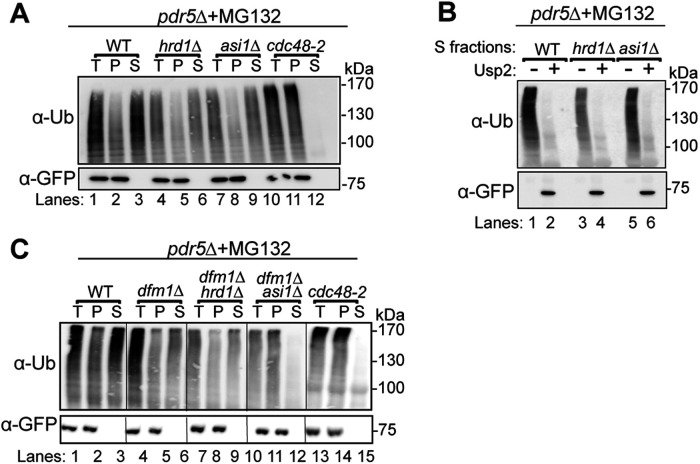
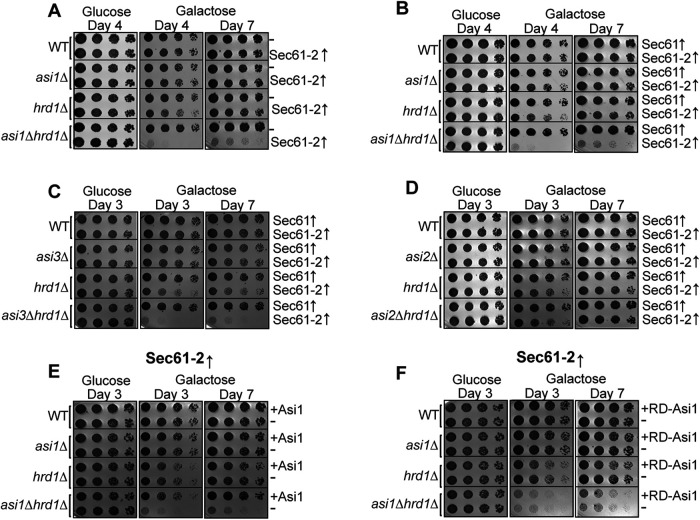
Before their delivery to and degradation by the 26S proteasome, misfolded transmembrane proteins of the endoplasmic reticulum (ER) and inner-nuclear membrane (INM) must be extracted from lipid bilayers. This extraction process, known as retrotranslocation, requires both quality-control E3 ubiquitin ligases and dislocation factors that diminish the energetic cost of dislodging the transmembrane segments of a protein. Recently, we showed that retrotranslocation of all ER transmembrane proteins requires the Dfm1 rhomboid pseudoprotease. However, we did not investigate whether Dfm1 also mediated retrotranslocation of transmembrane substrates in the INM, which is contiguous with the ER but functionally separated from it by nucleoporins. Here, we show that canonical retrotranslocation occurs during INM-associated degradation (INMAD) but proceeds independently of Dfm1. Despite this independence, ER-associated degradation (ERAD)-M and INMAD cooperate to mitigate proteotoxicity. We show a novel misfolded-transmembrane-protein toxicity that elicits genetic suppression, demonstrating the cell's ability to tolerate a toxic burden of misfolded transmembrane proteins without functional INMAD or ERAD-M. This strikingly contrasted the suppression of the null, which leads to the resumption of ERAD-M through HRD-complex remodeling. Thus, we conclude that INM retrotranslocation proceeds through a novel, private channel that can be studied by virtue of its role in alleviating membrane-associated proteotoxicity.
在被 26S 蛋白酶体输送和降解之前,内质网 (ER) 和核内膜 (INM) 中的错误折叠跨膜蛋白必须从脂质双层中提取出来。这个提取过程被称为逆向转运,需要质量控制 E3 泛素连接酶和易位因子,以降低将蛋白质的跨膜片段逐出的能量成本。最近,我们表明,所有 ER 跨膜蛋白的逆向转运都需要 Dfm1 菱形假蛋白酶。然而,我们没有研究 Dfm1 是否也介导了 INM 中跨膜底物的逆向转运,INM 与 ER 连续,但通过核孔蛋白在功能上与之分离。在这里,我们表明,规范的逆向转运发生在 INM 相关降解(INMAD)期间,但不依赖于 Dfm1。尽管这种独立性,ER 相关降解 (ERAD-M) 和 INMAD 合作以减轻蛋白毒性。我们展示了一种新的错误折叠跨膜蛋白毒性,它引发遗传抑制,证明了细胞在没有功能性 INMAD 或 ERAD-M 的情况下能够耐受错误折叠跨膜蛋白的毒性负担。这与 null 的抑制形成鲜明对比,后者通过 HRD 复合物重塑导致 ERAD-M 的恢复。因此,我们得出结论,INM 逆向转运通过一种新的、私有的通道进行,由于其在缓解膜相关蛋白毒性方面的作用,可以对其进行研究。