Department of Parasitology, U.S. Naval Medical Research Unit 6, Lima, Peru.
Department of Entomology, U.S. Naval Medical Research Unit 6, Lima, Peru.
PLoS Negl Trop Dis. 2021 Feb 10;15(2):e0009000. doi: 10.1371/journal.pntd.0009000. eCollection 2021 Feb.
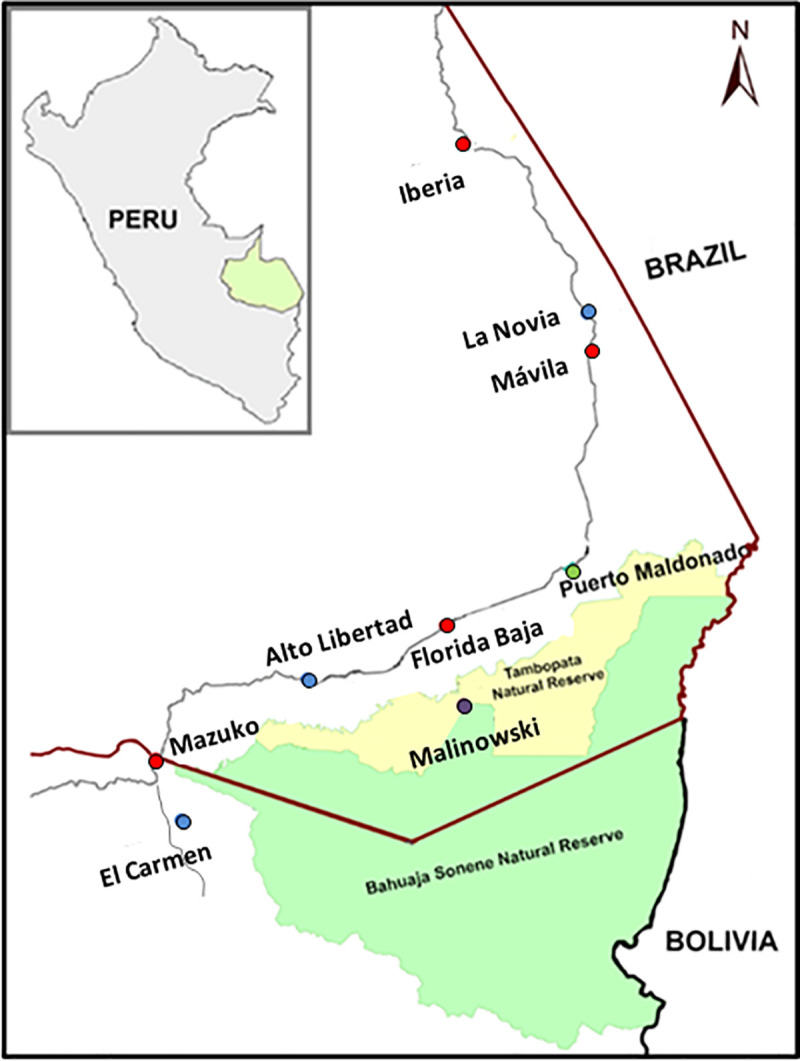
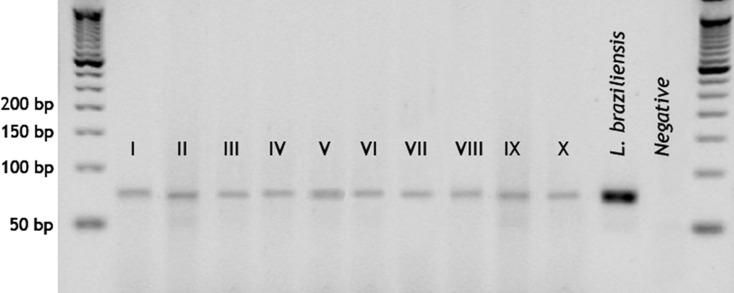
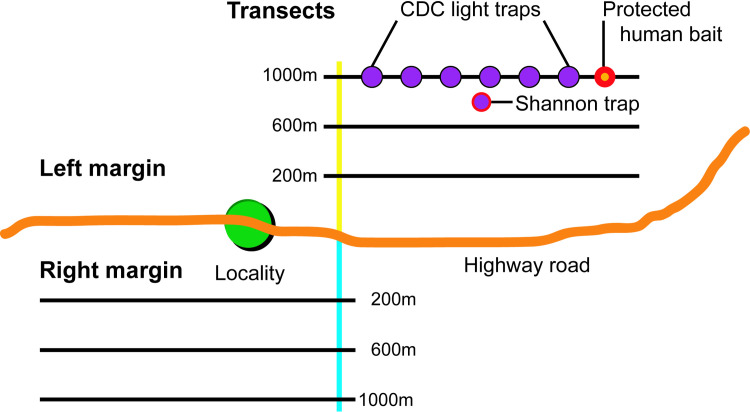
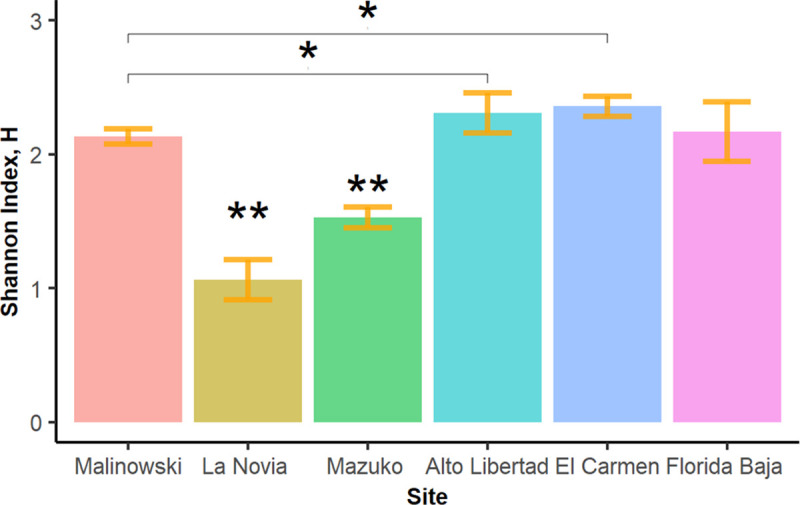
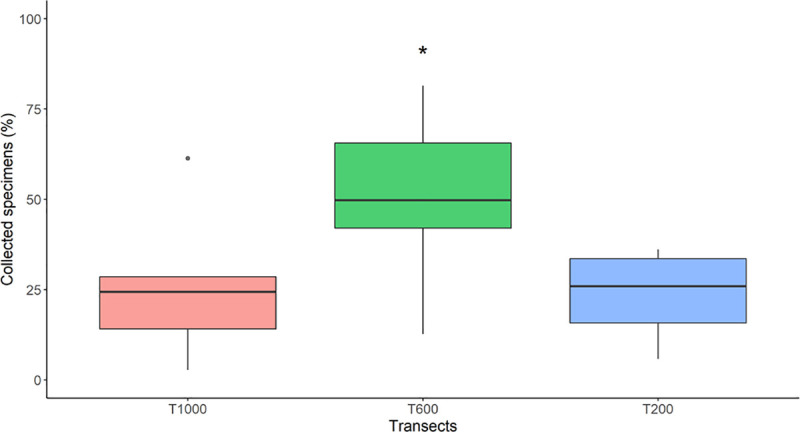
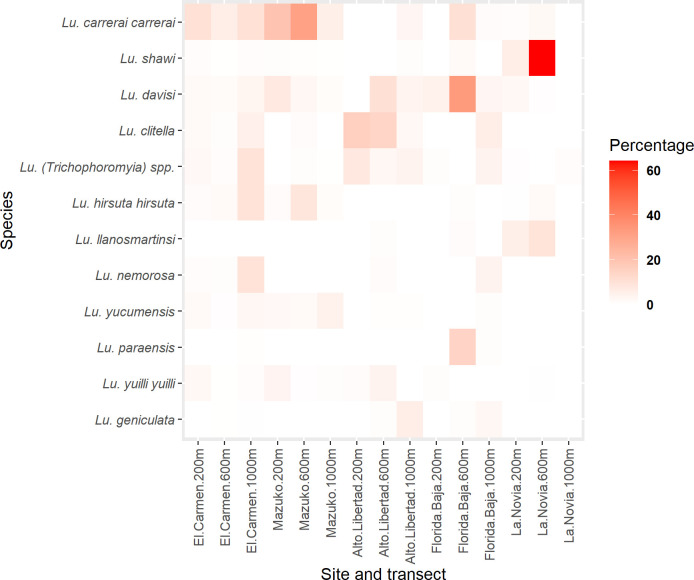
The Peruvian-Brazilian border is a highly endemic tegumentary leishmaniasis region in South America. The interoceanic highway is a commercial route that connects Peru and Brazil through Madre de Dios and has raised concerns about its impact on previously undisturbed areas. In order to assess leishmaniasis transmission risk along this highway, we conducted a surveillance study of the sand fly populations in this area. Sand flies were collected between 2009 and 2010 along transects at 200 m, 600 m and 1000 m from six study sites located along the highway (Iberia, La Novia, Alto Libertad, El Carmen, Florida Baja, Mazuko and Mavila) and an undisturbed area (Malinowski). Collected specimens were identified based on morphology and non-engorged females of each species were pooled and screened by kinetoplast PCR to detect natural Leishmania infections. A total of 9,023 specimens were collected belonging to 54 different Lutzomyia species including the first report of Lu. gantieri in Peru. Four species accounted for 50% of all specimens (Lutzomyia carrerai carrerai, Lu. davisi, Lu. shawi and Lu. richardwardi). El Carmen, Alto Libertad, Florida Baja and Malinowski presented higher Shannon diversity indexes (H = 2.36, 2.30, 2.17 and 2.13, respectively) than the most human disturbed sites of Mazuko and La Novia (H = 1.53 and 1.06, respectively). PCR detected 10 positive pools belonging to Lu. carrerai carrerai, Lu. yuilli yuilli, Lu. hirsuta hirsuta, Lu. (Trichophoromyia) spp., and Lu. (Lutzomyia) spp. Positive pools from 1,000 m transects had higher infectivity rates than those from 600 m and 200 m transects (9/169 = 5.3% vs 0/79 = 0% and 1/127 = 0.8%, p = 0.018). El Carmen, accounted for eight out of ten positives whereas one positive was collected in Florida Baja and Mazuko each. Our study has shown differences in sand fly diversity, abundance and species composition across and within sites. Multiple clustered Lutzomyia pools with natural Leishmania infection suggest a complex, diverse and spotty role in leishmaniasis transmission in Madre de Dios, with increased risk farther from the highway.
秘鲁-巴西边境是南美洲一个高度流行皮肤利什曼病的地区。跨洋公路是一条连接秘鲁和巴西的商业路线,穿过马德雷德迪奥斯地区,人们对其对先前未受干扰地区的影响感到担忧。为了评估这条公路沿线的利什曼病传播风险,我们对该地区的沙蝇种群进行了监测研究。2009 年至 2010 年,我们在距离公路上的六个研究点(伊比利亚、拉诺维亚、上自由、埃尔卡门、下佛罗里达、马祖科和马维拉)和一个未受干扰的地区(马利诺夫斯基)的 200 米、600 米和 1000 米的横截线上收集了沙蝇。根据形态学收集的标本进行了鉴定,并且对每个物种的非饱血雌性进行了分组,并通过动基体 PCR 进行筛查,以检测天然利什曼原虫感染。共收集了 9023 个标本,属于 54 种不同的路氏锥虫,包括在秘鲁首次报告的路氏锥虫 gantieri。四种物种占所有标本的 50%(路氏锥虫 carrerai carrerai、Lu. davisi、Lu. shawi 和 Lu. richardwardi)。埃尔卡门、上自由、下佛罗里达和马利诺夫斯基的香农多样性指数(H = 2.36、2.30、2.17 和 2.13)高于受人类干扰最大的马祖科和拉诺维亚地区(H = 1.53 和 1.06)。PCR 检测到 10 个阳性池,分别属于路氏锥虫 carrerai carrerai、Lu. yuilli yuilli、Lu. hirsuta hirsuta、Lu.( Trichophoromyia) spp. 和 Lu.( Lutzomyia) spp. 1000 米横截线上的阳性池的感染率高于 600 米和 200 米横截线上的阳性池(9/169 = 5.3%比 0/79 = 0%和 1/127 = 0.8%,p = 0.018)。埃尔卡门有 8 个阳性池,而佛罗里达 Baja 和马祖科各有 1 个阳性池。我们的研究表明,在横截面上和各站点之间,沙蝇的多样性、丰度和物种组成存在差异。多个聚类的路氏锥虫阳性池具有天然利什曼原虫感染,表明在马德雷德迪奥斯地区的利什曼病传播中存在复杂、多样和分散的作用,并且离公路越远,风险就越高。