Department of Biological, Geological and Environmental Sciences, University of Bologna, Via Selmi 3, 40126 Bologna, Italy.
Department of Pharmacy and Biotechnology (FaBiT), University of Bologna, Via San Giacomo 14, 40126 Bologna, Italy.
Molecules. 2021 Feb 8;26(4):885. doi: 10.3390/molecules26040885.
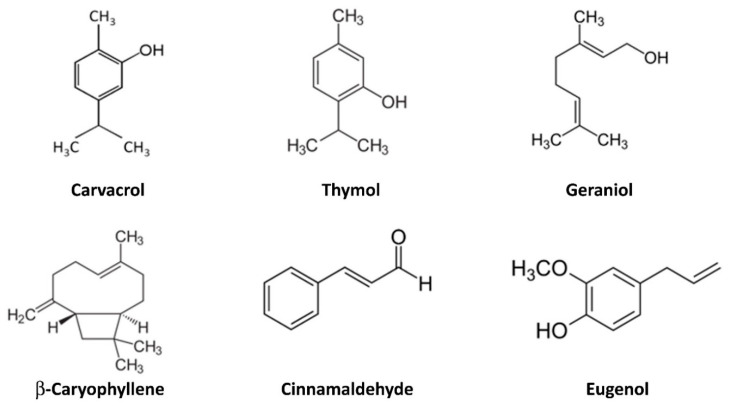
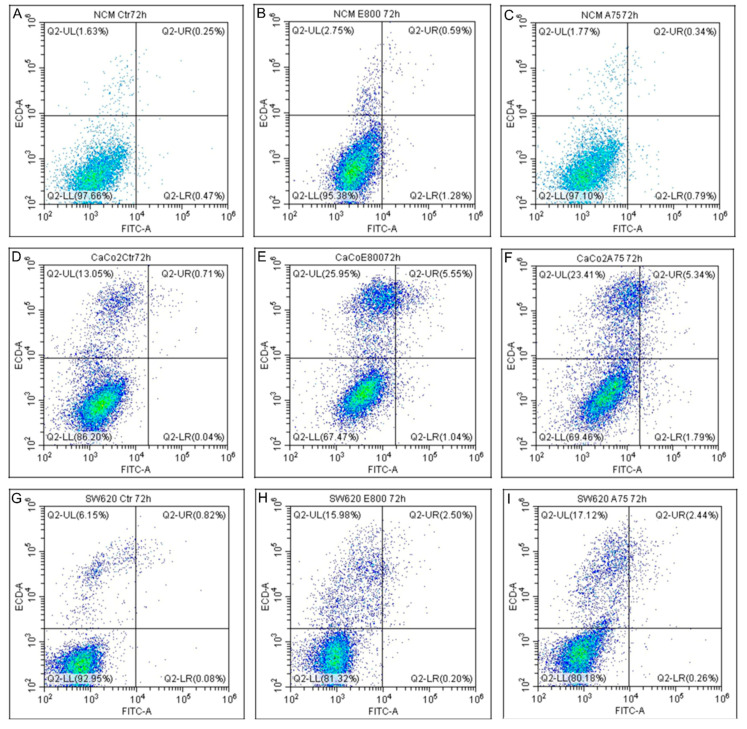
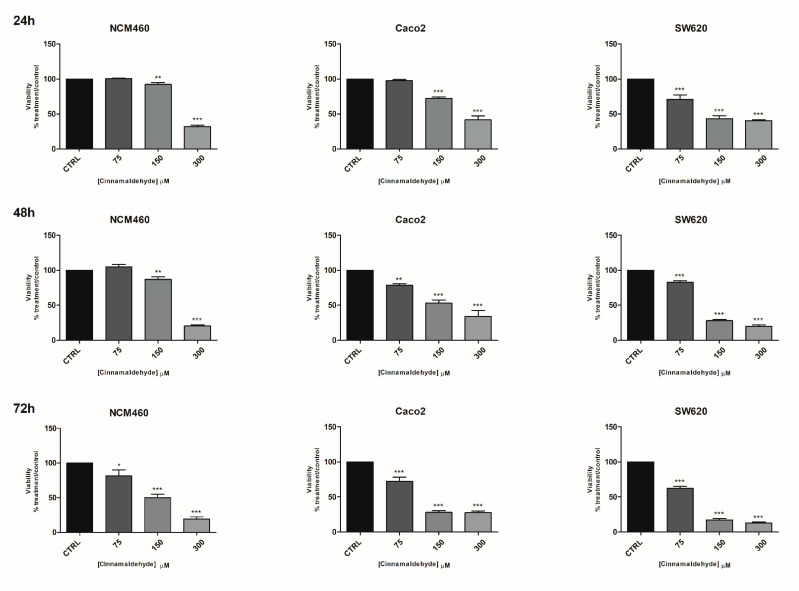
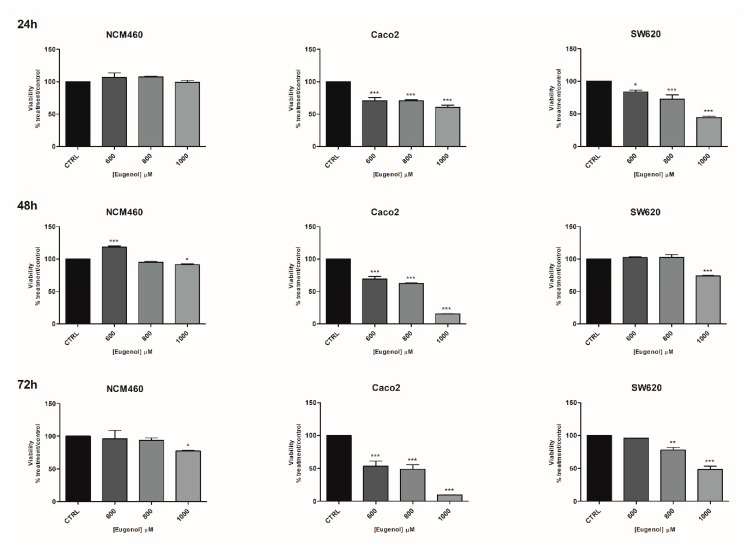
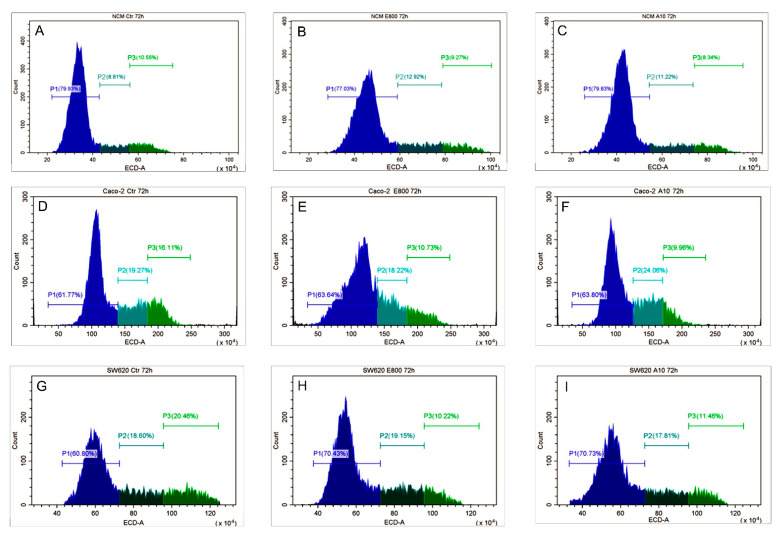
Essential oils (EOs) are a complex mixture of hydrophobic and volatile compounds synthesized from aromatic plants, commonly present in the human diet. In recent years, many in vitro studies have suggested possible anticancer properties of single EO compounds, on colorectal cancer (CRC) cells. However, the majority of these studies did not compare the effects of these compounds on normal and cancer colon cells. By using NCM-460, a normal human mucosal epithelial cell line, Caco-2, a human colon epithelial adenocarcinoma cell line, and SW-620, colon cancer cells derived from lymph node metastatic site, we identified cinnamaldehyde, derived from cinnamon EO and eugenol, derived from bud clove EO, as compounds with a specific anticancer action selectively targeting the transformed colonic cells. Both cinnamaldehyde (75 µM) and eugenol (800 µM), after 72 h of treatment, were capable to induce apoptosis, necrosis and a cell cycle slowdown in Caco-2 and in SW-620, but not in NCM-460 cells. If associated with a targeted delivery to the colon, these two compounds could prove effective in the prevention or treatment of CRC.
精油(EOs)是一种复杂的混合物,由芳香植物合成,具有疏水性和挥发性,通常存在于人类饮食中。近年来,许多体外研究表明,单一 EO 化合物对结直肠癌(CRC)细胞具有潜在的抗癌特性。然而,这些研究大多数没有比较这些化合物对正常和癌细胞的影响。我们使用 NCM-460(一种正常的人类黏膜上皮细胞系)、Caco-2(一种人结肠上皮腺癌细胞系)和 SW-620(源自淋巴结转移部位的结肠癌细胞系),鉴定出肉桂醛(来源于肉桂精油)和丁香酚(来源于丁香花蕾精油),这两种化合物具有特异性的抗癌作用,可选择性地针对转化的结肠细胞。肉桂醛(75µM)和丁香酚(800µM)在处理 72 小时后,能够诱导 Caco-2 和 SW-620 细胞凋亡、坏死和细胞周期停滞,但对 NCM-460 细胞没有作用。如果与靶向递送至结肠相结合,这两种化合物可能在预防或治疗 CRC 方面有效。