Xue Ming-Yuan, Xie Yun-Yi, Zhong Yi-Fan, Liu Jian-Xin, Guan Le Luo, Sun Hui-Zeng
Institute of Dairy Science, Ministry of Education Key Laboratory of Molecular Animal Nutrition, College of Animal Sciences, Zhejiang University, Hangzhou, 310058, China.
Department of Agricultural, Food and Nutritional Science, University of Alberta, Edmonton, AB, T6G 2P5, Canada.
Anim Microbiome. 2021 Feb 10;3(1):18. doi: 10.1186/s42523-021-00081-9.
Antimicrobial resistance is one of the most urgent threat to global public health, as it can lead to high morbidity, mortality, and medical costs for humans and livestock animals. In ruminants, the rumen microbiome carries a large number of antimicrobial resistance genes (ARGs), which could disseminate to the environment through saliva, or through the flow of rumen microbial biomass to the hindgut and released through feces. The occurrence and distribution of ARGs in rumen microbes has been reported, revealing the effects of external stimuli (e.g., antimicrobial administrations and diet ingredients) on the antimicrobial resistance in the rumen. However, the host effect on the ruminal resistome and their interactions remain largely unknown. Here, we investigated the ruminal resistome and its relationship with host feed intake and milk protein yield using metagenomic sequencing.
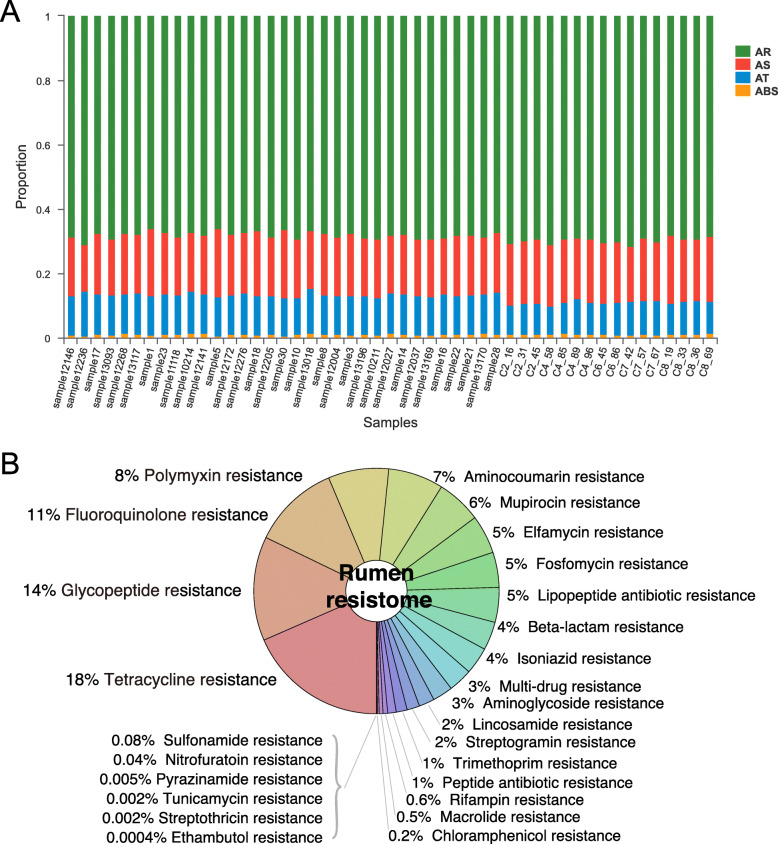
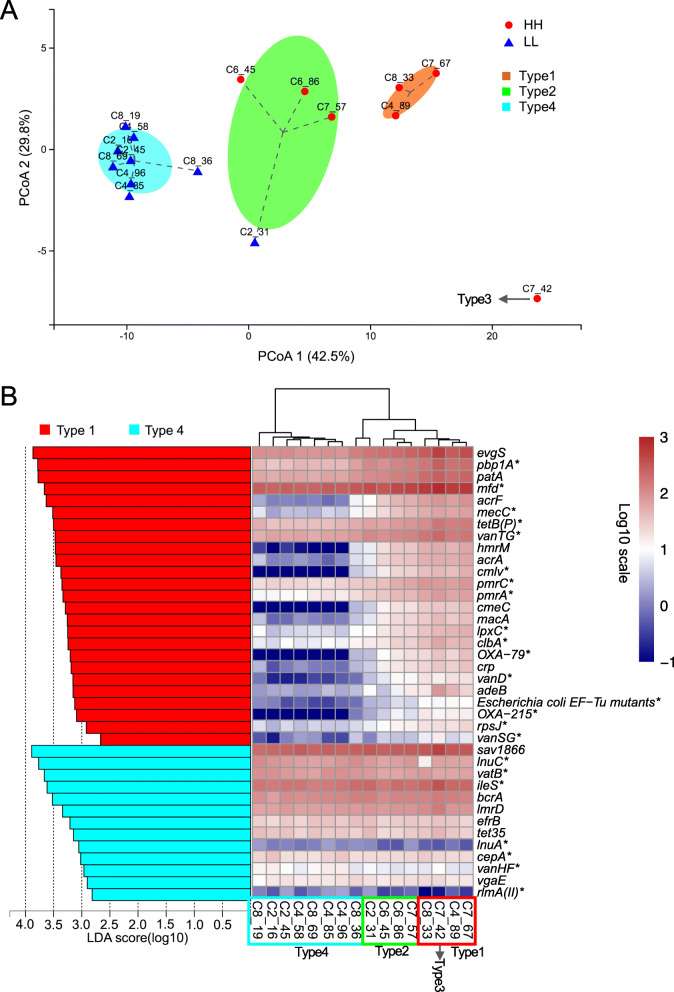
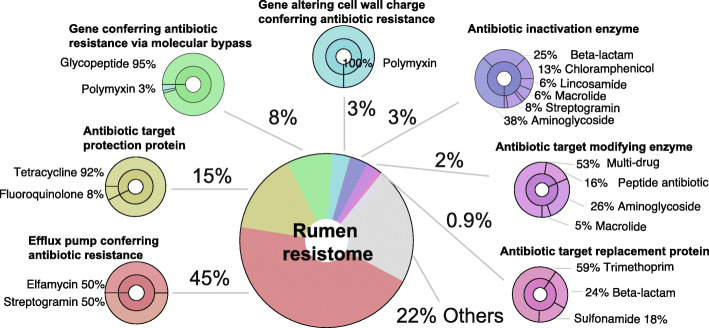
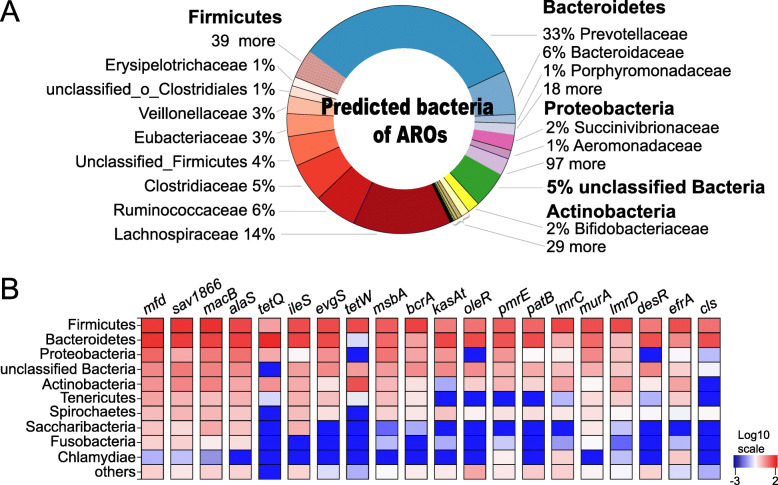
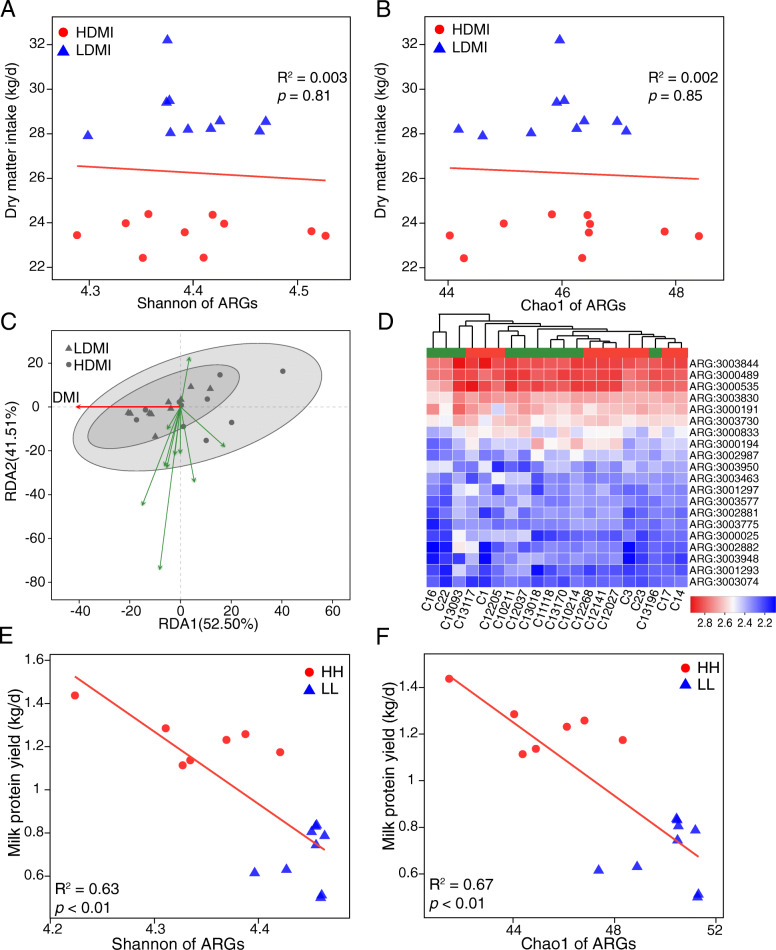
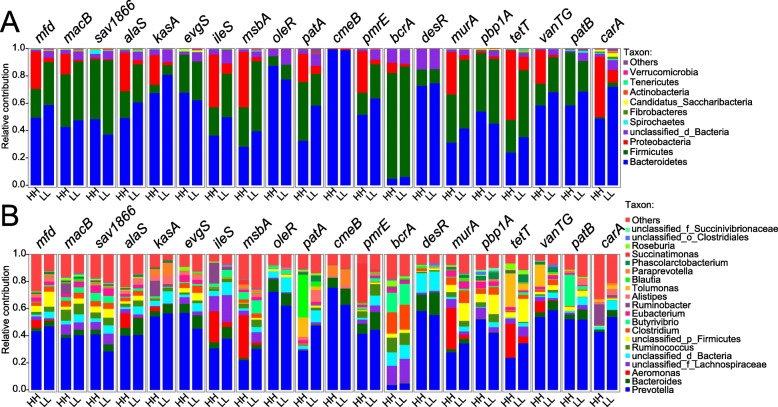
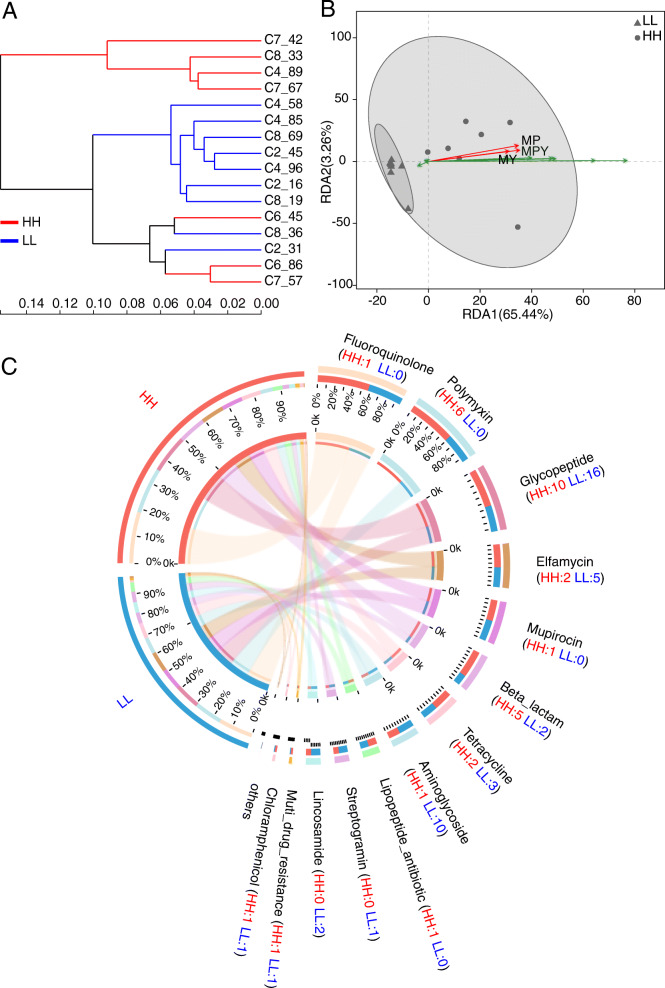
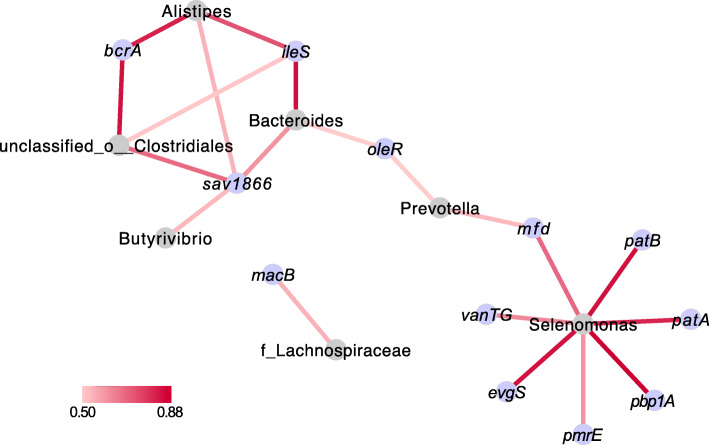
The ruminal resistome conferred resistance to 26 classes of antimicrobials, with genes encoding resistance to tetracycline being the most predominant. The ARG-containing contigs were assigned to bacterial taxonomy, and the majority of highly abundant bacterial genera were resistant to at least one antimicrobial, while the abundances of ARG-containing bacterial genera showed distinct variations. Although the ruminal resistome is not co-varied with host feed intake, it could be potentially linked to milk protein yield in dairy cows. Results showed that host feed intake did not affect the alpha or beta diversity of the ruminal resistome or the abundances of ARGs, while the Shannon index (R = 0.63, P < 0.01) and richness (R = 0.67, P < 0.01) of the ruminal resistome were highly correlated with milk protein yield. A total of 128 significantly different ARGs (FDR < 0.05) were identified in the high- and low-milk protein yield dairy cows. We found four ruminal resistotypes that are driven by specific ARGs and associated with milk protein yield. Particularly, cows with low milk protein yield are classified into the same ruminal resistotype and featured by high-abundance ARGs, including mfd and sav1866.
The current study uncovered the prevalence of ARGs in the rumen of a cohort of lactating dairy cows. The ruminal resistome is not co-varied with host feed intake, while it could be potentially linked to milk protein yield in dairy cows. Our results provide fundamental knowledge on the prevalence, mechanisms and impact factors of antimicrobial resistance in dairy cattle and are important for both the dairy industry and other food animal antimicrobial resistance control strategies.
抗菌药物耐药性是对全球公共卫生最紧迫的威胁之一,因为它会导致人类和家畜出现高发病率、高死亡率以及高昂的医疗成本。在反刍动物中,瘤胃微生物组携带大量抗菌药物耐药基因(ARGs),这些基因可通过唾液传播到环境中,或者通过瘤胃微生物生物量流向后肠并通过粪便排出。已有报道瘤胃微生物中ARGs的发生和分布情况,揭示了外部刺激(如抗菌药物给药和饲料成分)对瘤胃抗菌药物耐药性的影响。然而,宿主对瘤胃耐药组的影响及其相互作用仍 largely未知。在此,我们使用宏基因组测序研究了瘤胃耐药组及其与宿主采食量和乳蛋白产量的关系。
瘤胃耐药组对26类抗菌药物具有耐药性,其中编码对四环素耐药的基因最为主要。含有ARG的重叠群被归类到细菌分类学中,大多数高丰度细菌属对至少一种抗菌药物具有耐药性,而含有ARG的细菌属的丰度表现出明显差异。虽然瘤胃耐药组与宿主采食量没有共同变化,但它可能与奶牛的乳蛋白产量存在潜在联系。结果表明,宿主采食量不影响瘤胃耐药组的α或β多样性以及ARGs的丰度,而瘤胃耐药组的香农指数(R = 0.63,P < 0.01)和丰富度(R = 0.67,P < 0.01)与乳蛋白产量高度相关。在高乳蛋白产量和低乳蛋白产量的奶牛中总共鉴定出128个显著不同的ARGs(FDR < 0.05)。我们发现了四种由特定ARGs驱动并与乳蛋白产量相关的瘤胃耐药类型。特别是,乳蛋白产量低的奶牛被归类为同一瘤胃耐药类型,其特征是高丰度的ARGs,包括mfd和savl866。
本研究揭示了一群泌乳奶牛瘤胃中ARGs的流行情况。瘤胃耐药组与宿主采食量没有共同变化,而它可能与奶牛的乳蛋白产量存在潜在联系。我们的结果为奶牛抗菌药物耐药性的流行情况、机制和影响因素提供了基础知识,对乳制品行业和其他食用动物抗菌药物耐药性控制策略都很重要。