Azizah Nur, Halimah Eli, Puspitasari Irma Melyani, Hasanah Aliya Nur
Department of Pharmacology and Clinical Pharmacy, Faculty of Pharmacy, Universitas Padjadjaran, Sumedang, West Java, 45363, Indonesia.
Muhammadiyah Kuningan Institute of Health Science, Cigugur-Kuningan, West Java, 45551, Indonesia.
J Multidiscip Healthc. 2021 Feb 3;14:259-270. doi: 10.2147/JMDH.S289156. eCollection 2021.
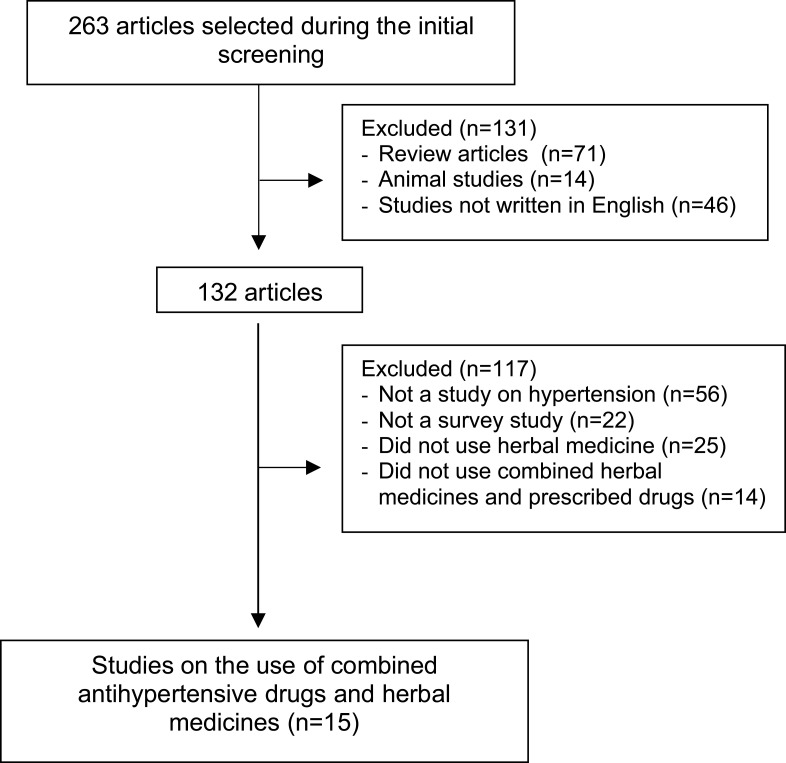
In various countries, approximately 80% of patients use herbal medicine, both in single form or in combination with antihypertensive drugs, for the treatment of hypertension. Therefore, this research summarized studies on the simultaneous use of herbal medicines and antihypertensive drugs among hypertensive patients in the community. A literature search was conducted on PubMed in April 2020, and the following keywords were used: "herbal medicines" and "antihypertensive patients." In total, 15 of 263 articles were found to be eligible in the initial research. Results showed that studies were performed in different countries worldwide including America and those in Europe, Asia, and Africa between 1960 and 2020. The factors associated with the use of herbal medicines and antihypertensive drugs were age, gender, education level, income, and residence. Herbal medicines and antihypertensive drugs are simultaneously utilized primarily due to their safety and high efficacy. Herbal medicine is frequently recommended by friends or colleagues, herbalists, advertisements, and health workers. Garlic is the most common herbal medicine used along with antihypertensive drugs. The side effects of combination therapy with herbal medicines and prescription drugs for the management of antihypertension include shortness of breath and cough, ulcers, diarrhea, knee cramps, and abdominal discomfort. The lack of communication between patients and health care workers could cause an increase in the simultaneous use of herbal medicines and antihypertensive drugs. Therefore, effective communication among health care workers and appropriate care are important in preventing the side effects and other risks of combined therapy.
在各个国家,约80%的患者使用草药,或单独使用,或与降压药联合使用,用于治疗高血压。因此,本研究总结了社区高血压患者同时使用草药和降压药的相关研究。2020年4月在PubMed上进行了文献检索,使用了以下关键词:“草药”和“高血压患者”。初步检索发现,263篇文章中有15篇符合条件。结果显示,研究在1960年至2020年间于包括美国以及欧洲、亚洲和非洲在内的世界不同国家开展。与使用草药和降压药相关的因素有年龄、性别、教育水平、收入和居住地。同时使用草药和降压药主要是因为其安全性和高效性。草药常由朋友或同事、草药医生、广告以及医护人员推荐。大蒜是与降压药同时使用最常见的草药。草药与处方药联合用于降压治疗的副作用包括呼吸急促、咳嗽、溃疡、腹泻、膝盖抽筋和腹部不适。患者与医护人员之间缺乏沟通可能导致草药和降压药同时使用的情况增加。因此,医护人员之间的有效沟通和适当护理对于预防联合治疗的副作用及其他风险很重要。