Yao Minghui, Wang Rong, Ye Weihua, Ren Chonglei
Department of Cardiovascular Surgery, the First Medical Center of PLA General Hospital, Beijing, China.
J Thorac Dis. 2021 Jan;13(1):291-298. doi: 10.21037/jtd-20-3510.
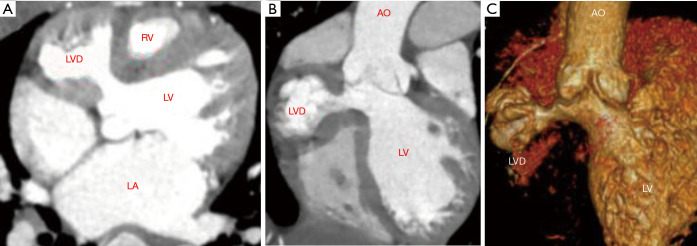
Congenital left ventricular diverticulum (LVD) is a rare cardiac malformation. Its prevalence rate is less than 0.1% of the congenital heart diseases requiring surgery. Some scholars suggest that all LVD should be actively removed to prevent possible risks, including diverticulum rupture, arterial embolism, and malignant arrhythmia. However, others believe that asymptomatic LVD can be followed up without immediate surgery. We reviewed and reported the diagnosis, clinical features, and surgical treatment of four cases of congenital LVD to provide clinical experience and a reference for the treatment of such patients.
Four patients (aged 3-32 years old) were diagnosed with congenital LVD and received surgical treatment at the Department of Cardiovascular Surgery of PLA General Hospital, Beijing, China from September 2009 to July 2019. All four patients had complete long-term postoperative follow-up data, including echocardiogram, enhanced cardiac computed tomography (CT), and electrocardiogram to monitor changes in left ventricular structure, heart function, and heart rhythm.
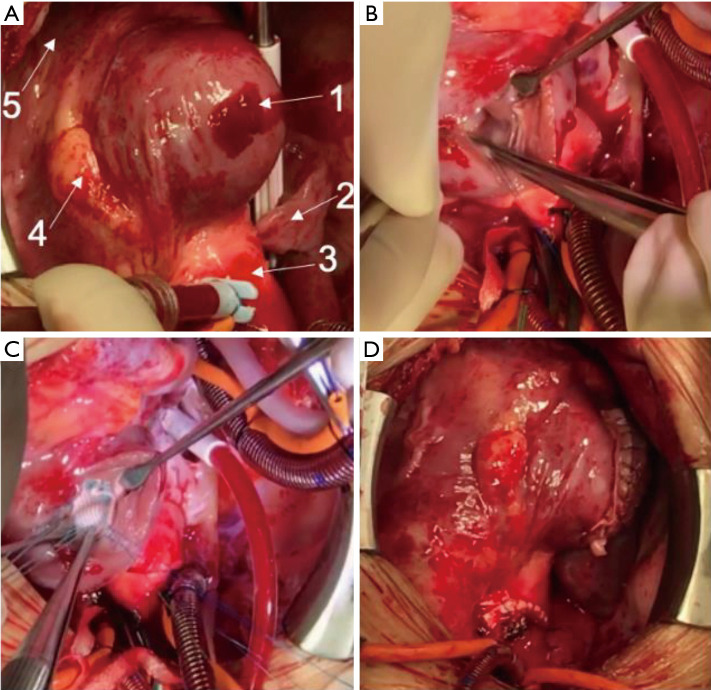
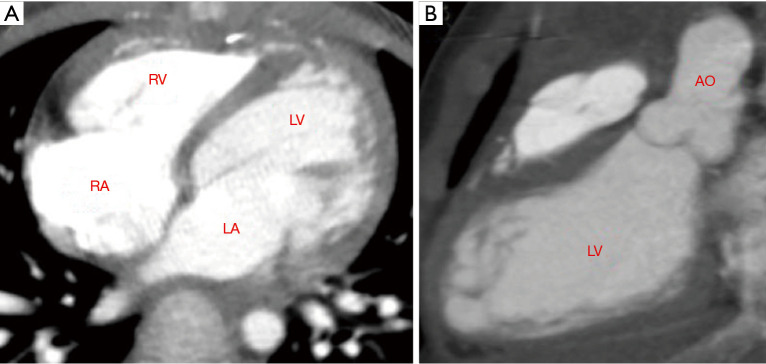
In the first case, the fibrodiverticulum under the aortic valve squeezed the right ventricular outflow tract and the right main coronary artery; the morphology of the right ventricle and coronary artery returned to normal after surgery. The second patient was complicated with a huge lipoma in the apex of the left ventricle and underwent lipoma resection during LVD resection surgery. The third and fourth cases had muscular diverticula in the left ventricular apexes and received LVD removal surgery. All four patients recovered well after surgery and their left ventricular morphology and cardiac function were normal without adverse complications, such as atrial fibrillation, ventricular arrhythmia, and cerebrovascular accident.
Although the morphology and character of congenital LVD were different in each case, the use of effective diagnostic and follow-up tools, including echocardiogram, enhanced CT, and magnetic resonance imaging (MRI), allowed for successful surgical treatment of the left ventricular diverticula and symptoms or other malformations. We propose that congenital LVD should be actively treated with surgery, especially considering effectiveness and low risk associated with this therapeutic option.
先天性左心室憩室(LVD)是一种罕见的心脏畸形。其患病率不到需要手术治疗的先天性心脏病的0.1%。一些学者建议,所有LVD均应积极切除以预防可能的风险,包括憩室破裂、动脉栓塞和恶性心律失常。然而,另一些人认为无症状的LVD可以进行随访而无需立即手术。我们回顾并报告了4例先天性LVD的诊断、临床特征及手术治疗情况,以提供此类患者治疗的临床经验和参考。
2009年9月至2019年7月,4例(年龄3 - 32岁)被诊断为先天性LVD的患者在中国北京解放军总医院心血管外科接受了手术治疗。所有4例患者均有完整的术后长期随访数据,包括超声心动图、增强心脏计算机断层扫描(CT)和心电图,以监测左心室结构、心功能和心律的变化。
第一例中,主动脉瓣下的纤维性憩室挤压右心室流出道和右冠状动脉主干;手术后右心室和冠状动脉形态恢复正常。第二例患者左心室尖部合并巨大脂肪瘤,在LVD切除手术中同时进行了脂肪瘤切除。第三例和第四例患者左心室尖部有肌性憩室,接受了LVD切除手术。所有4例患者术后恢复良好,左心室形态和心功能正常,无房颤、室性心律失常和脑血管意外等不良并发症。
尽管各例先天性LVD的形态和特征不同,但使用有效的诊断和随访工具,包括超声心动图、增强CT和磁共振成像(MRI),可成功地对左心室憩室及症状或其他畸形进行手术治疗。我们建议,应积极采用手术治疗先天性LVD,尤其是考虑到该治疗方案的有效性和低风险。