Moschovas Marcio Covas, Timóteo Frederico, Lins Leonardo, de Castro Neves Oséas, Seetharam Bhat Kulthe Ramesh, Patel Vipul R
Department of Robotic Surgery, AdventHealth Global Robotics Institute, FL, USA.
Faculdade de Medicina do ABC, São Paulo, Brazil.
Asian J Urol. 2021 Jan;8(1):81-88. doi: 10.1016/j.ajur.2020.10.002. Epub 2020 Oct 23.
: The robotic-assisted approach to simple prostatectomy (RASP) was conceived, essentially reproducing the fundaments of open simple prostatectomy. Since the first report, RASP underwent several technical modifications. The study aims to identify and describe the current robotic surgery techniques to approach benign prostatic hyperplasia (BPH).
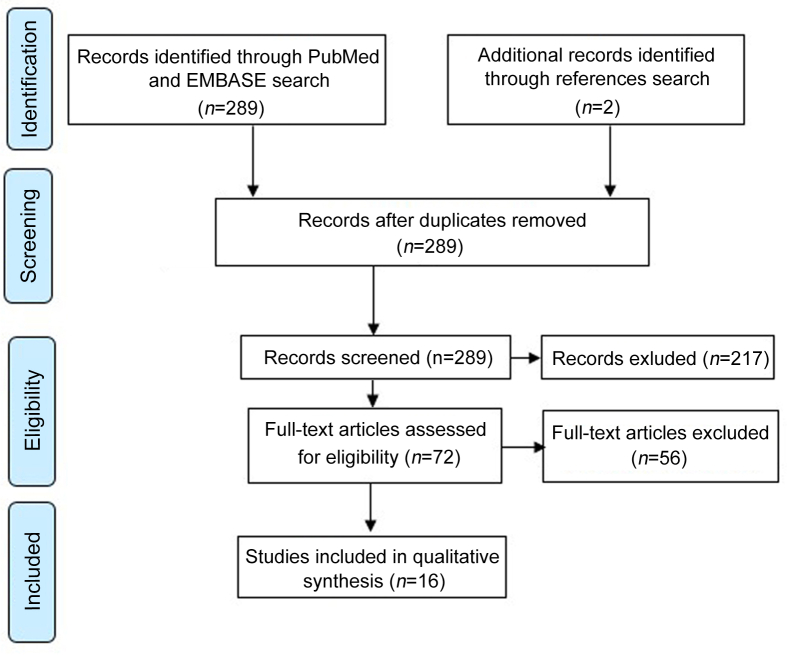
The paper performed a non-systematic literature review accessing PubMed and Embase databases for all full-text articles published from 2008 to May 2020, assessing robot-assisted surgical techniques for BPH treatment using the terms "robot-assisted simple prostatectomy" OR "robotic simple prostatectomy" OR "RASP" AND "surgical technique".
After careful review of 180 studies in PubMed and 198 in Embase, 16 papers reporting different RASP techniques. After the first procedure described by Sotelo et al. [9], several authors contributed to the development of the RASP technique. John et al. [24] proposed the extraperitoneal access, and Yuh et al. [23] first reported the adenoma transcapsular dissection. Some modifications were proposed by Coelho et al. [31] on trigonization, posterior reconstruction, and urethro-vesical anastomosis. Other groups focused on urethral-preserving procedures. Moschovas et al. [28] and Clavijo et al. [32] recently described an intrafascial RASP with the removal of the entire prostatic tissue. Finally, Kaouk et al. [29] reported the feasibility and safety of the da Vinci Single Port approach.
In the last eighteen years, the robotic-assisted approach to BPH disease has been evolved, and different techniques have been described. This review details all the technical developments on RASP that distinctive groups have proposed since the multiport robotic platforms until the new da Vinci Single Port.
机器人辅助单纯前列腺切除术(RASP)的构想本质上是重现开放性单纯前列腺切除术的基本原理。自首次报道以来,RASP经历了多次技术改进。本研究旨在识别和描述当前用于治疗良性前列腺增生(BPH)的机器人手术技术。
本文进行了非系统性文献综述,检索了2008年至2020年5月在PubMed和Embase数据库上发表的所有全文文章,使用“机器人辅助单纯前列腺切除术”或“机器人单纯前列腺切除术”或“RASP”以及“手术技术”等术语评估用于BPH治疗的机器人辅助手术技术。
在仔细查阅了PubMed中的180项研究和Embase中的198项研究后,有16篇论文报道了不同的RASP技术。在Sotelo等人[9]描述的首例手术之后,多位作者为RASP技术的发展做出了贡献。John等人[24]提出了经腹膜外入路,而Yuh等人[23]首次报道了腺瘤经包膜剥离术。Coelho等人[31]对三角区处理、后尿道重建和尿道膀胱吻合术提出了一些改进。其他团队则专注于保留尿道的手术。Moschovas等人[28]和Clavijo等人[32]最近描述了一种筋膜内RASP,可切除整个前列腺组织。最后,Kaouk等人[29]报道了达芬奇单孔入路的可行性和安全性。
在过去的十八年里,机器人辅助治疗BPH疾病的方法不断发展,并且已经描述了不同的技术。本综述详细介绍了自多端口机器人平台直至新型达芬奇单孔入路以来,不同团队提出的RASP的所有技术发展。