Pollok Bettina, Schmitz-Justen Claire, Krause Vanessa
Institute of Clinical Neuroscience and Medical Psychology, Medical Faculty and University Hospital Düsseldorf, Heinrich-Heine University Duesseldorf, 40225 Duesseldorf, Germany.
Department of Neuropsychology, Mauritius Hospital and Neurorehabilitation Center Meerbusch, 40670 Meerbusch, Germany.
Brain Sci. 2021 Feb 9;11(2):207. doi: 10.3390/brainsci11020207.
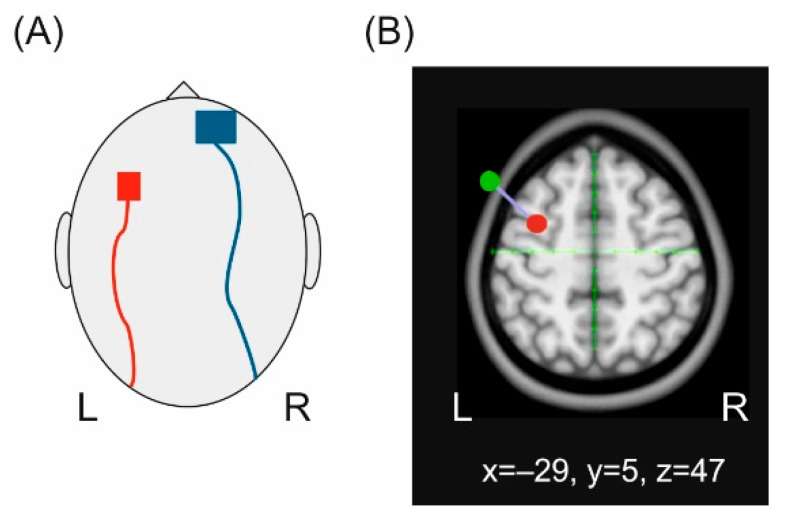
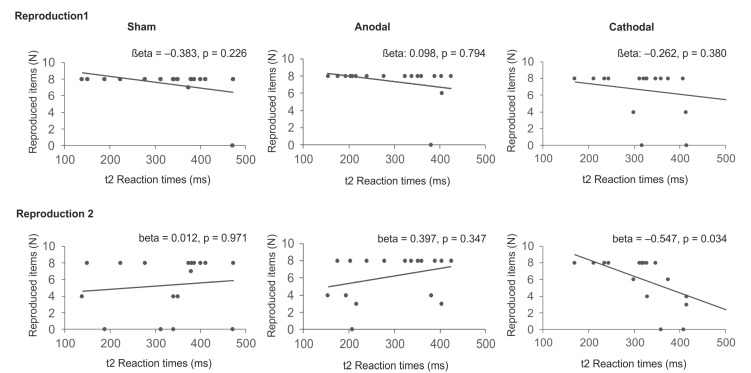
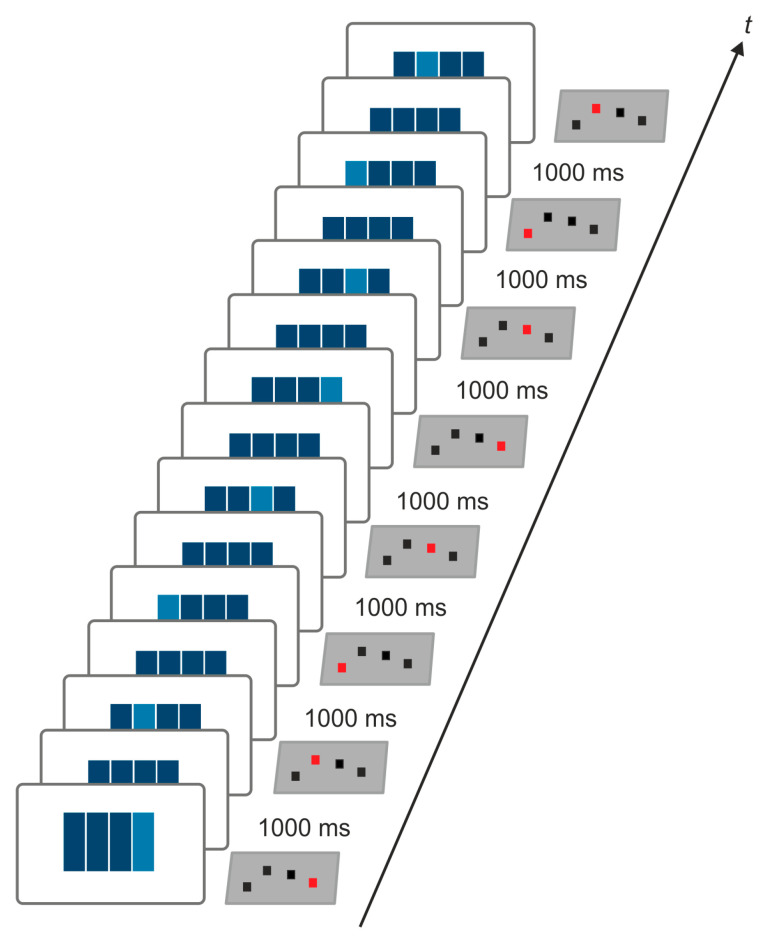
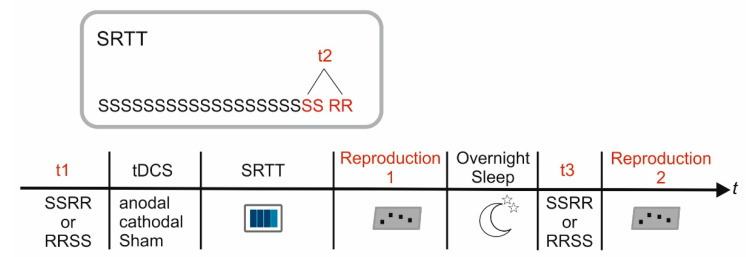
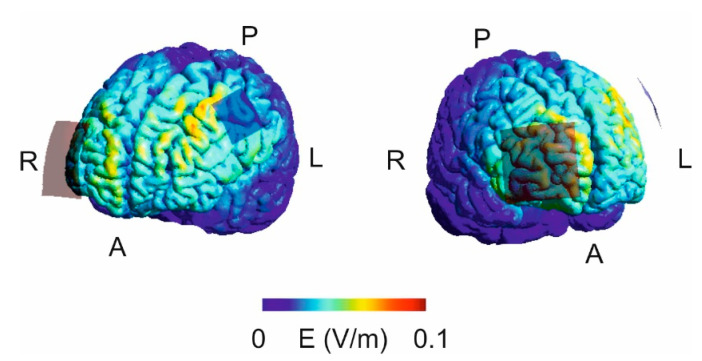
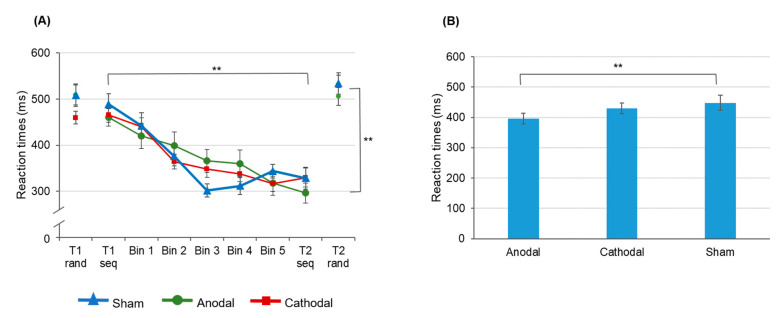
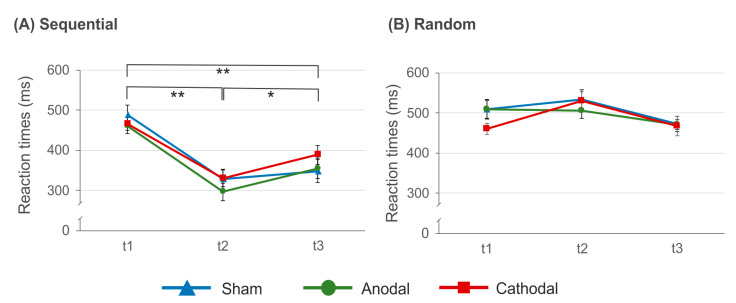
Transcranial direct current stimulation (tDCS) is a non-invasive brain stimulation technique that allows the modulation of cortical excitability. TDCS effects can outlast the stimulation period presumably due to changes of GABA concentration which play a critical role in use-dependent plasticity. Consequently, tDCS and learning-related synaptic plasticity are assumed to share common mechanisms. Motor sequence learning has been related to activation changes within a cortico-subcortical network and findings from a meta-analysis point towards a core network comprising the cerebellum as well as the primary motor (M1) and the dorsolateral premotor cortex (dPMC). The latter has been particularly related to explicit motor learning by means of brain imaging techniques. We here test whether tDCS applied to the left dPMC affects the acquisition and reproduction of an explicitly learned motor sequence. To this end, 18 healthy volunteers received anodal, cathodal and sham tDCS to the left dPMC and were then trained on a serial reaction time task (SRTT) with their right hand. Immediately after the training and after overnight sleep, reproduction of the learned sequence was tested by means of reaction times as well as explicit recall. Regression analyses suggest that following cathodal tDCS reaction times at the end of the SRTT training-block explained a significant proportion of the number of correctly reported sequence items after overnight sleep. The present data suggest the left premotor cortex as one possible target for the application of non-invasive brain stimulation techniques in explicit motor sequence learning with the right hand.
经颅直流电刺激(tDCS)是一种非侵入性脑刺激技术,可调节皮质兴奋性。tDCS的效应可能会在刺激期后持续存在,这可能是由于GABA浓度的变化,而GABA在使用依赖性可塑性中起关键作用。因此,tDCS和与学习相关的突触可塑性被认为具有共同机制。运动序列学习与皮质-皮质下网络内的激活变化有关,一项荟萃分析的结果指向一个核心网络,该网络包括小脑以及初级运动皮层(M1)和背外侧运动前皮层(dPMC)。通过脑成像技术,后者尤其与明确的运动学习有关。我们在此测试应用于左侧dPMC的tDCS是否会影响明确学习的运动序列的获取和再现。为此,18名健康志愿者接受了对左侧dPMC的阳极、阴极和假tDCS,然后用右手进行序列反应时任务(SRTT)训练。训练后立即以及过夜睡眠后,通过反应时间和明确回忆来测试所学序列的再现。回归分析表明,在阴极tDCS后,SRTT训练块结束时的反应时间在很大程度上解释了过夜睡眠后正确报告的序列项目数量。目前的数据表明,左侧运动前皮层是在右手进行明确运动序列学习时应用非侵入性脑刺激技术的一个可能靶点。