
了解病毒感染机制和患者症状,以开发针对 COVID-19 的治疗方法。
Understanding Viral Infection Mechanisms and Patient Symptoms for the Development of COVID-19 Therapeutics.
机构信息
Department of Clinical Pharmacology and Therapeutics, Kyung Hee University School of Medicine, Seoul 02447, Korea.
Division of Infectious Diseases, Department of Internal Medicine, Kyung Hee University Hospital at Gangdong, Gandong-gu, Seoul 02447, Korea.
出版信息
Int J Mol Sci. 2021 Feb 9;22(4):1737. doi: 10.3390/ijms22041737.
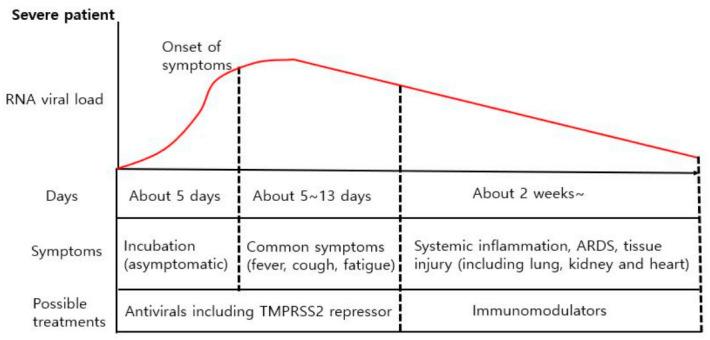
Coronavirus disease 2019 (COVID-19), caused by the SARS-CoV-2 virus, has become a worldwide pandemic. Symptoms range from mild fever to cough, fatigue, severe pneumonia, acute respiratory distress syndrome (ARDS), and organ failure, with a mortality rate of 2.2%. However, there are no licensed drugs or definitive treatment strategies for patients with severe COVID-19. Only antiviral or anti-inflammatory drugs are used as symptomatic treatments based on clinician experience. Basic medical researchers are also trying to develop COVID-19 therapeutics. However, there is limited systematic information about the pathogenesis of COVID-19 symptoms that cause tissue damage or death and the mechanisms by which the virus infects and replicates in cells. Here, we introduce recent knowledge of time course changes in viral titers, delayed virus clearance, and persistent systemic inflammation in patients with severe COVID-19. Based on the concept of drug reposition, we review which antiviral or anti-inflammatory drugs can effectively treat COVID-19 patients based on progressive symptoms and the mechanisms inhibiting virus infection and replication.
新型冠状病毒病(COVID-19),由 SARS-CoV-2 病毒引起,已成为全球性大流行疾病。症状范围从轻度发热到咳嗽、乏力、重症肺炎、急性呼吸窘迫综合征(ARDS)和器官衰竭,死亡率为 2.2%。然而,对于重症 COVID-19 患者,尚无许可的药物或明确的治疗策略。仅根据临床医生的经验使用抗病毒或抗炎药物进行对症治疗。基础医学研究人员也在努力开发 COVID-19 疗法。然而,对于导致组织损伤或死亡的 COVID-19 症状的发病机制以及病毒在细胞中感染和复制的机制,我们了解有限。在这里,我们介绍了严重 COVID-19 患者病毒滴度、病毒清除延迟和持续全身炎症的时程变化的最新知识。基于药物再定位的概念,我们根据进行性症状以及抑制病毒感染和复制的机制,回顾了哪些抗病毒或抗炎药物可有效治疗 COVID-19 患者。



 Zotero 插件