Dong Jisheng, Li Li, Fang Xing, Zang Mousheng
Department of Orthopedics, The Second People's Hospital of Hefei, The Affiliated Hefei Hospital of Anhui Medical University, Hefei, Anhui, 230011, People's Republic of China.
J Pain Res. 2021 Feb 4;14:297-310. doi: 10.2147/JPR.S291472. eCollection 2021.
Exosome-encapsulated microRNAs (miRNAs) are being considered as either diagnostic or predictive markers in different types of diseases. Here, we discussed the effects of exosome-encapsulated miR-127-3p from bone marrow-derived mesenchymal stem cells (BM-MSCs) on osteoarthritis (OA).
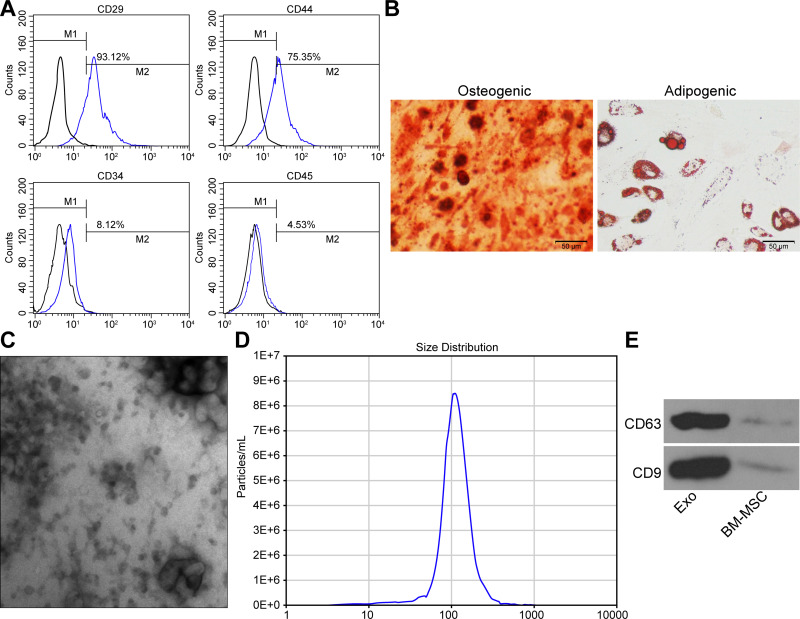
BM-MSCs and primary chondrocytes were isolated from Sprague Dawley rats. IL-1β was utilized to treat chondrocytes to mimic an OA in vitro model, and exosomes extracted from BM-MSCs were utilized to treat chondrocytes so as to verify their protective effects on OA. Through online website prediction and experiments confirmation, we found the most significantly enriched miRNA in exosomes and elucidated the effect of this miRNA on the therapeutic effect of exosomes by interfering with its expression. Also, the genes targeted by the miRNA and the involved pathway were also found through bioinformatics analysis and experimental research, thereby probing into the protective mechanism of exosomes on chondrocytes.
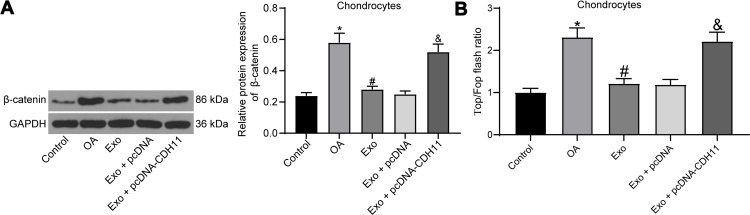
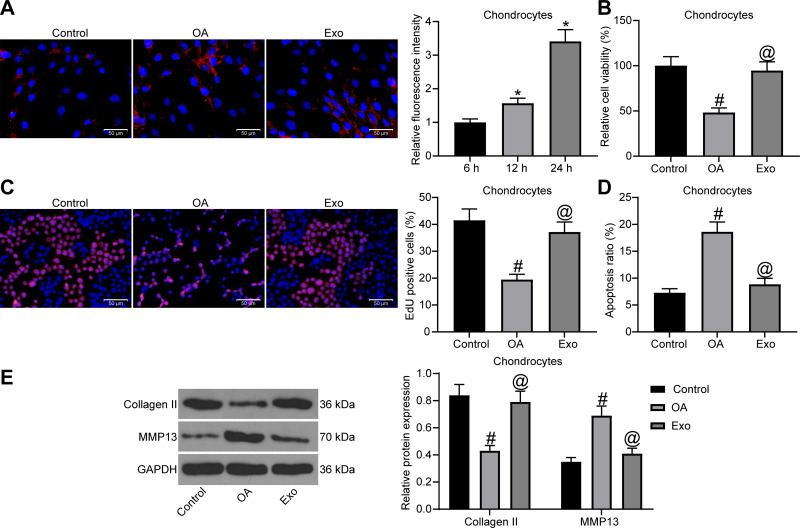
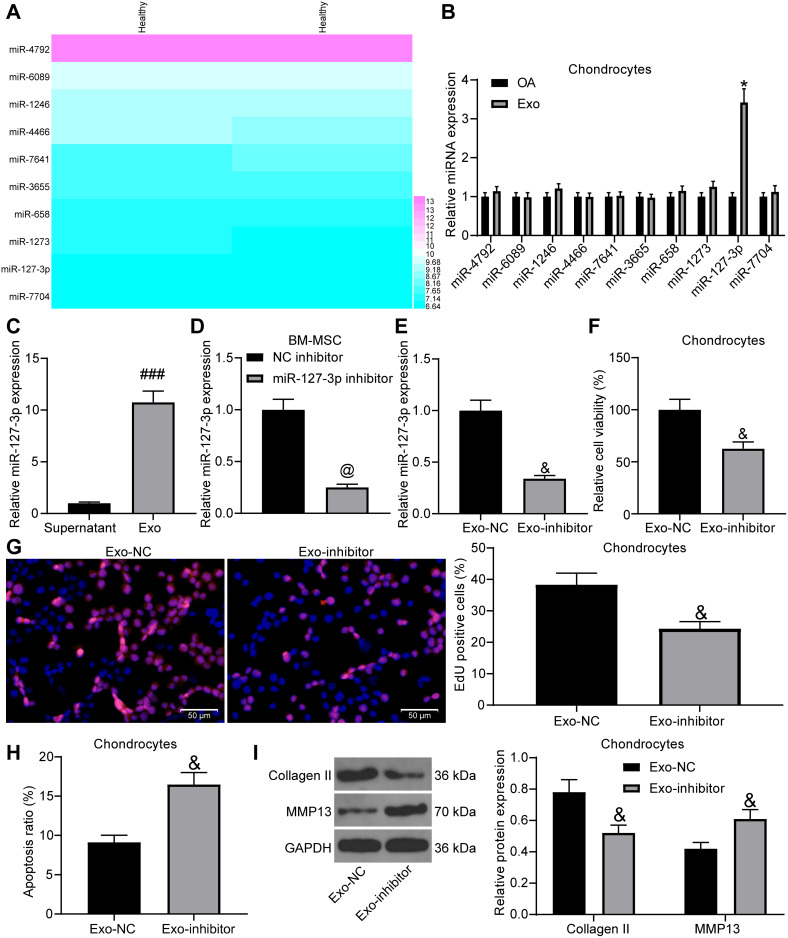
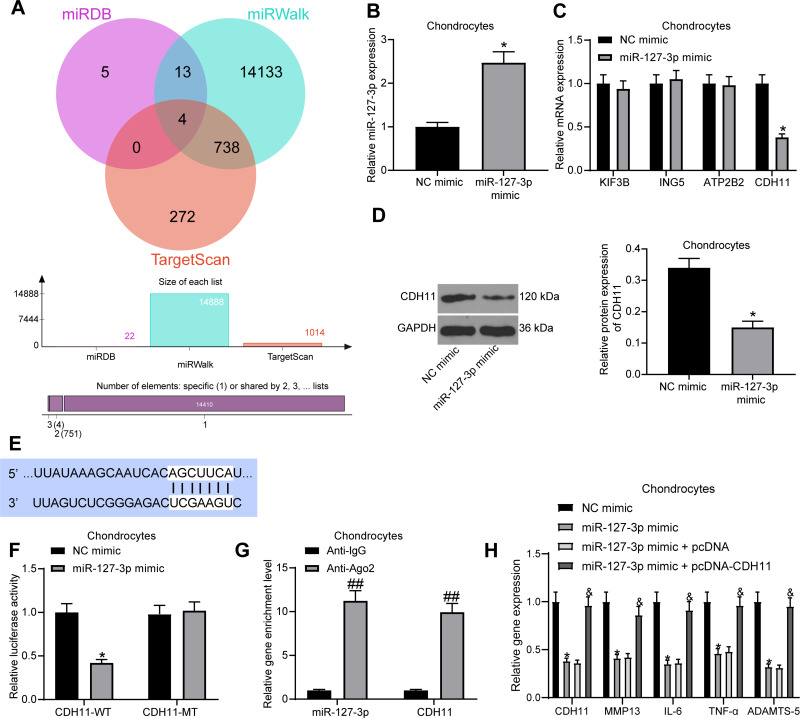
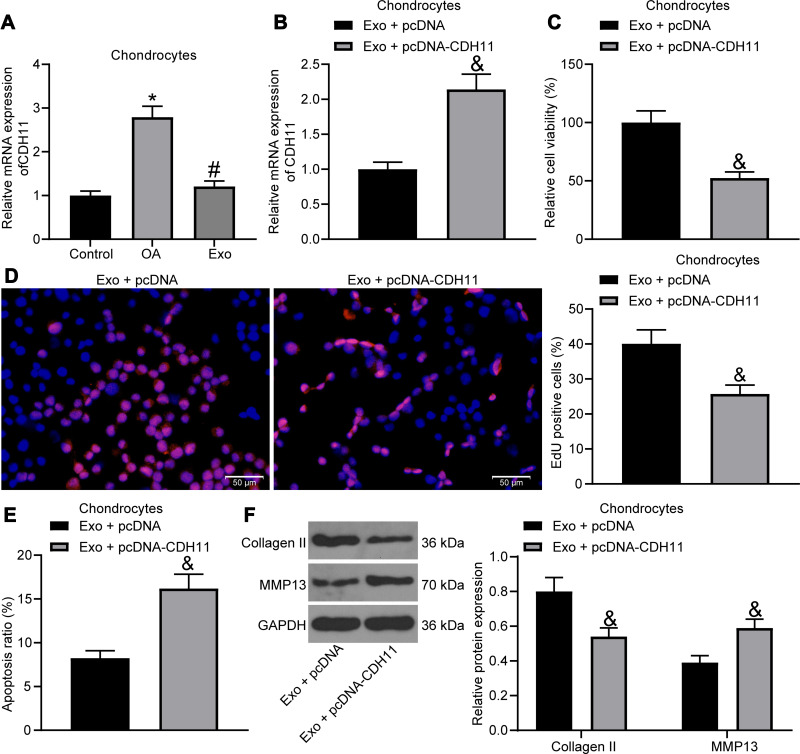
Exosomes derived from BM-MSCs restricted the IL-1β-induced chondrocytes damage. miR-127-3p was found to be enriched in exosomes, and the protective effect of exosomes was reversed by miR-127-3p inhibition. miR-127-3p targeted CDH11, and overexpressed CDH11 in chondrocytes weakened the therapeutic effect of exosomes. IL-1β treatment resulted in the activation of the Wnt/β-catenin pathway in chondrocytes. Exosomes treatment could inhibit the activation of this pathway, and overexpressed CDH11 reversed the inhibitory effect of exosomes on this pathway.
This study suggests that exosomal miR-127-3p derived from BM-MSCs inhibits CDH11 in chondrocytes, thereby blocking the Wnt/β-catenin pathway activation and relieving chondrocyte damage in OA.
外泌体包裹的微小RNA(miRNA)正被视为不同类型疾病的诊断或预测标志物。在此,我们探讨了骨髓间充质干细胞(BM-MSC)来源的外泌体包裹的miR-127-3p对骨关节炎(OA)的影响。
从Sprague Dawley大鼠中分离出BM-MSC和原代软骨细胞。利用白细胞介素-1β(IL-1β)处理软骨细胞以模拟体外OA模型,并利用从BM-MSC中提取的外泌体处理软骨细胞,以验证其对OA的保护作用。通过在线网站预测和实验确认,我们发现外泌体中最显著富集的miRNA,并通过干扰其表达阐明该miRNA对外泌体治疗效果的影响。此外,还通过生物信息学分析和实验研究发现了该miRNA的靶基因及相关通路,从而探究外泌体对软骨细胞的保护机制。
BM-MSC来源的外泌体限制了IL-1β诱导的软骨细胞损伤。发现miR-127-3p在外泌体中富集,且miR-127-3p抑制可逆转外泌体的保护作用。miR-127-3p靶向钙黏蛋白11(CDH11),软骨细胞中过表达CDH11会削弱外泌体的治疗效果。IL-1β处理导致软骨细胞中Wnt/β-连环蛋白通路激活。外泌体处理可抑制该通路的激活,而过表达CDH11可逆转外泌体对该通路的抑制作用。
本研究表明,BM-MSC来源的外泌体miR-127-3p抑制软骨细胞中的CDH11,从而阻断Wnt/β-连环蛋白通路激活,减轻OA中的软骨细胞损伤。