Ni Zhenhong, Zhou Siru, Li Song, Kuang Liang, Chen Hangang, Luo Xiaoqing, Ouyang Junjie, He Mei, Du Xiaolan, Chen Lin
Department of Wound Repair and Rehabilitation Medicine, Center of Bone Metabolism and Repair, Laboratory for Prevention and Rehabilitation of Training Injuries, State Key Laboratory of Trauma, Burns and Combined Injury, Trauma Center, Research Institute of Surgery, Daping Hospital, Army Medical University, Chongqing, China.
State Key Laboratory of Trauma, Burns and Combined Injury; Medical Cformation of H-type vessel in subchondral enter of Trauma and War Injury; Daping Hospital, Army Medical University of PLA, Chongqing, China.
Bone Res. 2020 Jun 19;8:25. doi: 10.1038/s41413-020-0100-9. eCollection 2020.
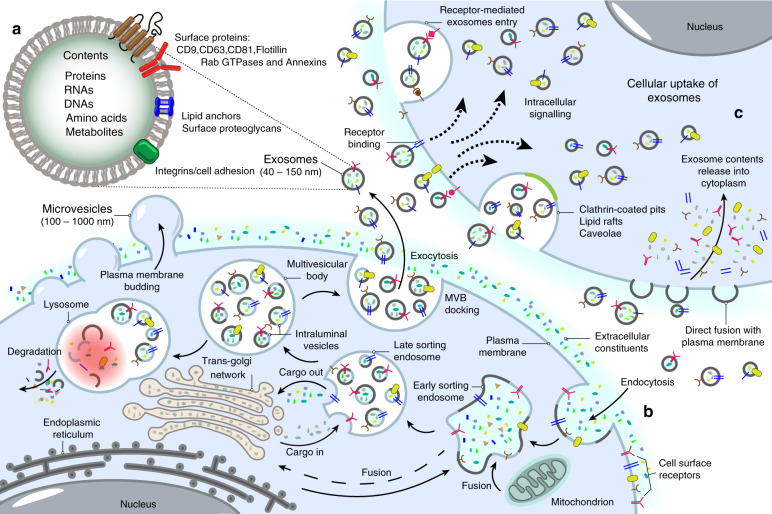
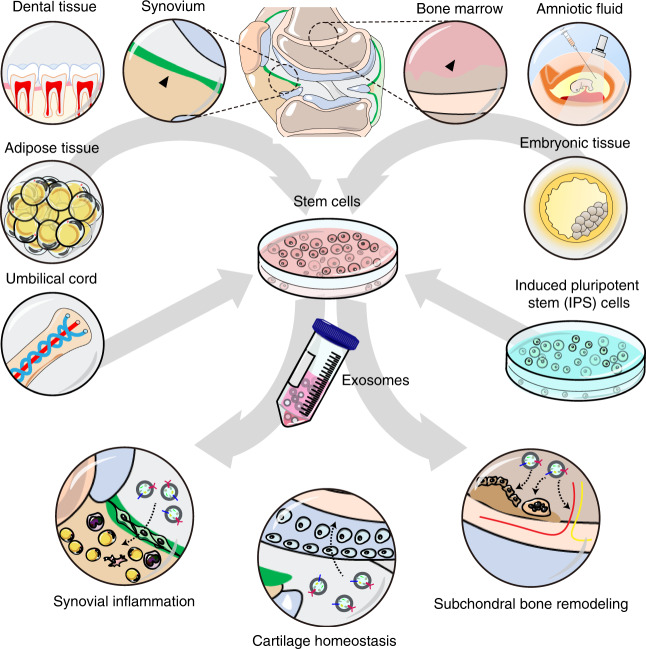
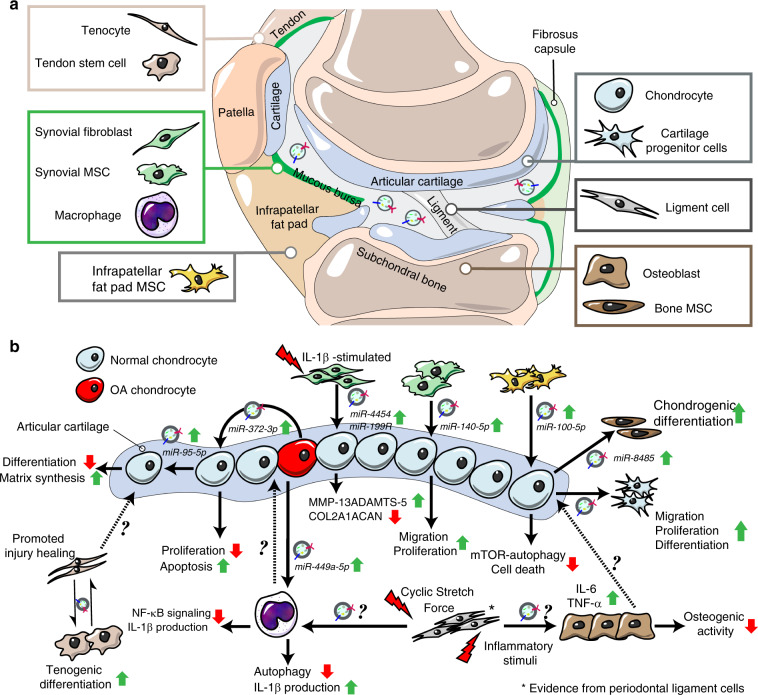
Exosomes participate in many physiological and pathological processes by regulating cell-cell communication, which are involved in numerous diseases, including osteoarthritis (OA). Exosomes are detectable in the human articular cavity and were observed to change with OA progression. Several joint cells, including chondrocytes, synovial fibroblasts, osteoblasts, and tenocytes, can produce and secrete exosomes that influence the biological effects of targeted cells. In addition, exosomes from stem cells can protect the OA joint from damage by promoting cartilage repair, inhibiting synovitis, and mediating subchondral bone remodeling. This review summarizes the roles and therapeutic potential of exosomes in OA and discusses the perspectives and challenges related to exosome-based treatment for OA patients in the future.
外泌体通过调节细胞间通讯参与多种生理和病理过程,这些过程涉及包括骨关节炎(OA)在内的多种疾病。外泌体可在人体关节腔中检测到,并观察到其随骨关节炎进展而变化。包括软骨细胞、滑膜成纤维细胞、成骨细胞和肌腱细胞在内的几种关节细胞可以产生和分泌影响靶细胞生物学效应的外泌体。此外,干细胞来源的外泌体可通过促进软骨修复、抑制滑膜炎和介导软骨下骨重塑来保护骨关节炎关节免受损伤。本综述总结了外泌体在骨关节炎中的作用和治疗潜力,并讨论了未来基于外泌体治疗骨关节炎患者的前景和挑战。