Cohen Samuel A, Cohen Landon E, Tijerina Jonathan D
Stanford University School of Medicine, 291 Campus Drive, Stanford, 94305 CA, USA.
Keck School of Medicine of USC, 1975 Zonal Avenue, Los Angeles, 90089 CA, USA.
Ecancermedicalscience. 2020 Dec 10;14:1154. doi: 10.3332/ecancer.2020.1154. eCollection 2020.
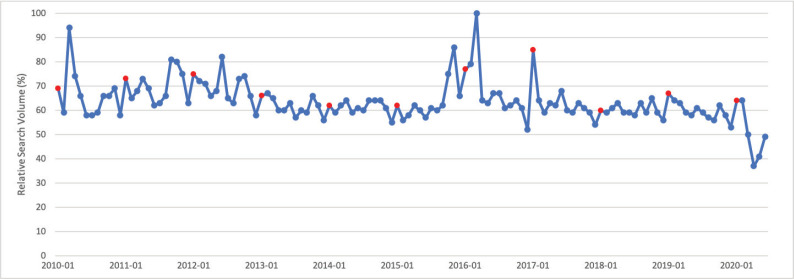
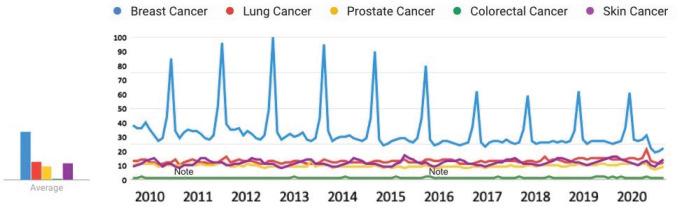
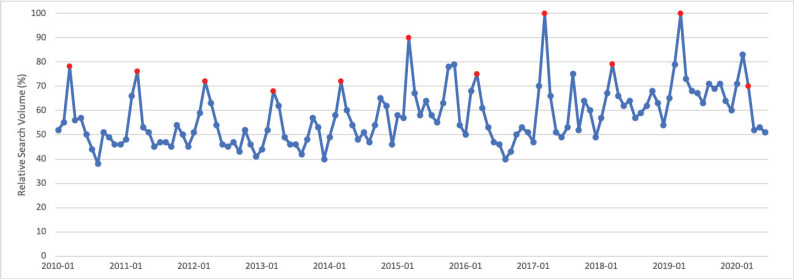
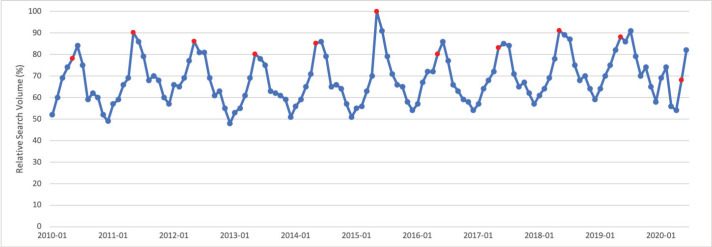
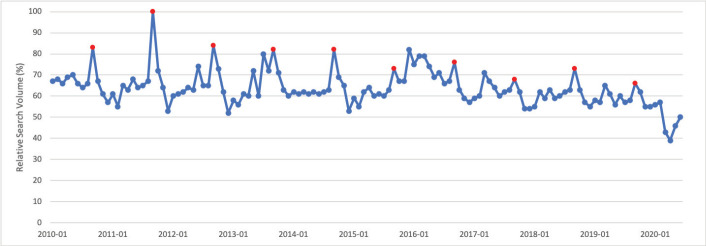
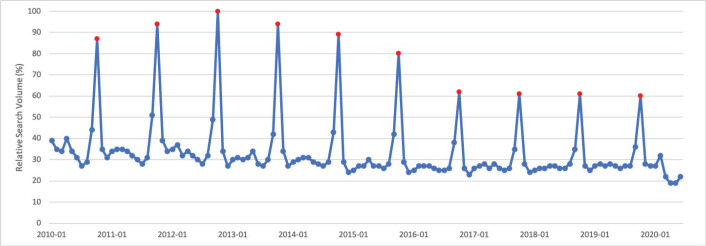
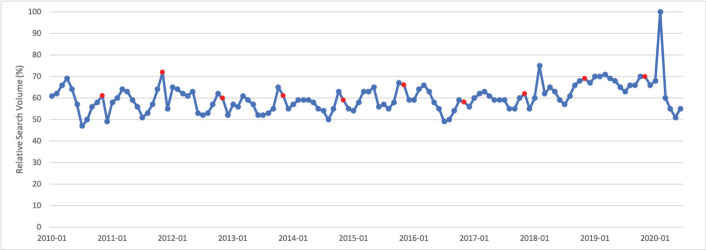
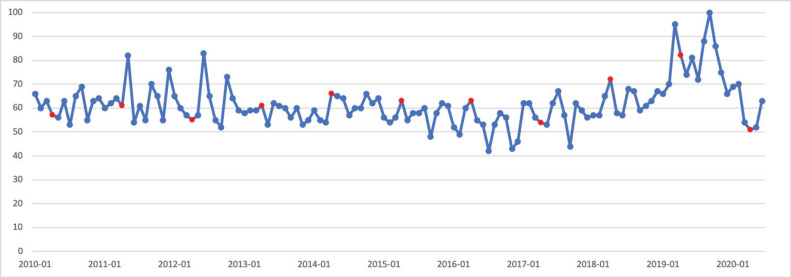
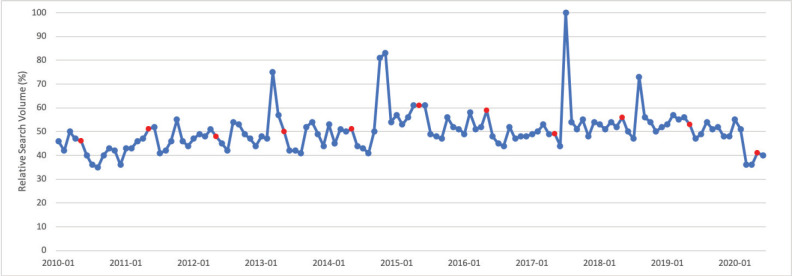
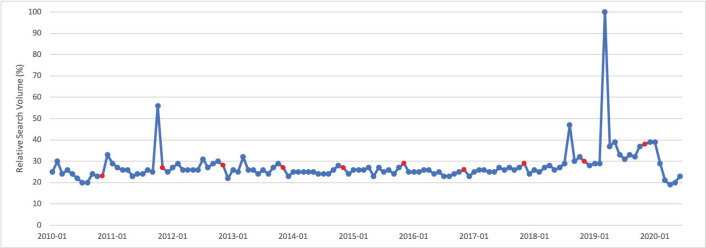
It is estimated that more than 600,000 people will die of cancer in the United States in 2020. Annual cancer diagnoses throughout the country are expected to rise in the coming years, which may further strain the American healthcare system. As such, it is vital that public health campaigns intended to reduce cancer morbidity and mortality are successful. Monthly cancer awareness campaigns have been used in the past to raise awareness and funding for various malignancies. One notable example is the 'Pink October' campaign to raise awareness for breast cancer. There has been limited study, however, on the effectiveness of cancer awareness campaigns for other cancers such as colorectal cancer, prostate cancer and cervical cancer. High-profile media coverage of celebrity cancer diagnoses and/or cancer-related deaths is another method by which knowledge of common cancers is dispersed to the public. In this study, we evaluate the impact of monthly cancer awareness campaigns as well as celebrity cancer diagnoses and/or deaths on Internet search traffic regarding various malignancies. We used the Google Trends database to evaluate public interest in 13 different cancers (and their respective cancer screening methods, when applicable) from January 2010 to June 2020. Public interest in 6 of 13 cancers (cervical cancer, colorectal cancer, skin cancer, ovarian cancer, breast cancer and lung cancer) was significantly higher in their respective awareness months when compared to the rest of the year. Furthermore, peak public interest for 9 of 13 cancers was associated with a media-event such as a monthly awareness campaign or celebrity diagnoses and/or death. Our findings illustrate the important role that the media plays in facilitating public interest in common cancers and their screening methods. Cancer awareness months can serve as an effective tool to increase Internet search traffic regarding a given malignancy. In the future, public health agencies can attempt to utilise increased search traffic to better educate the public, raise funds and improve enrolment in cancer screening programmes that reduce cancer morbidity and mortality.
据估计,2020年美国将有超过60万人死于癌症。预计在未来几年,全国每年的癌症诊断数量将会上升,这可能会给美国医疗系统带来更大压力。因此,旨在降低癌症发病率和死亡率的公共卫生运动取得成功至关重要。过去曾开展每月一次的癌症宣传活动,以提高人们对各种恶性肿瘤的认识并筹集资金。一个显著的例子是“粉色十月”乳腺癌宣传活动。然而,对于结直肠癌、前列腺癌和宫颈癌等其他癌症的宣传活动效果的研究却很有限。名人癌症诊断和/或与癌症相关的死亡事件在媒体上的高调报道是另一种向公众传播常见癌症知识的方式。在本研究中,我们评估了每月一次的癌症宣传活动以及名人癌症诊断和/或死亡事件对各种恶性肿瘤相关互联网搜索流量的影响。我们使用谷歌趋势数据库评估了2010年1月至2020年6月期间公众对13种不同癌症(以及适用时它们各自的癌症筛查方法)的兴趣。与一年中的其他时间相比,13种癌症中的6种(宫颈癌、结直肠癌、皮肤癌、卵巢癌、乳腺癌和肺癌)在各自的宣传月期间公众兴趣显著更高。此外,13种癌症中有9种的公众兴趣峰值与媒体事件相关,如每月一次的宣传活动或名人诊断和/或死亡。我们的研究结果表明,媒体在促进公众对常见癌症及其筛查方法的兴趣方面发挥着重要作用。癌症宣传月可以作为增加特定恶性肿瘤相关互联网搜索流量的有效工具。未来,公共卫生机构可以尝试利用增加的搜索流量更好地教育公众、筹集资金并提高癌症筛查项目的参与率,从而降低癌症发病率和死亡率。