Munguia-Vega Adrian, Weaver Amy Hudson, Domínguez-Contreras José F, Peckham Hoyt
Conservation Genetics Laboratory and Desert Laboratory on Tumamoc Hill, The University of Arizona, Tucson, AZ, USA.
@ Lab Applied Genomics, La Paz, Baja California Sur, Mexico.
PeerJ. 2021 Jan 29;9:e10750. doi: 10.7717/peerj.10750. eCollection 2021.
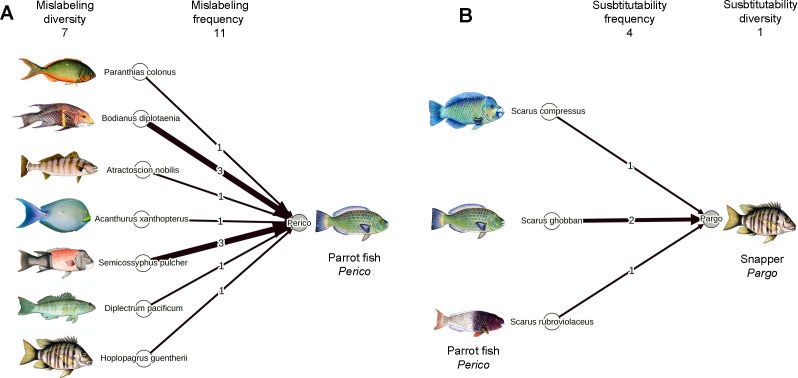
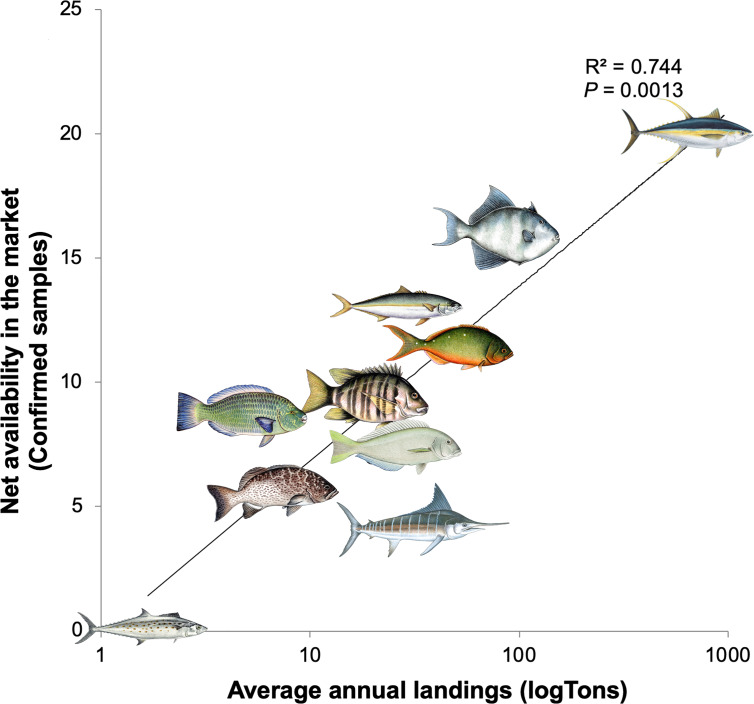
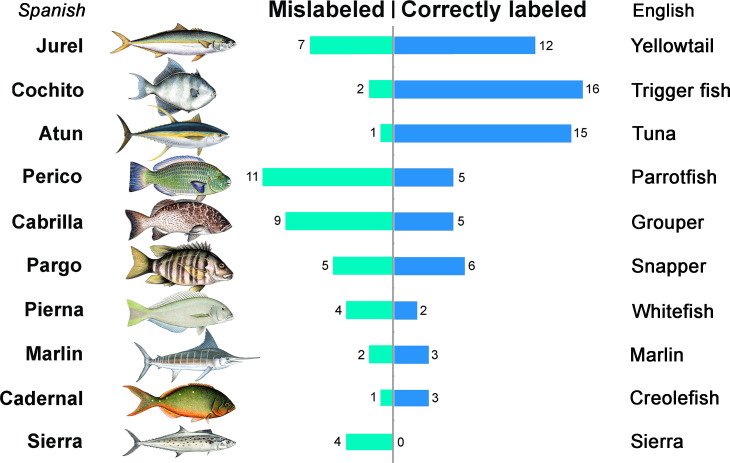
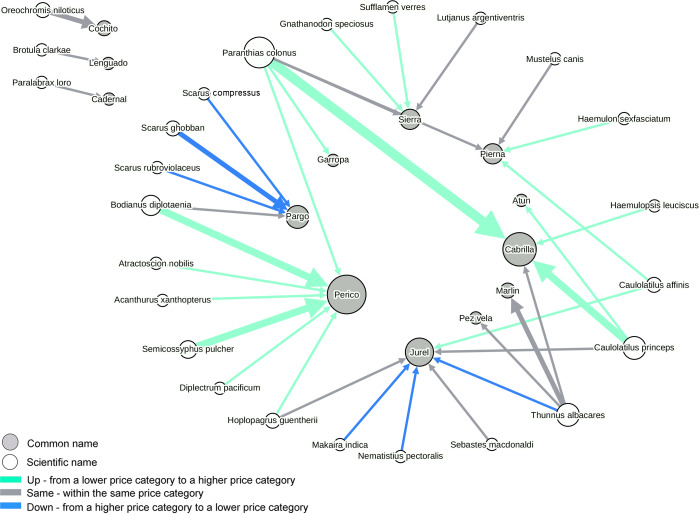
Seafood mislabeling has the potential to mask changes in the supply of species due to overfishing, while also preventing consumers from making informed choices about the origin, quality and sustainability of their food. Thus, there is a need to understand mislabeling and analyze the potential causes behind it to propose solutions. We conducted a COI DNA barcoding study in La Paz, Baja California Sur, Mexico, with 74 samples from fish markets and 50 samples from restaurants. We identified 38 species sold under 19 commercial names, from which at least ∼80% came from local small-scale fisheries. Overall, 49 samples, representing 40% (95% CI [31.4-48.3]) were considered mislabeled in our samples. Based on analyses where species were assigned to three price categories, economic incentives were associated with approximately half of the mislabeling events observed, suggesting that other motivating factors might simultaneously be at play. Using a network approach to describe both mislabeling (when species are mislabeled as the focal species) and substitution (when the focal species is used as substitute for others), we calculated proxies for the net availability of each species in the market. We found that local fish landings were a significant predictor of the net availability of the 10 most important commercial species at retail, but this true availability was masked to the eyes of the final consumer by both mislabeling and substitution. We hypothesize that the level of supply of each species could help explain mislabeling and substitution rates, where species in low supply and high demand could show higher mislabeling rates and rarely be used as substitutes, while species in high supply and low demand could be used as substitutes for the preferred species. Other factors affecting mislabeling include national regulations that restrict the fishing or commercialization of certain species and local and global campaigns that discourage specific patterns of consumption. We discuss how these factors might influence mislabeling and propose some solutions related to communication and education efforts to this local and global challenge.
海鲜误标有可能掩盖因过度捕捞导致的物种供应变化,同时也会使消费者无法就其食物的来源、质量和可持续性做出明智选择。因此,有必要了解误标情况并分析其背后的潜在原因,以提出解决方案。我们在墨西哥南下加利福尼亚州的拉巴斯进行了一项细胞色素氧化酶亚基I(COI)DNA条形码研究,采集了74个来自鱼市的样本和50个来自餐厅的样本。我们识别出以19个商业名称出售的38个物种,其中至少约80%来自当地小型渔业。总体而言,我们的样本中有49个样本(占40%,95%置信区间[31.4 - 48.3])被认为存在误标。基于将物种分为三个价格类别的分析,经济激励与约一半观察到的误标事件相关,这表明可能同时存在其他驱动因素。我们使用网络方法来描述误标(当物种被误标为目标物种时)和替代(当目标物种被用作其他物种的替代品时),计算了市场上每个物种的净可获得性代理指标。我们发现,当地鱼类上岸量是零售市场上10种最重要商业物种净可获得性的一个重要预测指标,但这种实际可获得性在最终消费者眼中被误标和替代所掩盖。我们假设每个物种的供应水平有助于解释误标和替代率,供应低但需求高的物种可能显示出更高的误标率且很少被用作替代品,而供应高但需求低的物种可能被用作首选物种的替代品。影响误标的其他因素包括限制某些物种捕捞或商业化的国家法规,以及劝阻特定消费模式的地方和全球宣传活动。我们讨论了这些因素可能如何影响误标,并针对这一地方和全球挑战提出了一些与沟通和教育努力相关的解决方案。