Post-Graduation Program in Dentistry, School of Dentistry, Ibirapuera University, São Paulo, Brazil.
A.C. Camargo Cancer Center, Stomatology Department, São Paulo, Brazil.
Biomed Res Int. 2021 Jan 25;2021:6684667. doi: 10.1155/2021/6684667. eCollection 2021.
The regeneration of dental pulp, especially in cases of pulp death of immature teeth, is the goal of the regenerative endodontic procedures (REPs) that are based on tissue engineering principles, consisting of stem cells, growth factors, and scaffolds. Photobiomodulation therapy (PBMT) showed to improve dental pulp regeneration through cell homing approaches in preclinical studies and has been proposed as the fourth element of tissue engineering. However, when a blood clot was used as a scaffold in one of these previous studies, only 30% of success was achieved. The authors pointed the instability of the blood clot as the regeneration shortcoming. Then, to circumvent this problem, a new scaffold was developed to be applied with the blood clot. The hypothesis of the present study was that an experimental injectable chitosan hydrogel would facilitate the three-dimensional spatial organization of endogenous stem cells in dental pulp regeneration with no interference on the positive influence of PBMT.
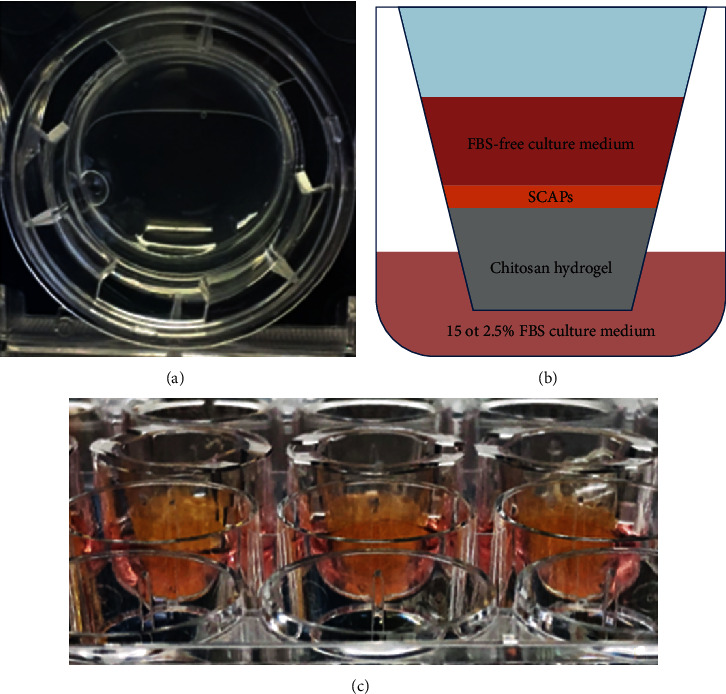
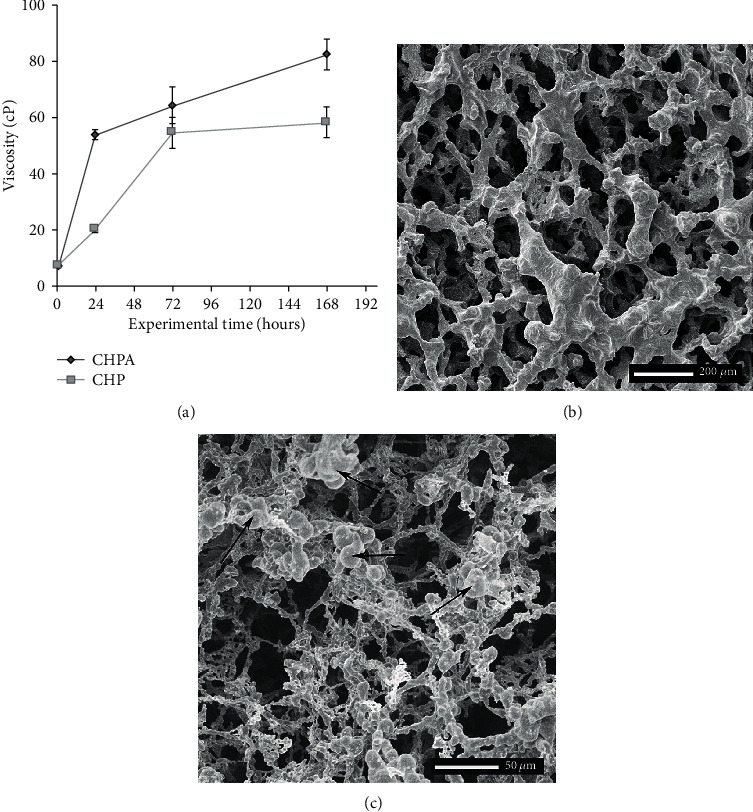
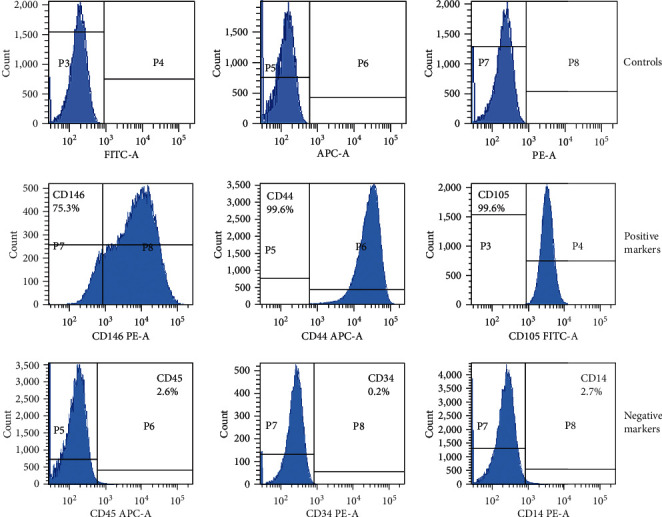
For the analysis, stem cells from the apical papilla (SCAPs) were characterized by flow cytometry and applied in the chitosan scaffold for evaluating adhesion, migration, and proliferation. For the analysis, the chitosan scaffold was applied in a rodent orthotopic dental pulp regeneration model under the influence of PBMT (660 nm; power output of 20 mW, beam area of 0.028 cm, and energy density of 5 J/cm).
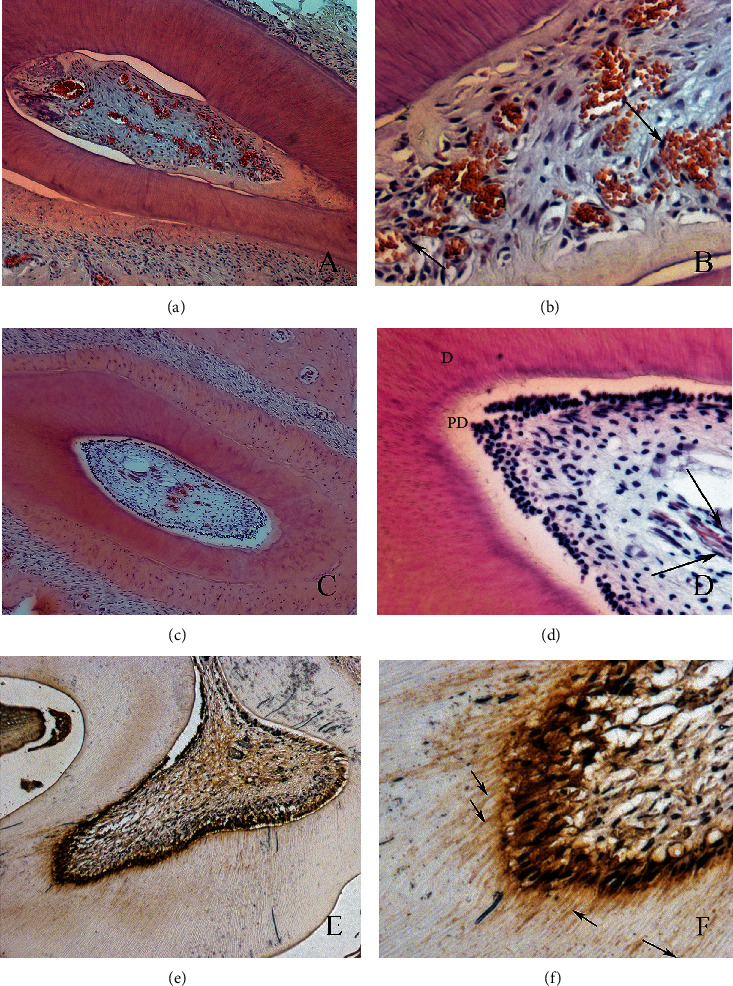
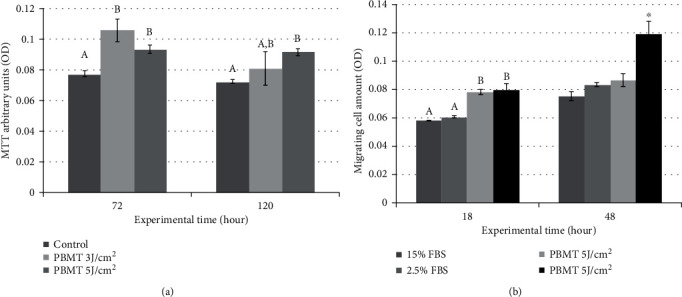
The scaffold tested in this study allowed significantly higher viability, proliferation, and migration of SCAPs when PBMT was applied, especially with the energy density of 5 J/cm. These results were in consonance to those of the data, where pulp-like tissue formation was observed inside the root canal.
Chitosan hydrogel when applied with a blood clot and PBMT could in the future improve previous results of dental pulp regeneration through cell homing approaches.
牙髓再生,特别是在未成熟牙齿牙髓坏死的情况下,是基于组织工程原理的再生性牙髓治疗(REP)的目标,包括干细胞、生长因子和支架。光生物调节疗法(PBMT)已被证明通过临床前研究中的细胞归巢方法来改善牙髓再生,并被提议作为组织工程的第四个要素。然而,当在其中一项先前的研究中使用血凝块作为支架时,仅取得了 30%的成功率。作者指出血凝块的不稳定性是再生的缺点。然后,为了避免这个问题,开发了一种新的支架与血凝块一起使用。本研究的假设是,一种实验性的可注射壳聚糖水凝胶将促进牙髓内源性干细胞的三维空间组织,而不会对 PBMT 的积极影响造成干扰。
为了分析,通过流式细胞术对根尖乳头干细胞(SCAPs)进行了表征,并将其应用于壳聚糖支架中,以评估其在牙髓再生中的黏附、迁移和增殖能力。为了分析,在 PBMT(660nm;输出功率 20mW、光束面积 0.028cm 和能量密度 5J/cm)的影响下,将壳聚糖支架应用于啮齿动物原位牙髓再生模型中。
本研究中测试的支架允许 SCAPs 的活力、增殖和迁移显著提高,尤其是在能量密度为 5J/cm 时。这些结果与数据结果一致,在根管内观察到了类似牙髓的组织形成。
壳聚糖水凝胶与血凝块和 PBMT 联合应用,可能在未来通过细胞归巢方法改善牙髓再生的先前结果。