Wang Zihao, Guo Xiaopeng, Gao Lu, Wang Yu, Guo Yi, Xing Bing, Ma Wenbin
Department of Neurosurgery, Peking Union Medical College Hospital, Chinese Academy of Medical Sciences and Peking Union Medical College, Beijing 100730, China.
Mol Ther Oncolytics. 2020 Dec 25;20:34-47. doi: 10.1016/j.omto.2020.12.012. eCollection 2021 Mar 26.
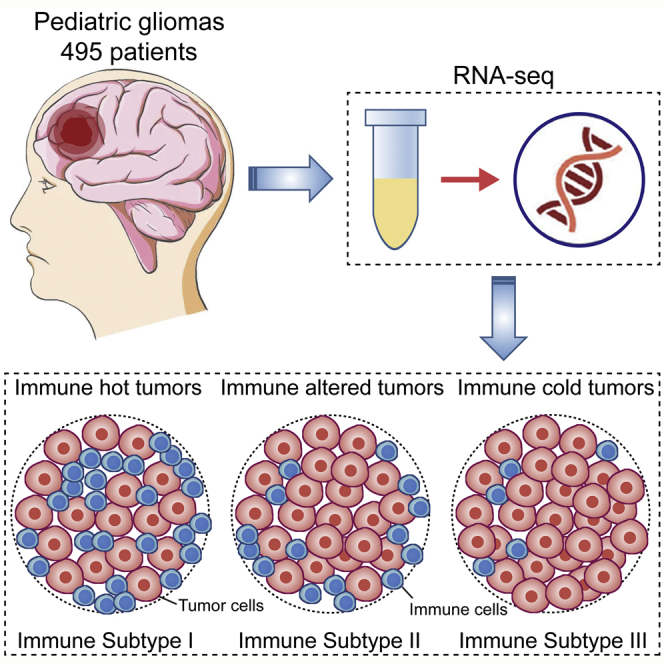
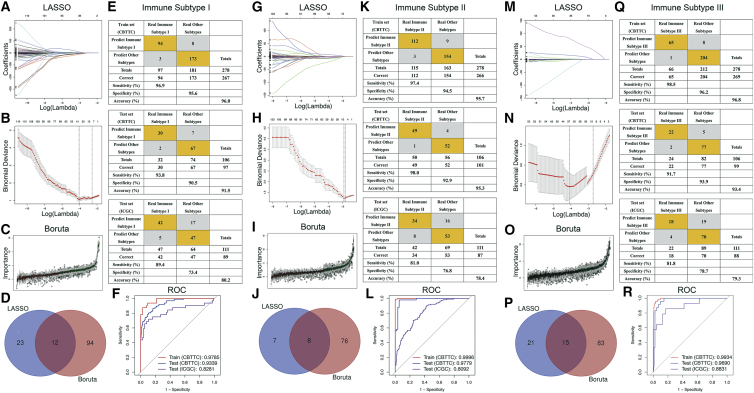
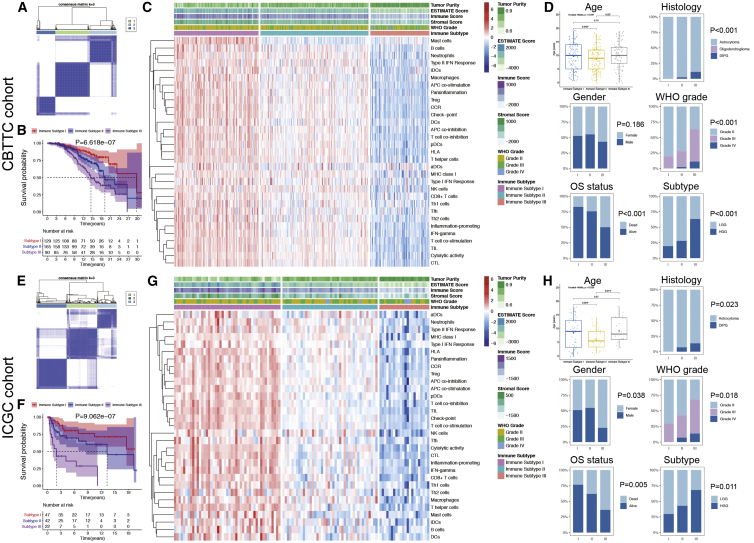
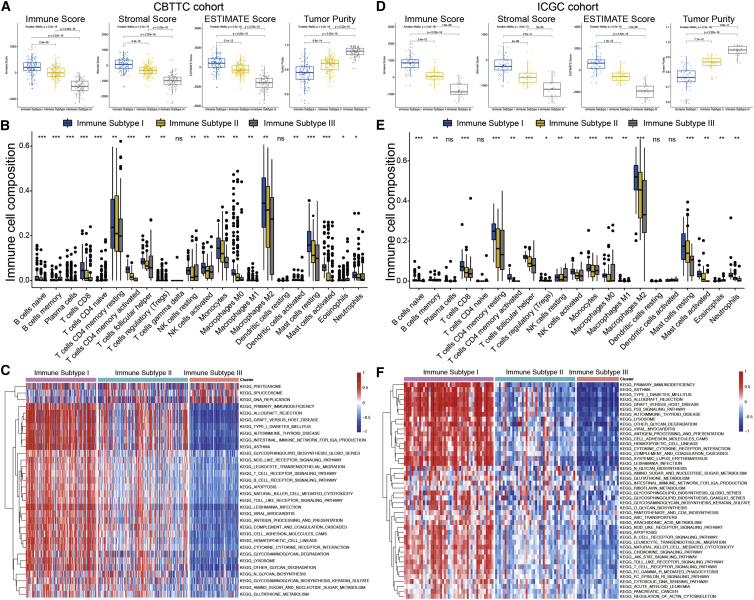
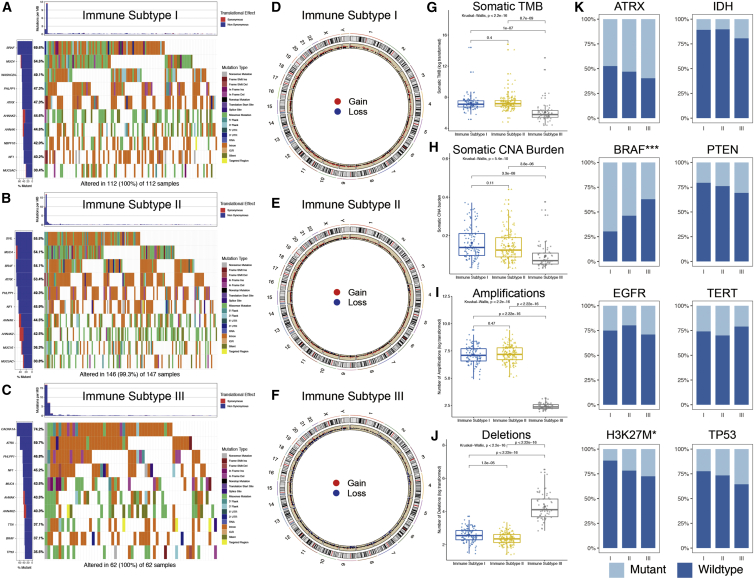
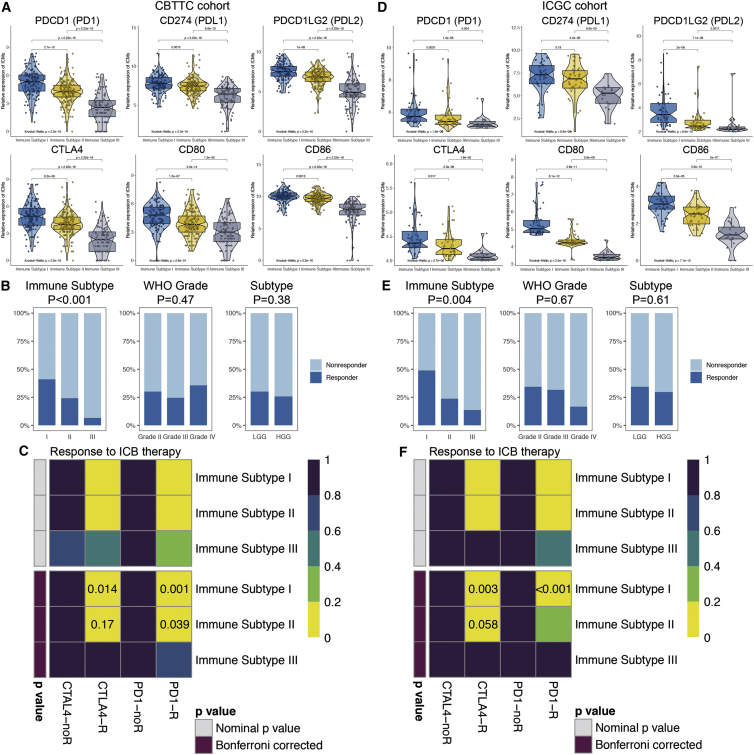
Pediatric gliomas (PGs) are the most common brain tumors in children and the leading cause of childhood cancer-related death. The understanding of the immune microenvironment is essential for developing effective antitumor immunotherapies. Transcriptomic data from 495 PGs were analyzed in this study, with 384 as a training cohort and 111 as a validation cohort. Macrophages were the most common immune infiltrates in the PG microenvironment, followed by T cells. PGs were classified into 3 immune subtypes (ISs) based on immunological profiling: "immune hot" (IS-I), "immune altered" (IS-II), and "immune cold" (IS-III). IS-I tumors, characterized by substantial immune infiltration and high immune checkpoint molecule (ICM) expression, had a favorable prognosis and were more likely to respond to anti-PD1 and anti-CTLA4 immunotherapies, whereas IS-III tumors, characterized by weak immune infiltration and low ICM expression, had a dismal prognosis and poor immunotherapy responsiveness. IS-II tumors represented a transitional stage. Immune classification was also correlated with somatic mutations, copy number alterations, and molecular pathways related to tumorigenesis, metabolism, and immune responses. Three predictive classifiers using eight representative genes were generated by machine learning methods for immune classification. This study established a reliable immunological profile-based classification system for PGs, providing implications for further immunotherapy strategies.
小儿胶质瘤(PGs)是儿童中最常见的脑肿瘤,也是儿童癌症相关死亡的主要原因。了解免疫微环境对于开发有效的抗肿瘤免疫疗法至关重要。本研究分析了495例PGs的转录组数据,其中384例作为训练队列,111例作为验证队列。巨噬细胞是PG微环境中最常见的免疫浸润细胞,其次是T细胞。根据免疫特征,PGs被分为3种免疫亚型(ISs):“免疫热”(IS-I)、“免疫改变”(IS-II)和“免疫冷”(IS-III)。IS-I肿瘤的特征是大量免疫浸润和高免疫检查点分子(ICM)表达,预后良好,更有可能对抗PD1和抗CTLA4免疫疗法产生反应,而IS-III肿瘤的特征是免疫浸润较弱和ICM表达较低,预后较差,免疫治疗反应性也较差。IS-II肿瘤代表一个过渡阶段。免疫分类还与体细胞突变、拷贝数改变以及与肿瘤发生、代谢和免疫反应相关的分子途径有关。通过机器学习方法生成了使用8个代表性基因的3种预测分类器用于免疫分类。本研究建立了一种基于可靠免疫特征的PGs分类系统,为进一步的免疫治疗策略提供了启示。