Spina Rosella, Saliba Sahar, Dupire François, Ptak Agata, Hehn Alain, Piutti Séverine, Poinsignon Sophie, Leclerc Sebastien, Bouguet-Bonnet Sabine, Laurain-Mattar Dominique
Université de Lorraine, CNRS, L2CM, F-54000 Nancy, France.
Department of Plant Breeding, Physiology and Seed Science, University of Agriculture in Krakow, Łobzowska 24, 31-140 Krakow, Poland.
Int J Mol Sci. 2021 Feb 10;22(4):1773. doi: 10.3390/ijms22041773.
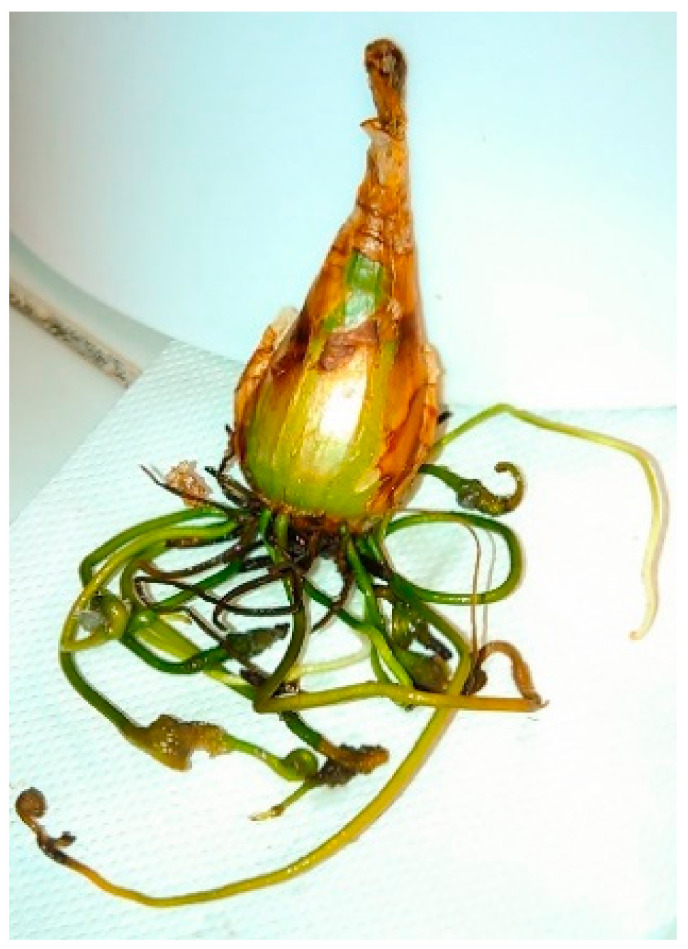
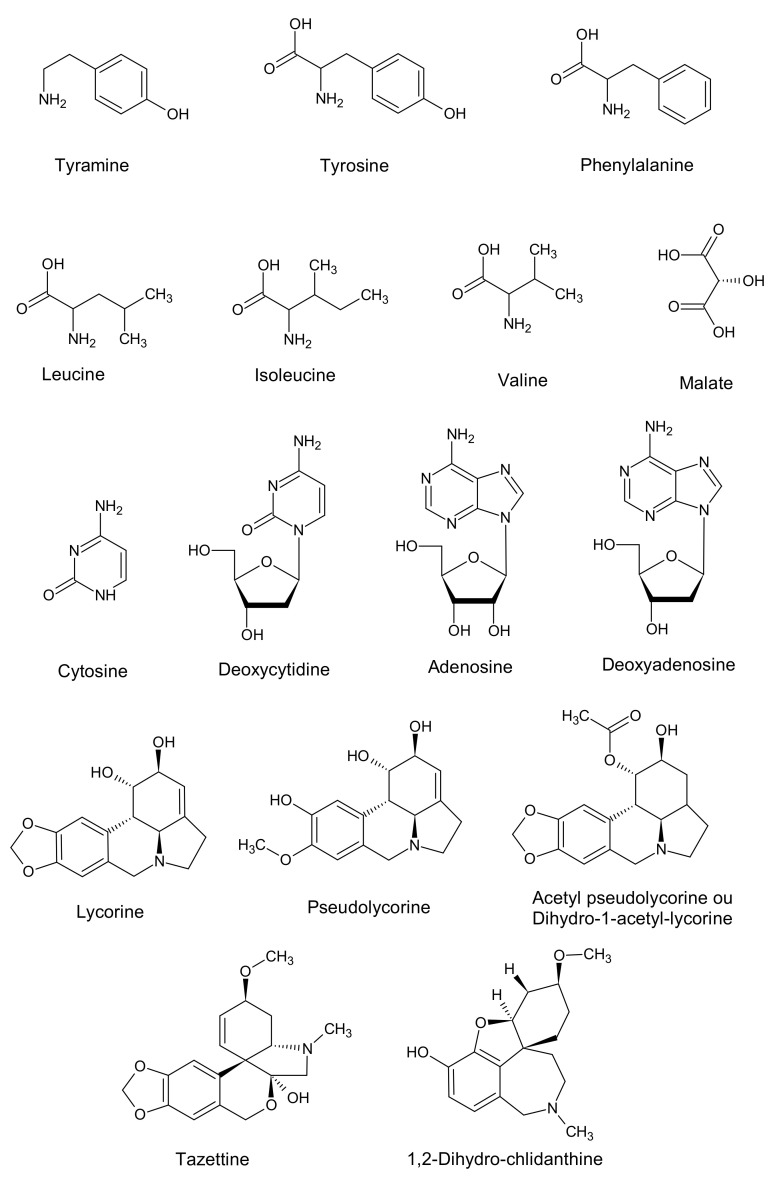
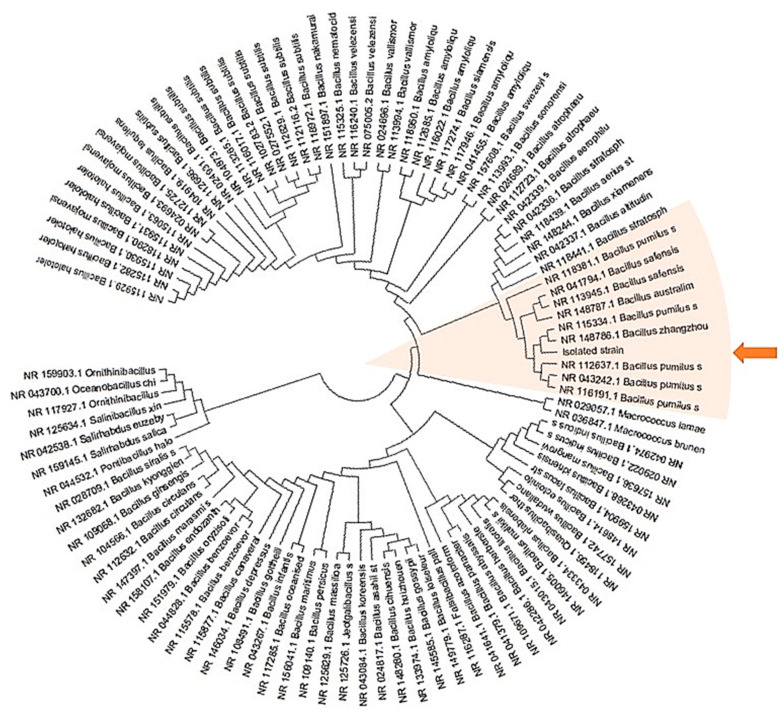
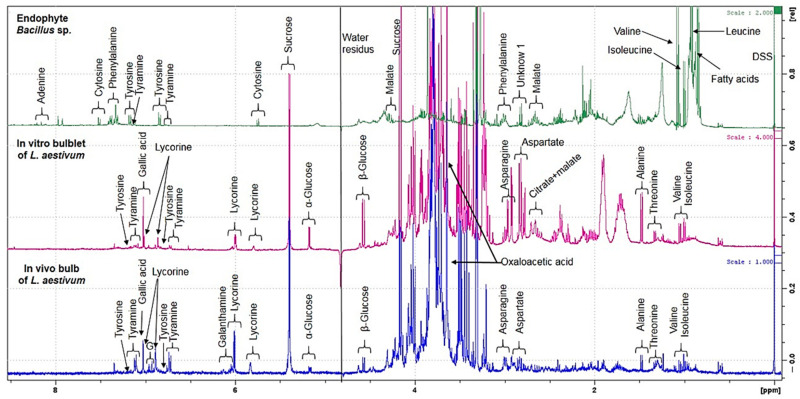
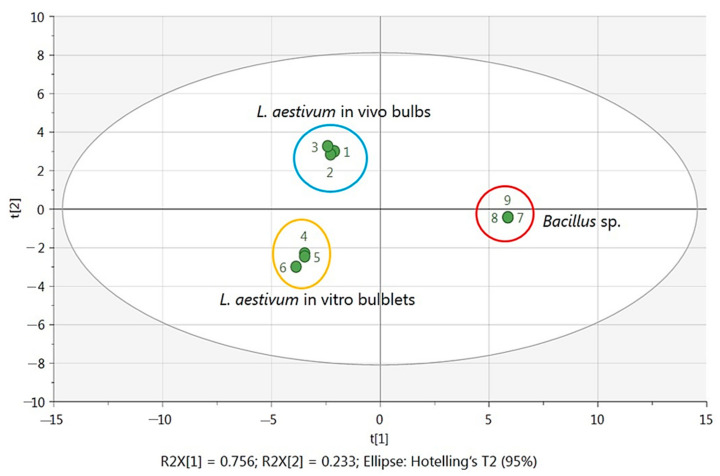
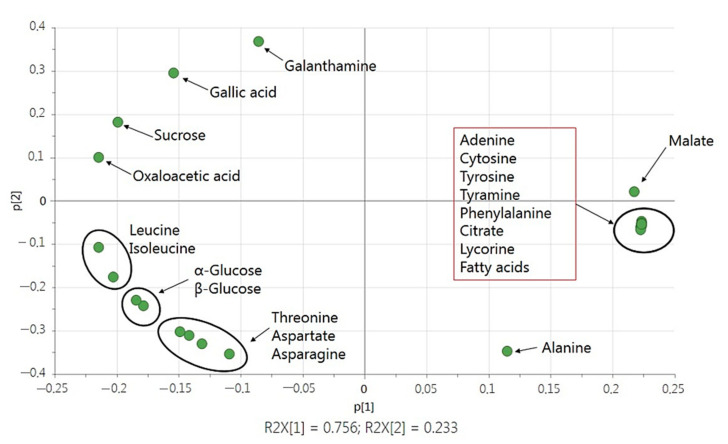
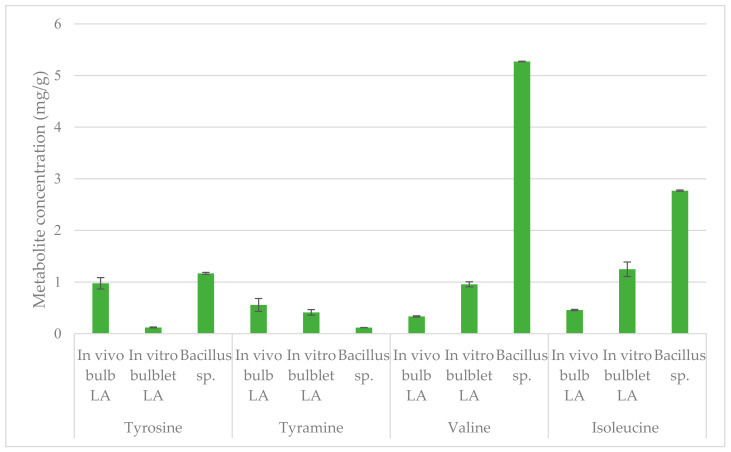
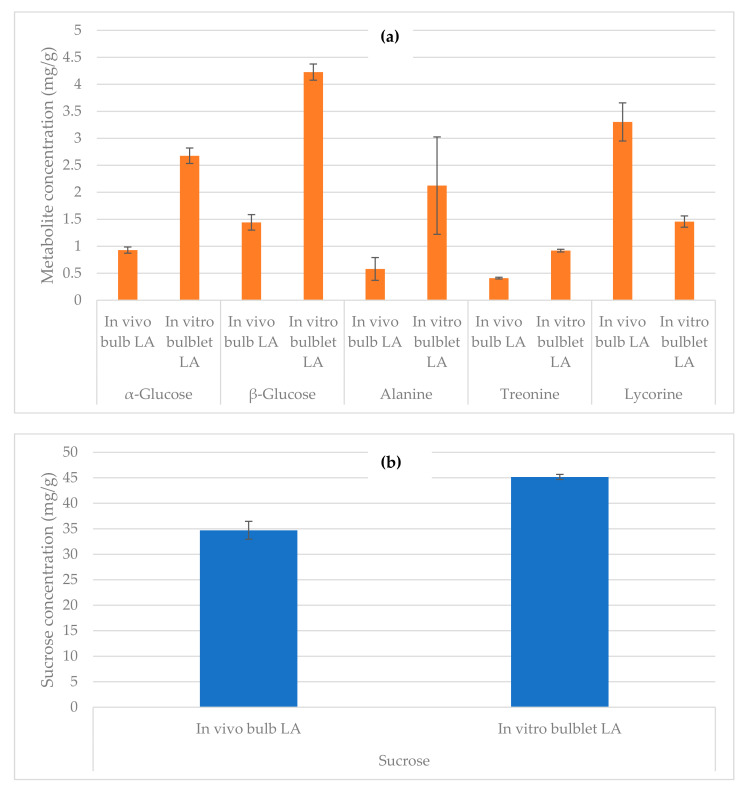
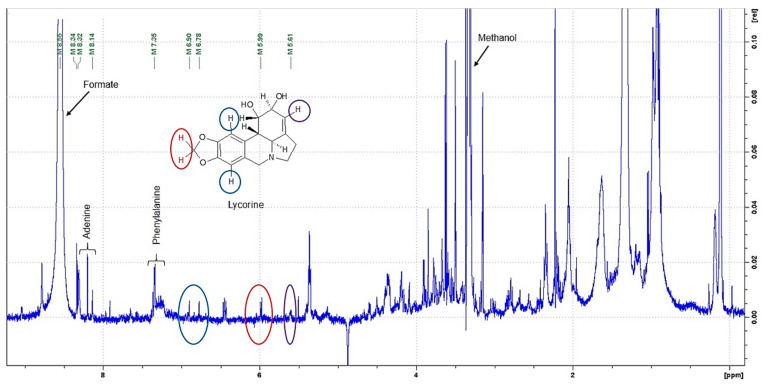
In this study, endophytic bacteria belonging to the genus were isolated from in vitro bulblets of and their ability to produce Amaryllidaceae alkaloids was studied. Proton Nuclear Magnetic Resonance (H NMR)-based metabolomics combined with multivariate data analysis was chosen to compare the metabolism of this plant (in vivo bulbs, in vitro bulblets) with those of the endophytic bacteria community. Primary metabolites were quantified by quantitative H NMR (qNMR) method. The results showed that tyrosine, one precursor of the Amaryllidaceae alkaloid biosynthesis pathway, was higher in endophytic extract compared to plant extract. In total, 22 compounds were identified including five molecules common to plant and endophyte extracts (tyrosine, isoleucine, valine, fatty acids and tyramine). In addition, endophytic extracts were analyzed using Liquid Chromatography-Mass Spectrometry (LC-MS) and Gas Chromatography-Mass Spectrometry (GC-MS) for the identification of compounds in very low concentrations. Five Amaryllidaceae alkaloids were detected in the extracts of endophytic bacteria. Lycorine, previously detected by H NMR, was confirmed with LC-MS analysis. Tazettine, pseudolycorine, acetylpseudolycorine, 1,2-dihydro-chlidanthine were also identified by LC-MS using the positive ionization mode or by GC-MS. In addition, 11 primary metabolites were identified in the endophytic extracts such as tyramine, which was obtained by decarboxylation of tyrosine. Thus, sp. isolated from bulblets synthesized some primary and specialized metabolites in common with the plant. These endophytic bacteria are an interesting new approach for producing the Amaryllidaceae alkaloid such as lycorine.
在本研究中,从[植物名称]的离体小鳞茎中分离出属于该属的内生细菌,并研究了它们产生石蒜科生物碱的能力。选择基于质子核磁共振(H NMR)的代谢组学结合多变量数据分析,来比较这种植物(体内鳞茎、离体小鳞茎)与内生细菌群落的代谢情况。通过定量H NMR(qNMR)方法对初级代谢产物进行定量。结果表明,石蒜科生物碱生物合成途径的前体之一酪氨酸,在内生菌提取物中比植物提取物中含量更高。总共鉴定出22种化合物,包括植物和内生菌提取物共有的5种分子(酪氨酸、异亮氨酸、缬氨酸、脂肪酸和酪胺)。此外,使用液相色谱 - 质谱联用(LC-MS)和气相色谱 - 质谱联用(GC-MS)分析内生菌提取物,以鉴定极低浓度的化合物。在内生细菌提取物中检测到5种石蒜科生物碱。之前通过H NMR检测到的石蒜碱,经LC-MS分析得到证实。此外,还通过LC-MS的正离子模式或GC-MS鉴定出了塔泽汀、假石蒜碱、乙酰假石蒜碱、1,2 - 二氢氯丹定。另外,在内生菌提取物中鉴定出11种初级代谢产物,如由酪氨酸脱羧得到的酪胺。因此,从[植物名称]小鳞茎中分离出的[内生细菌名称]合成了一些与[植物名称]植物共有的初级和特殊代谢产物。这些内生细菌是生产石蒜科生物碱如石蒜碱的一种有趣的新方法。