Beijing Institute of Respiratory Medicine, Department of Respiratory Medicine and Critical Care, Beijing Chaoyang Hospital, Capital Medical University, Beijing, 100020, China.
Hunan Prevention and Treatment Institute for Occupational Diseases, Changsha, 410007, Hunan, China.
BMC Pulm Med. 2021 Feb 12;21(1):57. doi: 10.1186/s12890-021-01399-5.
Anti-synthetase syndrome (ASSD) is a chronic autoimmune condition characterized by antibodies directed against an aminoacycl transfer RNA synthetase (ARS) along with a group of clinical features including the classical clinical triad: inflammatory myopathy, arthritis, and interstitial lung disease (ILD). ASSD is highly heterogenous due to different organ involvement, and ILD is the main cause of mortality and function loss, which presents as different patterns when diagnosed. We designed this retrospective cohort to describe the clinical features and disease behaviour of ASSD associated ILD.
Data of 108 cases of ASSD associated ILD were retrospectively collected in Beijing Chaoyang Hospital from December 2017 to March 2019. Data were obtained from the Electronic Medical Record system. Patients were divided into 5 groups according to distinct aminoacyl tRNA synthetase (ARS) antibodies.
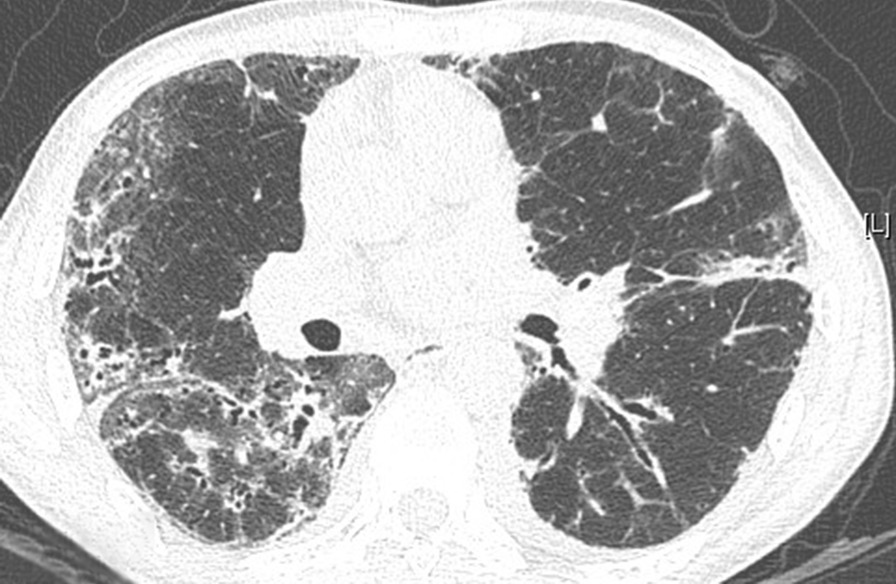
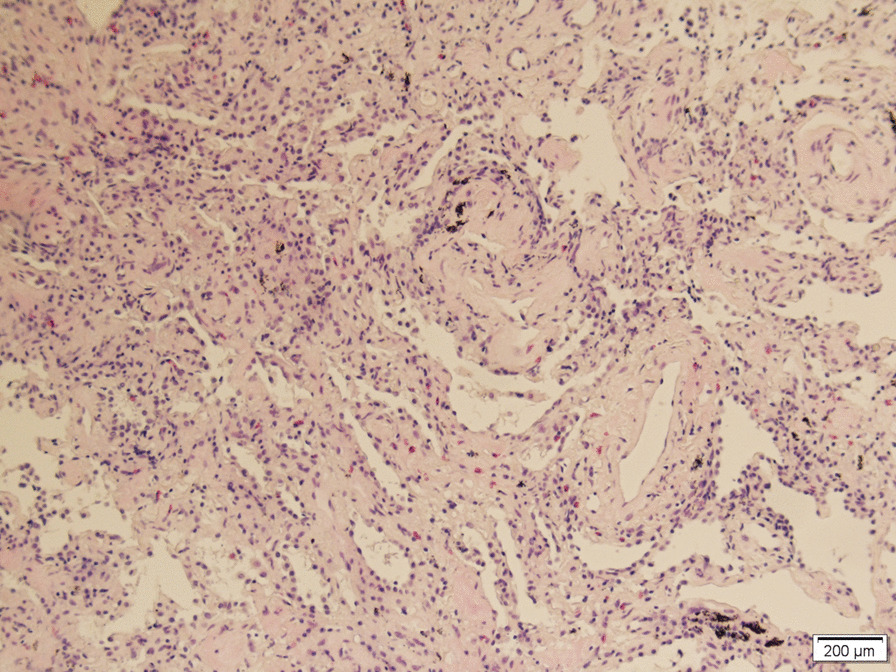
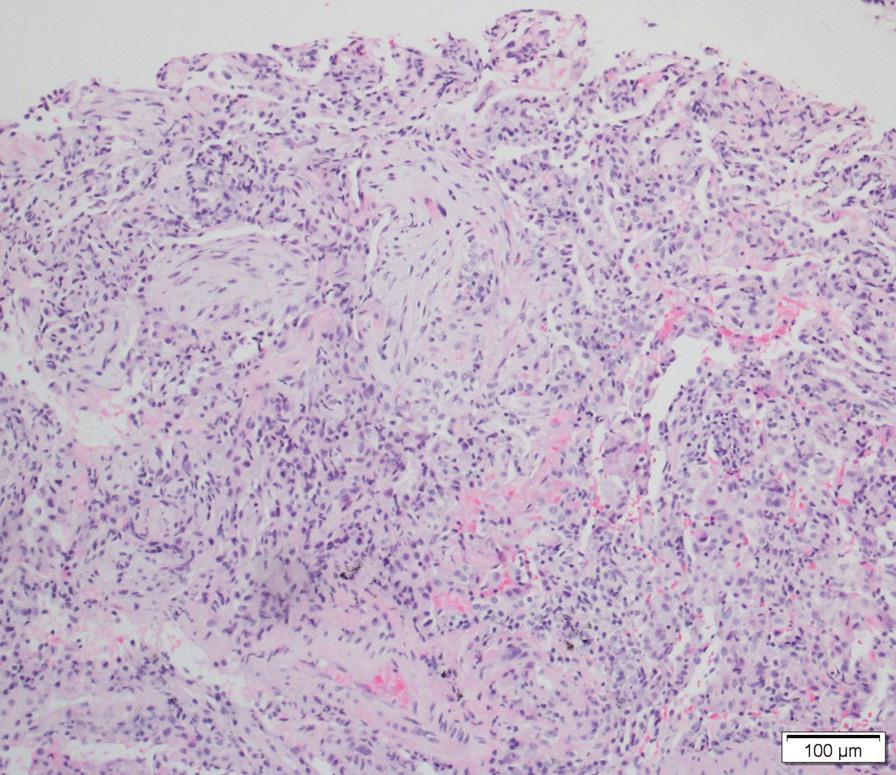
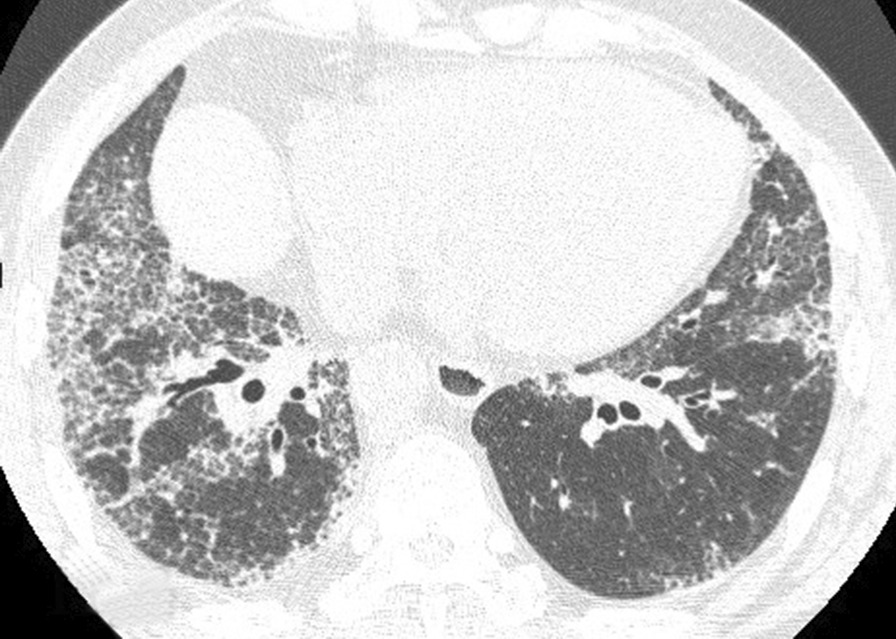
Overall, 108 consecutive patients were recruited. 33 were JO-1 positive, 30 were PL-7 positive, 23 were EJ positive, 13 were PL-12 positive and 9 were OJ positive. The JO-1 (+) group had a significant higher rate of mechanic's hand (57.6%) than other 4 groups. Polymyositis/dermatomyositis (PM/DM) was diagnosed in 25 (23.1%) patients and no difference was observed among the 5 groups. The PL-7 (+) group had a higher frequency of UIP pattern (13.3%) than the other 4 groups but the difference was not significant, and the EJ (+) group had the most frequent OP pattern (78.2%), which was significantly higher than the PL-7 (+) (P < 0.001) and PL-12 (+) groups (P = 0.025). The median follow-up time was 10.7 months, during which no patients died. All received prednisone treatment, with or without immunosuppressants. At the 6-month follow-up, 96.3% of all patients (104/108) had a positive response to therapy, the JO-1 (+) and EJ (+) groups had a significantly higher improvement of forced vital capacity than the other 3 groups (P < 0.05), and the PL-7 group had the lowest FVC improvement (P < 0.05). The JO-1 (+) group and EJ (+) group had significantly higher anti-Ro-52 positive occurrence than the other 3 groups (P < 0.05).
Anti PL-7 antibody had the same frequency as anti-JO-1 in ASSD-ILD, in which the ILD pattern was different with distinct anti-ARS antibodies. Most ASSD-ILD had a positive response to steroid therapies, with or without immunosuppressants. The PL-7 (+) group had the highest occurrence of UIP pattern, and a significantly lower response to therapy.
抗合成酶综合征(ASSD)是一种慢性自身免疫性疾病,其特征是针对氨酰基 tRNA 合成酶(ARS)的抗体以及一组临床特征,包括经典的临床三联征:炎性肌病、关节炎和间质性肺病(ILD)。ASSD 由于不同的器官受累而具有高度异质性,ILD 是导致死亡率和功能丧失的主要原因,在诊断时呈现出不同的模式。我们设计了这项回顾性队列研究,以描述 ASSD 相关 ILD 的临床特征和疾病行为。
我们回顾性收集了 2017 年 12 月至 2019 年 3 月期间北京朝阳医院 108 例 ASSD 相关 ILD 患者的数据。数据来自电子病历系统。根据不同的氨酰基 tRNA 合成酶(ARS)抗体,将患者分为 5 组。
总体而言,共纳入 108 例连续患者。33 例为 JO-1 阳性,30 例为 PL-7 阳性,23 例为 EJ 阳性,13 例为 PL-12 阳性,9 例为 OJ 阳性。JO-1(+)组的机械性手发生率(57.6%)明显高于其他 4 组。25 例(23.1%)患者诊断为多发性肌炎/皮肌炎(PM/DM),但 5 组间无差异。PL-7(+)组 UIP 模式的频率(13.3%)高于其他 4 组,但差异无统计学意义,EJ(+)组 OP 模式的频率(78.2%)最高,明显高于 PL-7(+)组(P<0.001)和 PL-12(+)组(P=0.025)。中位随访时间为 10.7 个月,期间无患者死亡。所有患者均接受泼尼松治疗,联合或不联合免疫抑制剂。在 6 个月随访时,所有患者(104/108)的治疗反应均为阳性,JO-1(+)和 EJ(+)组用力肺活量的改善明显高于其他 3 组(P<0.05),PL-7 组用力肺活量的改善最低(P<0.05)。JO-1(+)组和 EJ(+)组抗 Ro-52 阳性的发生率明显高于其他 3 组(P<0.05)。
抗 PL-7 抗体在 ASSD-ILD 中的频率与抗 JO-1 抗体相同,其中 ILD 模式因不同的抗 ARS 抗体而不同。大多数 ASSD-ILD 对类固醇治疗有阳性反应,联合或不联合免疫抑制剂。PL-7(+)组 UIP 模式的发生率最高,对治疗的反应明显较低。