Stanford University School of Medicine, Stanford, CA, USA.
Department of Global Health and Social Medicine, Harvard Medical School, Boston, USA.
Int J Health Geogr. 2021 Feb 12;20(1):8. doi: 10.1186/s12942-021-00262-4.
Reliable surveillance systems are essential for identifying disease outbreaks and allocating resources to ensure universal access to diagnostics and treatment for endemic diseases. Yet, most countries with high disease burdens rely entirely on facility-based passive surveillance systems, which miss the vast majority of cases in rural settings with low access to health care. This is especially true for malaria, for which the World Health Organization estimates that routine surveillance detects only 14% of global cases. The goal of this study was to develop a novel method to obtain accurate estimates of disease spatio-temporal incidence at very local scales from routine passive surveillance, less biased by populations' financial and geographic access to care.
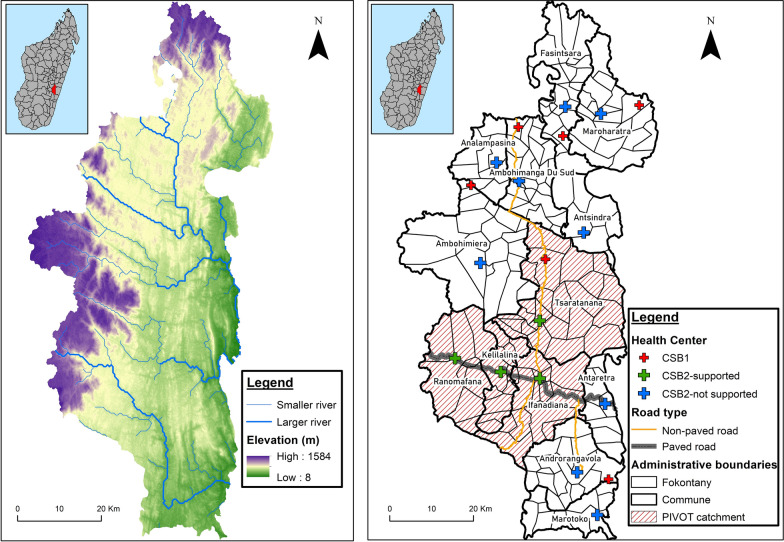
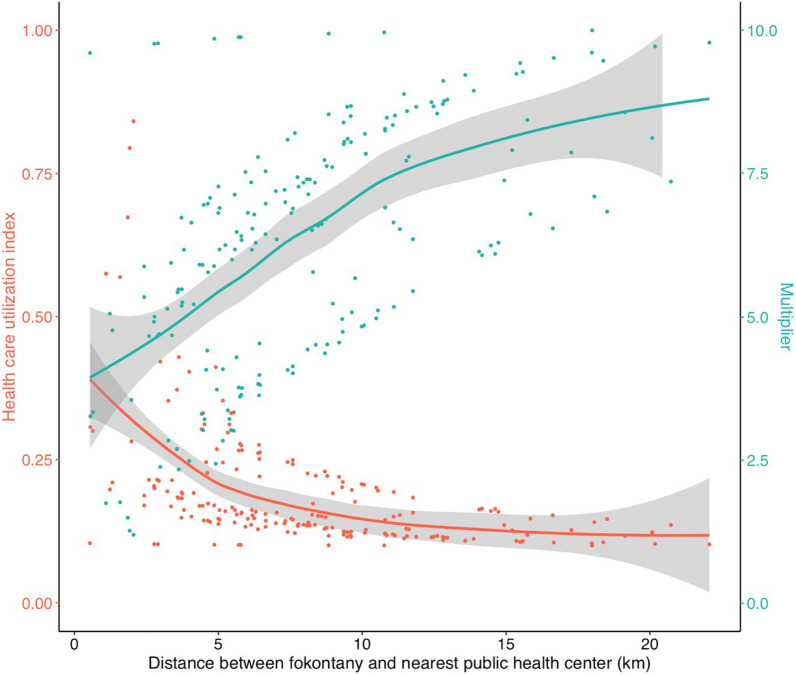
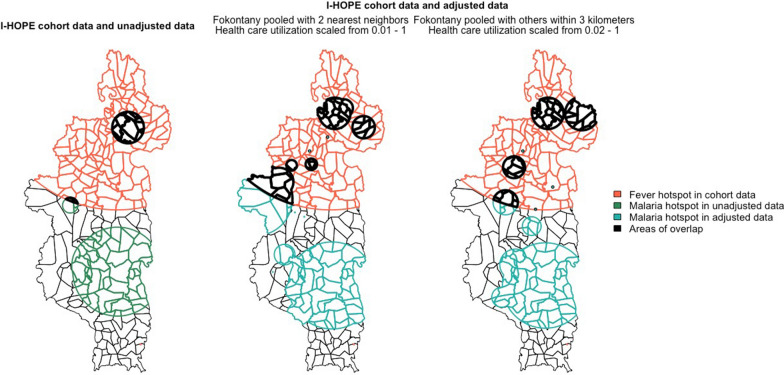
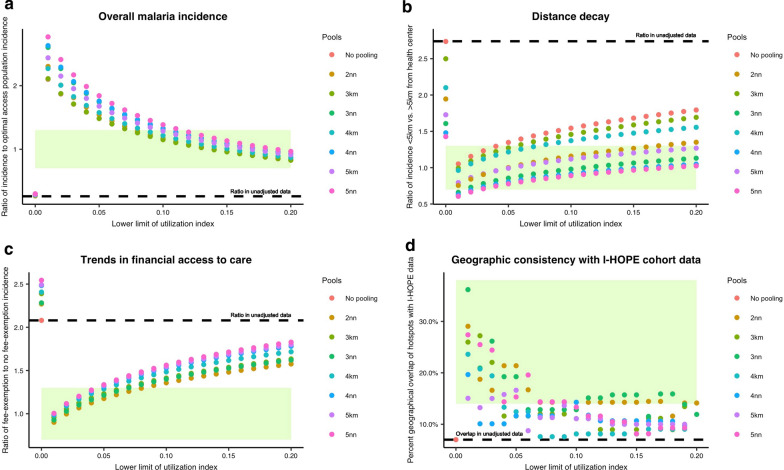
We use a geographically explicit dataset with residences of the 73,022 malaria cases confirmed at health centers in the Ifanadiana District in Madagascar from 2014 to 2017. Malaria incidence was adjusted to account for underreporting due to stock-outs of rapid diagnostic tests and variable access to healthcare. A benchmark multiplier was combined with a health care utilization index obtained from statistical models of non-malaria patients. Variations to the multiplier and several strategies for pooling neighboring communities together were explored to allow for fine-tuning of the final estimates. Separate analyses were carried out for individuals of all ages and for children under five. Cross-validation criteria were developed based on overall incidence, trends in financial and geographical access to health care, and consistency with geographic distribution in a district-representative cohort. The most plausible sets of estimates were then identified based on these criteria.
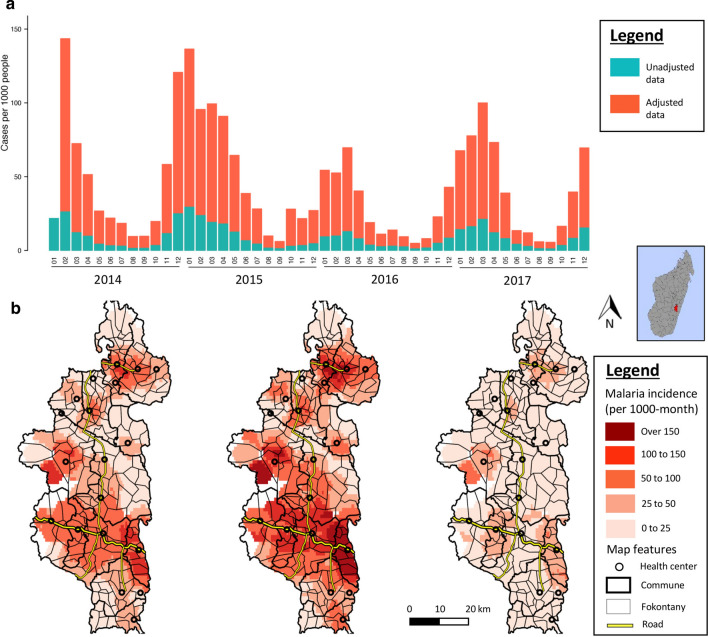
Passive surveillance was estimated to have missed about 4 in every 5 malaria cases among all individuals and 2 out of every 3 cases among children under five. Adjusted malaria estimates were less biased by differences in populations' financial and geographic access to care. Average adjusted monthly malaria incidence was nearly four times higher during the high transmission season than during the low transmission season. By gathering patient-level data and removing systematic biases in the dataset, the spatial resolution of passive malaria surveillance was improved over ten-fold. Geographic distribution in the adjusted dataset revealed high transmission clusters in low elevation areas in the northeast and southeast of the district that were stable across seasons and transmission years.
Understanding local disease dynamics from routine passive surveillance data can be a key step towards achieving universal access to diagnostics and treatment. Methods presented here could be scaled-up thanks to the increasing availability of e-health disease surveillance platforms for malaria and other diseases across the developing world.
可靠的监测系统对于识别疾病暴发和分配资源以确保普遍获得针对地方病的诊断和治疗至关重要。然而,大多数疾病负担沉重的国家完全依赖于基于机构的被动监测系统,这些系统在农村地区(那里获得医疗保健的机会较少)会漏掉绝大多数病例。这在疟疾方面尤其如此,世界卫生组织估计常规监测仅发现了全球病例的 14%。本研究的目的是开发一种新方法,以便从常规被动监测中获得非常局部的疾病时空发病率的准确估计,从而减少因人群获得医疗保健的经济和地理条件而产生的偏倚。
我们使用一个具有地理位置的数据集,其中包括 2014 年至 2017 年在马达加斯加 Ifanadiana 区卫生中心确诊的 73,022 例疟疾病例的住所。疟疾发病率根据快速诊断检测试剂盒缺货和医疗保健可及性的变化进行了调整。结合从非疟疾患者统计模型中获得的医疗保健利用率指数,使用基准乘数。探索了乘数的变化和将相邻社区合并的几种策略,以允许对最终估计值进行微调。分别对所有年龄的个体和五岁以下的儿童进行了分析。根据总体发病率、获得卫生保健的财务和地理条件的趋势以及与区代表队列的地理分布的一致性,制定了交叉验证标准。然后根据这些标准确定最合理的估计集。
被动监测估计,在所有个体中,大约每 5 例疟疾病例就有 4 例被漏报,在五岁以下儿童中,大约每 3 例就有 2 例被漏报。调整后的疟疾估计值受人群获得医疗保健的经济和地理条件差异的影响较小。高传播季节的平均调整后每月疟疾发病率几乎是低传播季节的四倍。通过收集患者层面的数据并消除数据集中的系统偏差,被动疟疾监测的空间分辨率提高了十倍以上。在调整后的数据集的地理分布中,发现了东北部和东南部低海拔地区的高传播集群,这些集群在整个季节和传播年份都保持稳定。
从常规被动监测数据中了解当地疾病动态可能是实现普遍获得诊断和治疗的关键步骤。由于发展中国家越来越多地使用电子卫生疾病监测平台来监测疟疾和其他疾病,因此这里提出的方法可以得到扩展。