Department of Pediatrics, Universidade Federal de São Paulo, Escola Paulista de Medicina, Rua Dr. Diogo de Faria, 671, São Paulo, SP, CEP 04037002, Brazil.
Universidade Federal de São Paulo, Campus Diadema, São Paulo, SP, Brazil.
Orphanet J Rare Dis. 2021 Feb 12;16(1):83. doi: 10.1186/s13023-021-01732-5.
Ataxia-Telangiectasia (A-T) is a multi-system disorder that may be associated with endocrine changes, oxidative stress in addition to inflammation. Studies suggest that selenium is a trace element related to protection against damage caused by oxidative stress.
To describe the plasma levels of selenium and erythrocyte glutathione peroxidase activity in A-T patients and to relate them to oxidative stress and lipid status biomarkers.
This is a cross-sectional and controlled study evaluating 22 A-T patients (age median, 12.2 years old) matched by gender and age with 18 healthy controls. We evaluated: nutritional status, food intake, plasma selenium levels, erythrocyte glutathione peroxidase activity, lipid status, inflammation and oxidative stress biomarkers.
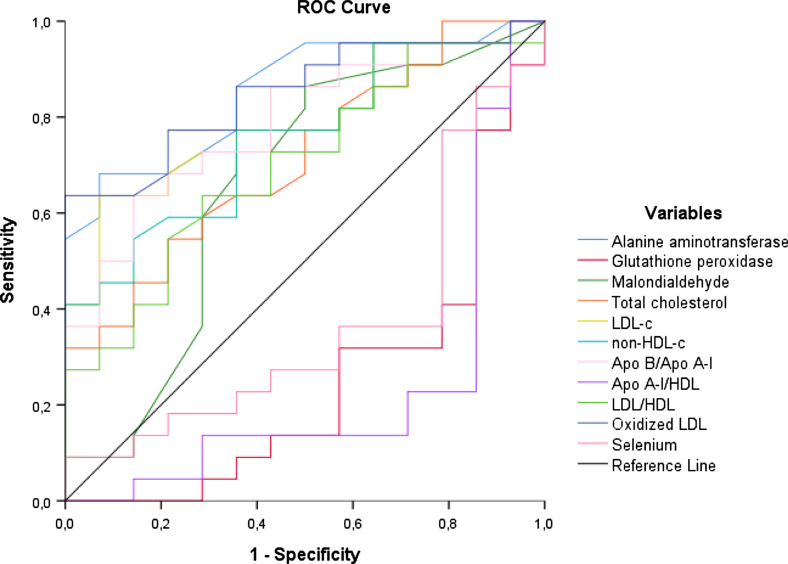
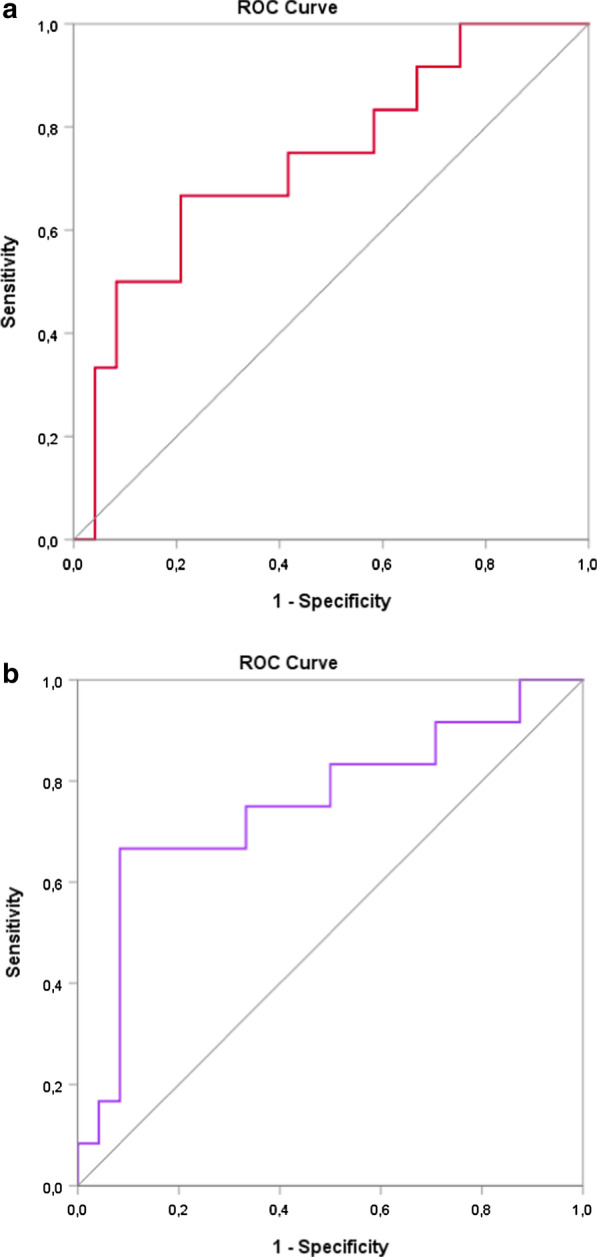
Adequate levels of selenium were observed in 24/36 (66.7%) in this evaluated population. There was no statistically significant difference between the groups in selenium levels [47.6 μg/L (43.2-57.0) vs 54.6 (45.2-62.6) μg/dL, p = 0.242]. Nine of A-T patients (41%) had selenium levels below the reference value. The A-T group presented higher levels of LDL-c, non-HDL-c, oxidized LDL, Apo B, Apo-B/Apo-A-I1, LDL-c/HDL-c ratio, malondialdehyde [3.8 µg/L vs 2.8 µg/L, p = 0.029] and lower Apo-A-I1/HDL-c and glutathione peroxidase activity [7300 U/L vs 8686 U/L, p = 0.005]. Selenium levels were influenced, in both groups, independently, by the concentrations of oxidized LDL, malonaldehyde and non-HDL-c. The oxidized LDL (AUC = 0.849) and ALT (AUC = 0.854) were the variables that showed the greatest discriminatory power between groups.
In conclusion, we observed the presence of selenium below the reference value in nearly 40% and low GPx activity in A-T patients. There was a significant, inverse and independent association between selenium concentrations and oxidative stress biomarkers. Those data reinforce the importance of assessing the nutritional status of selenium in those patients.
共济失调-毛细血管扩张症(A-T)是一种多系统疾病,可能与内分泌变化、氧化应激以及炎症有关。研究表明,硒是一种与抵抗氧化应激损伤有关的微量元素。
描述 A-T 患者的血浆硒水平和红细胞谷胱甘肽过氧化物酶活性,并将其与氧化应激和脂质状态生物标志物相关联。
这是一项横断面对照研究,共纳入 22 名 A-T 患者(年龄中位数为 12.2 岁),并按照性别和年龄与 18 名健康对照相匹配。我们评估了:营养状况、饮食摄入、血浆硒水平、红细胞谷胱甘肽过氧化物酶活性、脂质状态、炎症和氧化应激生物标志物。
在所评估的人群中,有 24/36(66.7%)的硒水平充足。两组间硒水平无统计学差异[47.6μg/L(43.2-57.0)vs 54.6μg/dL(45.2-62.6),p=0.242]。9 名 A-T 患者(41%)的硒水平低于参考值。A-T 组的 LDL-c、非 HDL-c、氧化 LDL、Apo B、Apo-B/Apo-A-I1、LDL-c/HDL-c 比值、丙二醛[3.8μg/L 比 2.8μg/L,p=0.029]水平较高,Apo-A-I1/HDL-c 和谷胱甘肽过氧化物酶活性[7300 U/L 比 8686 U/L,p=0.005]较低。在两组中,硒水平均受氧化 LDL、丙二醛和非 HDL-c 浓度的独立影响。氧化 LDL(AUC=0.849)和 ALT(AUC=0.854)是两组间具有最大区分能力的变量。
总之,我们观察到近 40%的 A-T 患者存在硒参考值以下和谷胱甘肽过氧化物酶活性低的情况。硒浓度与氧化应激生物标志物之间存在显著、负相关和独立的关联。这些数据强调了评估这些患者硒营养状况的重要性。