Center for Regenerative Medicine, National Center for Child Health and Development Research Institute, 2-10-1 Okura, Setagaya, Tokyo, 157-8535, Japan.
Center for Maternal-Fetal, Neonatal and Reproductive Medicine, National Center for Child Health and Development, 2-10-1 Okura, Setagaya, Tokyo, 157-8535, Japan.
Stem Cell Res Ther. 2021 Feb 12;12(1):130. doi: 10.1186/s13287-021-02188-x.
Thin endometrium adversely affects reproductive success rates with fertility treatment. Autologous transplantation of exogenously prepared endometrium can be a promising therapeutic option for thin endometrium; however, endometrial epithelial cells have limited expansion potential, which needs to be overcome in order to make regenerative medicine a therapeutic strategy for refractory thin endometrium. Here, we aimed to perform long-term culture of endometrial epithelial cells in vitro.
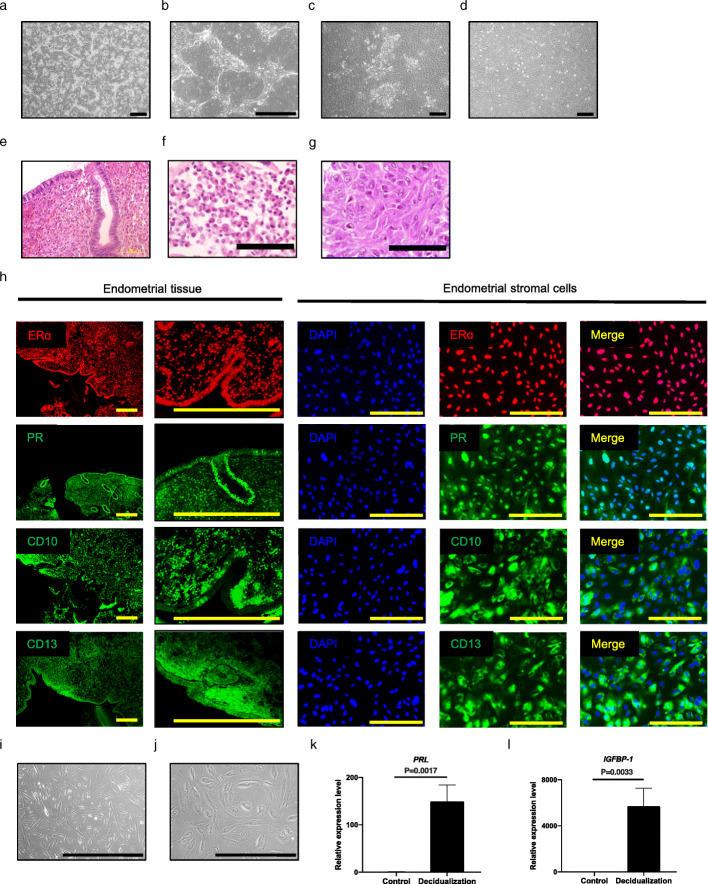
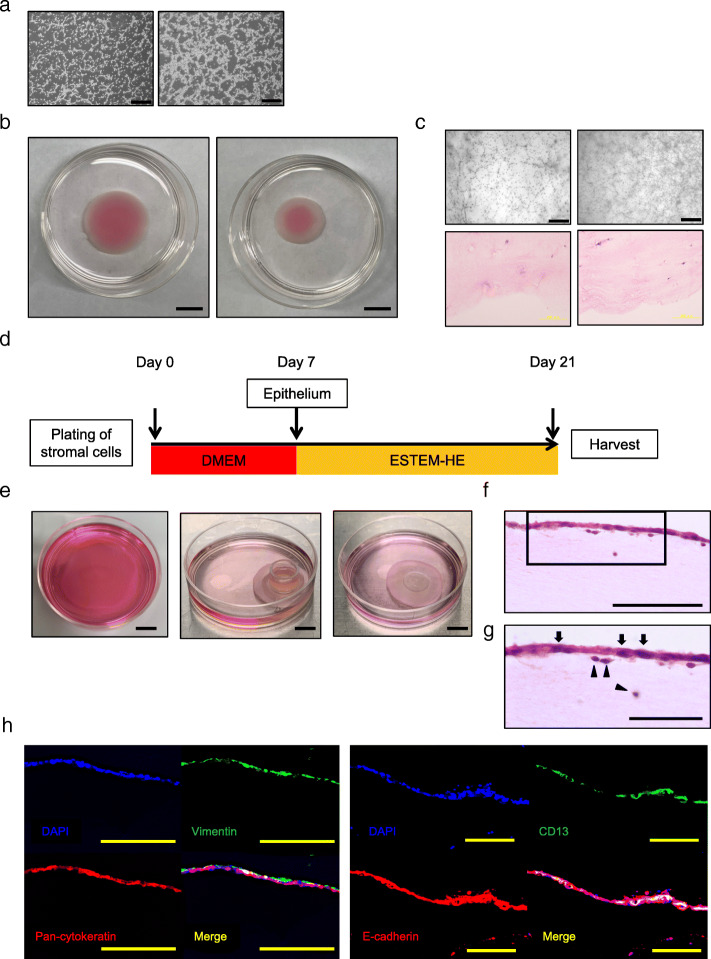
We prepared primary human endometrial epithelial cells and endometrial stromal cells and investigated whether endometrial stromal cells and human embryonic stem cell-derived feeder cells could support proliferation of endometrial epithelial cells. We also investigated whether three-dimensional culture can be achieved using thawed endometrial epithelial cells and endometrial stromal cells.
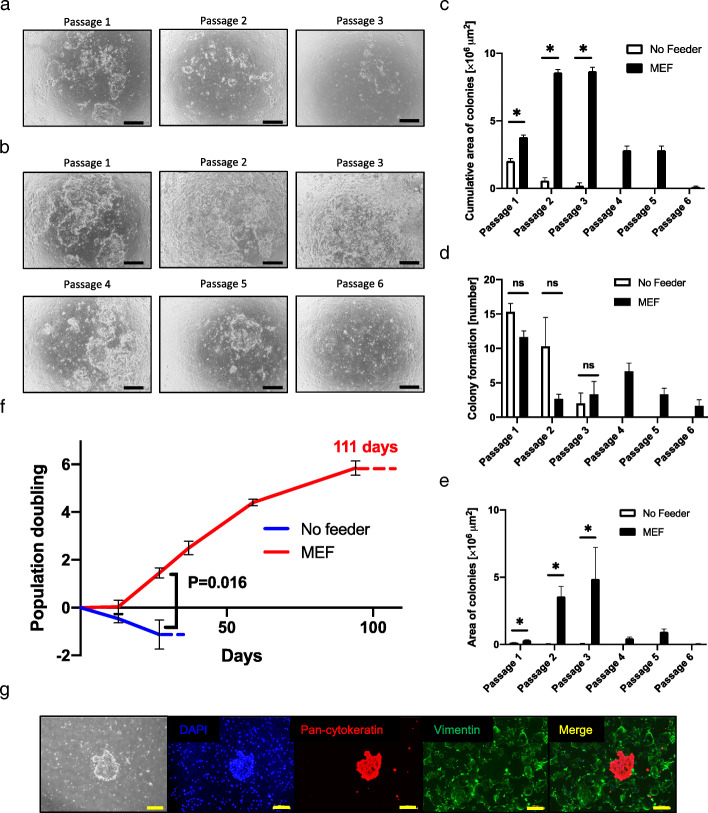
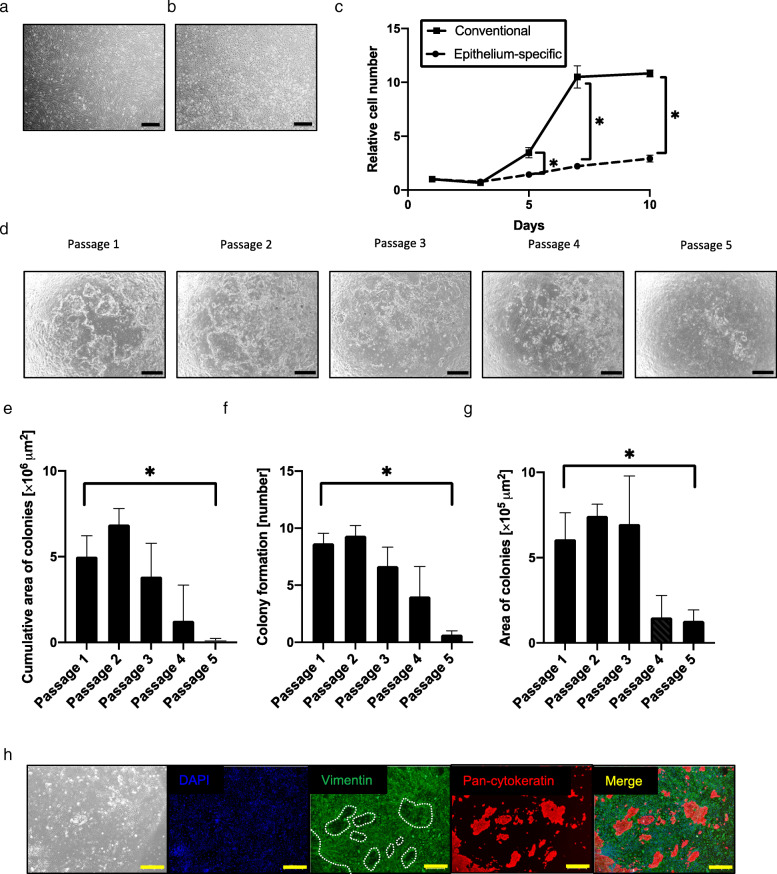
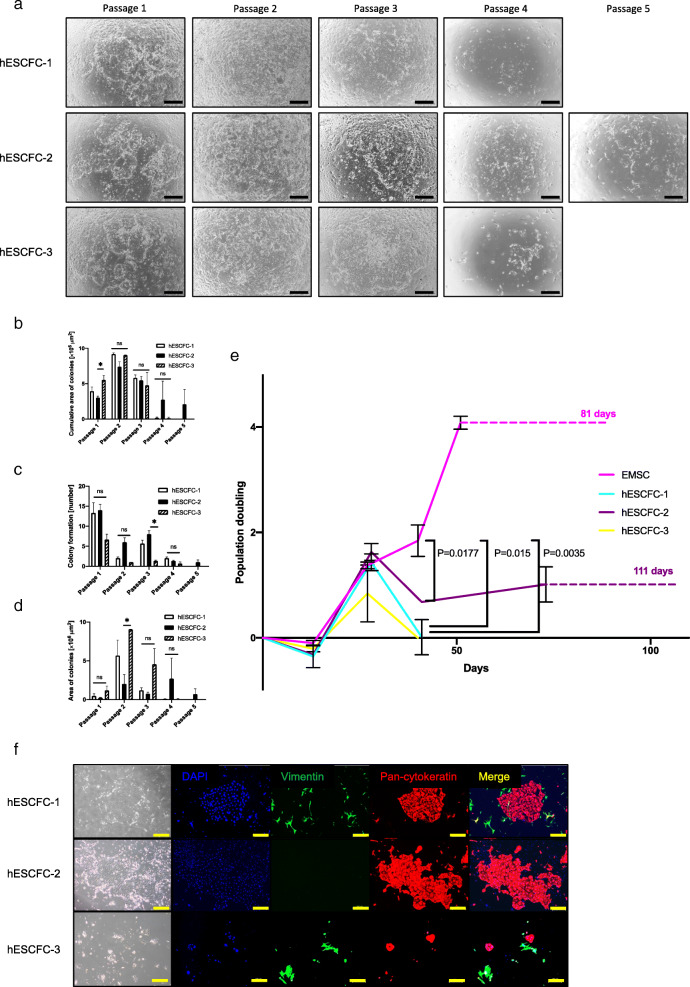
Co-cultivation with the feeder cells dramatically increased the proliferation rate of the endometrial epithelial cells. We serially passaged the endometrial epithelial cells on mouse embryonic fibroblasts up to passage 6 for 4 months. Among the human-derived feeder cells, endometrial stromal cells exhibited the best feeder activity for proliferation of the endometrial epithelial cells. We continued to propagate the endometrial epithelial cells on endometrial stromal cells up to passage 5 for 81 days. Furthermore, endometrial epithelium and stroma, after the freeze-thaw procedure and sequential culture, were able to establish an endometrial three-dimensional model.
We herein established a model of in vitro cultured endometrium as a potential therapeutic option for refractory thin endometrium. The three-dimensional culture model with endometrial epithelial and stromal cell orchestration via cytokines, membrane-bound molecules, extracellular matrices, and gap junction will provide a new framework for exploring the mechanisms underlying the phenomenon of implantation. Additionally, modified embryo culture, so-called "in vitro implantation", will be possible therapeutic approaches in fertility treatment.
薄型子宫内膜会降低生育治疗的受孕成功率。自体移植体外准备的子宫内膜可能是治疗薄型子宫内膜的一种很有前途的治疗选择;然而,子宫内膜上皮细胞的扩增潜力有限,需要克服这一限制,以使再生医学成为治疗难治性薄型子宫内膜的一种治疗策略。在这里,我们旨在进行子宫内膜上皮细胞的长期体外培养。
我们制备了原代人子宫内膜上皮细胞和子宫内膜基质细胞,并研究了子宫内膜基质细胞和人胚胎干细胞衍生的饲养细胞是否能支持子宫内膜上皮细胞的增殖。我们还研究了冻融的子宫内膜上皮细胞和子宫内膜基质细胞是否能进行三维培养。
与饲养细胞共培养可显著提高子宫内膜上皮细胞的增殖率。我们在鼠胚胎成纤维细胞上连续传代至第 6 代,持续 4 个月。在人源性饲养细胞中,子宫内膜基质细胞对子宫内膜上皮细胞的增殖具有最佳的饲养活性。我们在子宫内膜基质细胞上继续传代至第 5 代,持续 81 天。此外,经过冻融和连续培养后,子宫内膜上皮和基质能够建立起子宫内膜的三维模型。
我们在此建立了一种体外培养的子宫内膜模型,作为治疗难治性薄型子宫内膜的潜在治疗选择。通过细胞因子、膜结合分子、细胞外基质和间隙连接,子宫内膜上皮和基质的三维共培养模型将为探索植入现象的机制提供一个新的框架。此外,改良的胚胎培养,即所谓的“体外植入”,将成为生育治疗中可能的治疗方法。