Institute of Molecular Biology, Academia Sinica, Taipei 11529, Taiwan.
Plant Cell. 2021 Jul 2;33(5):1492-1505. doi: 10.1093/plcell/koab051.
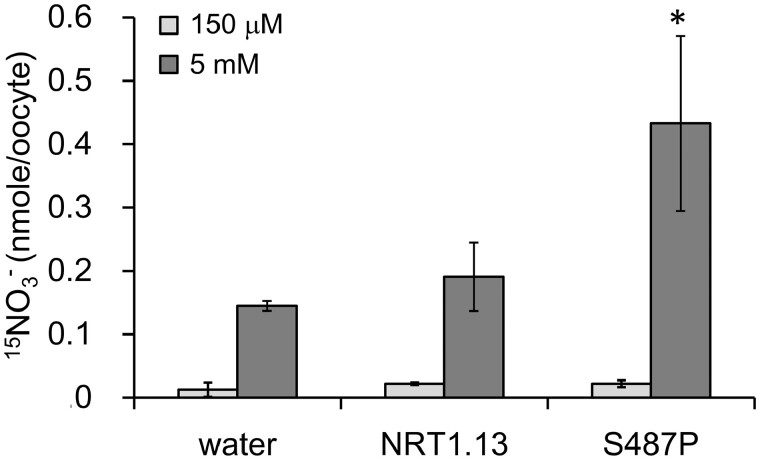
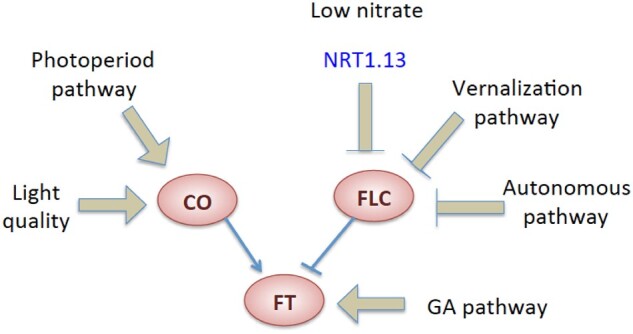
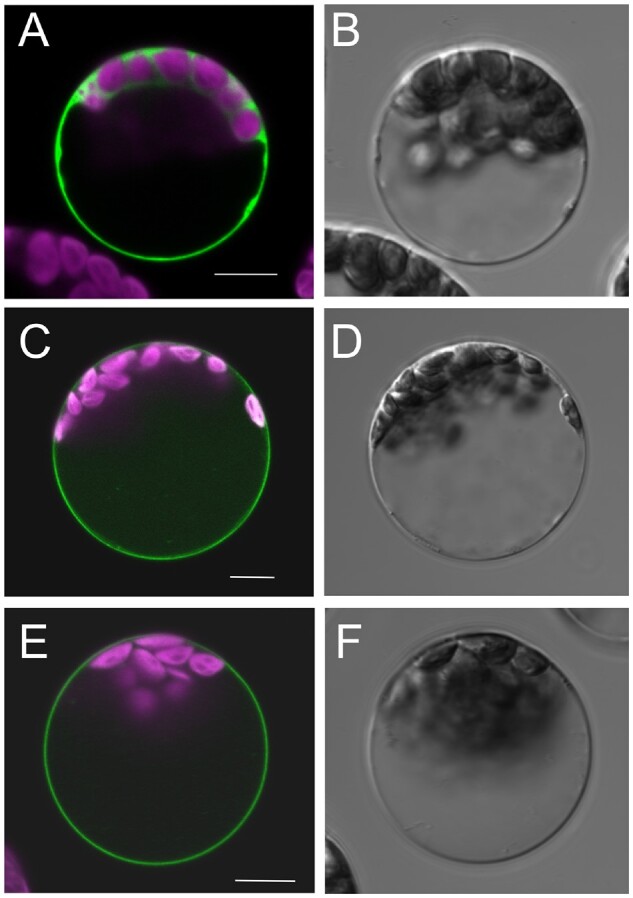
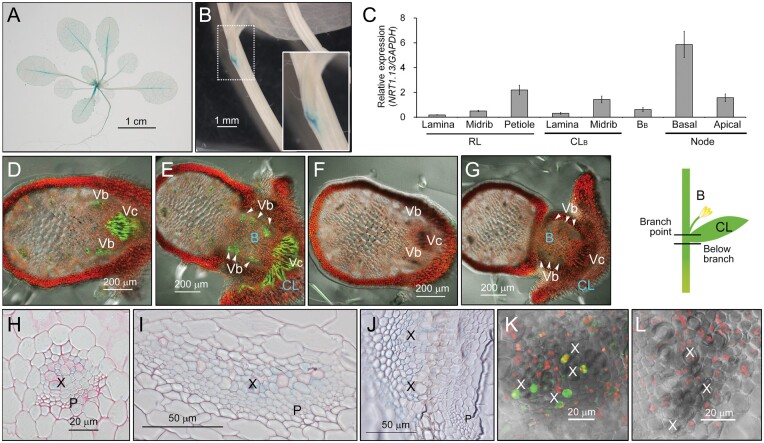
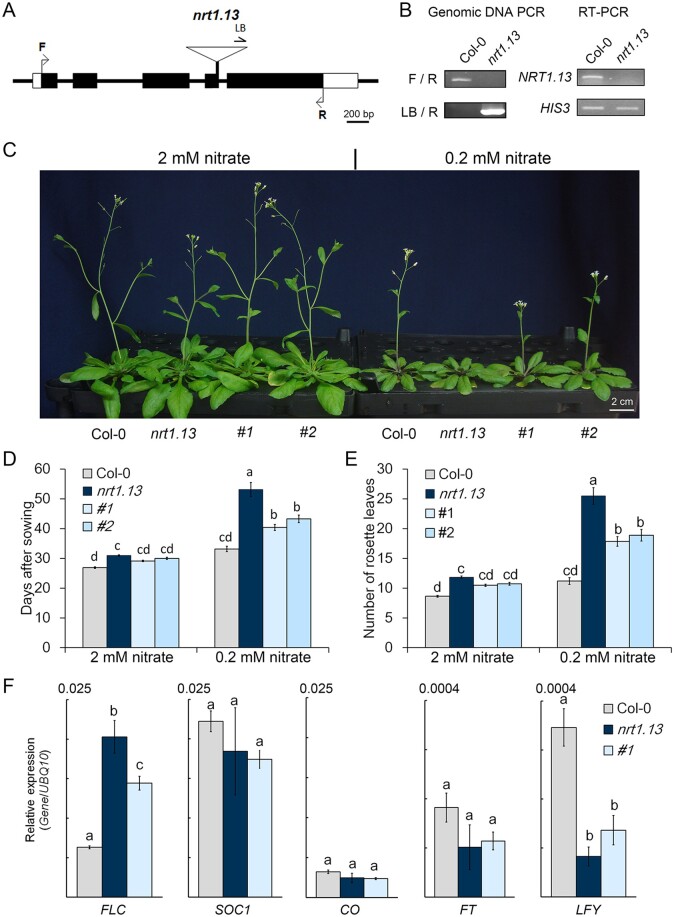
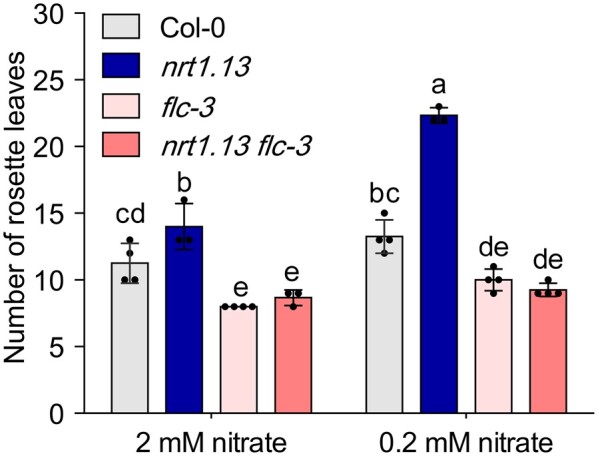
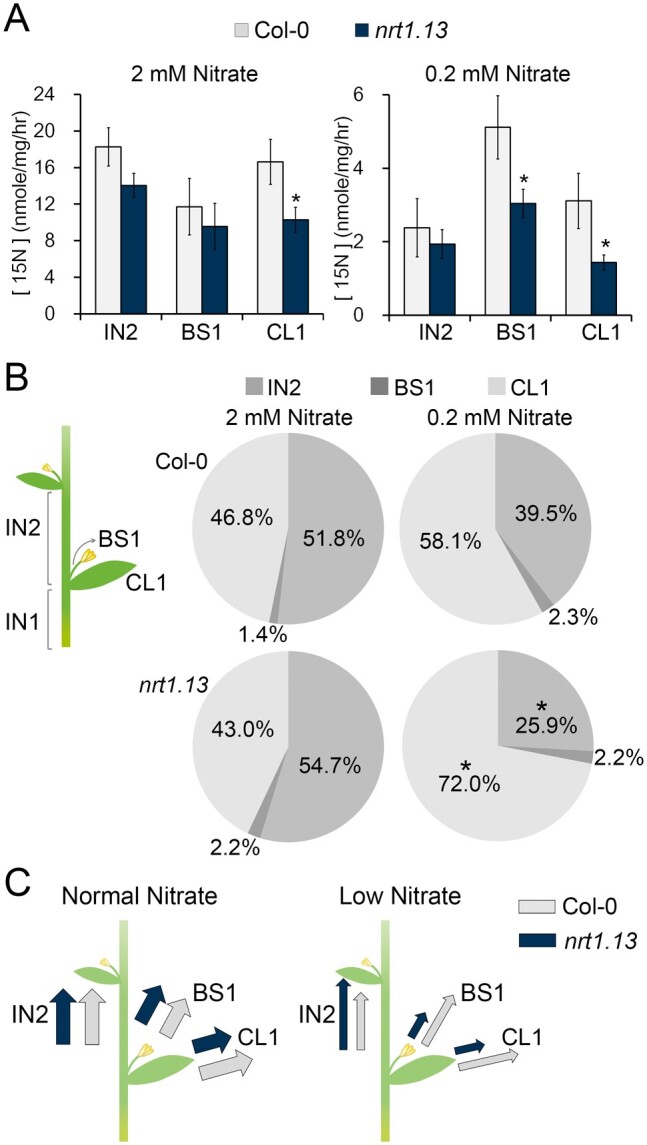
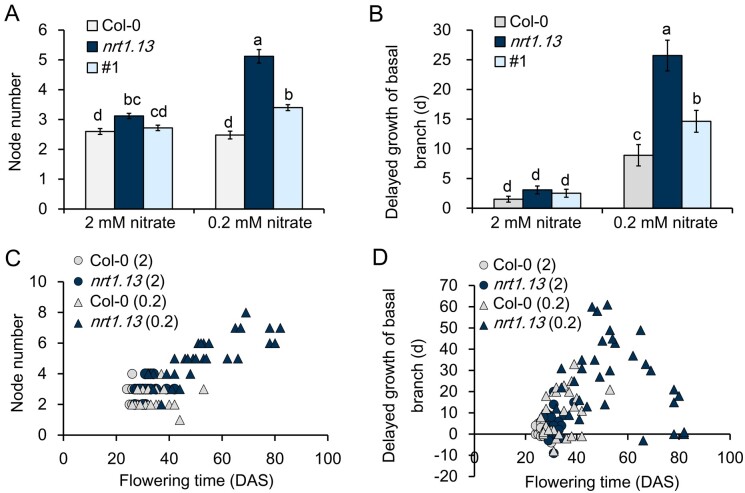
Compared with root development regulated by external nutrients, less is known about how internal nutrients are monitored to control plasticity of shoot development. In this study, we characterize an Arabidopsis thaliana transceptor, NRT1.13 (NPF4.4), of the NRT1/PTR/NPF family. Different from most NRT1 transporters, NRT1.13 does not have the conserved proline residue between transmembrane domains 10 and 11; an essential residue for nitrate transport activity in CHL1/NRT1.1/NPF6.3. As expected, when expressed in oocytes, NRT1.13 showed no nitrate transport activity. However, when Ser 487 at the corresponding position was converted back to proline, NRT1.13 S487P regained nitrate uptake activity, suggesting that wild-type NRT1.13 cannot transport nitrate but can bind it. Subcellular localization and β-glucuronidase reporter analyses indicated that NRT1.13 is a plasma membrane protein expressed at the parenchyma cells next to xylem in the petioles and the stem nodes. When plants were grown with a normal concentration of nitrate, nrt1.13 showed no severe growth phenotype. However, when grown under low-nitrate conditions, nrt1.13 showed delayed flowering, increased node number, retarded branch outgrowth, and reduced lateral nitrate allocation to nodes. Our results suggest that NRT1.13 is required for low-nitrate acclimation and that internal nitrate is monitored near the xylem by NRT1.13 to regulate shoot architecture and flowering time.
与受外部养分调控的根系发育相比,人们对于内部养分如何被监测以控制芽发育可塑性的了解较少。在这项研究中,我们鉴定了拟南芥 NRT1/PTR/NPF 家族的跨膜受体 NRT1.13(NPF4.4)。与大多数 NRT1 转运体不同,NRT1.13 跨膜结构域 10 和 11 之间没有保守的脯氨酸残基;这个残基是 CHL1/NRT1.1/NPF6.3 硝酸盐转运活性所必需的。正如预期的那样,当在卵母细胞中表达时,NRT1.13 没有表现出硝酸盐转运活性。然而,当相应位置的丝氨酸 487 被回转为脯氨酸时,NRT1.13 S487P 恢复了硝酸盐摄取活性,这表明野生型 NRT1.13 不能转运硝酸盐,但可以与之结合。亚细胞定位和β-葡萄糖醛酸酶报告基因分析表明,NRT1.13 是一种质膜蛋白,在叶柄和茎节点的木质部旁边的薄壁细胞中表达。当植物在正常浓度的硝酸盐中生长时,nrt1.13 没有表现出严重的生长表型。然而,当在低硝酸盐条件下生长时,nrt1.13 表现出开花延迟、节点数增加、分枝生长受阻以及向节点分配的侧生硝酸盐减少。我们的结果表明,NRT1.13 是适应低硝酸盐所必需的,并且内部硝酸盐由 NRT1.13 在靠近木质部的地方监测,以调节芽的结构和开花时间。