Key Laboratory of Brain, Cognition and Education Sciences, Ministry of Education; School of Psychology, Center for Studies of Psychological Application, and Guangdong Key Laboratory of Mental Health and Cognitive Science, South China Normal University, Guangzhou, Guangdong, 510631, China; Pazhou Lab, Guangzhou 510335, China.
Pazhou Lab, Guangzhou 510335, China; Department of Neurosurgery, Huashan Hospital, Shanghai Medical College, Fudan University, Shanghai, China; Shanghai Clinical Medical Center of Neurosurgery, Shanghai Key laboratory of Brain Function Restoration and Neural Regeneration, Neurosurgical Institute of Fudan University, Shanghai, China; State Key Laboratory of Medical Neurobiology and MOE Frontiers Center for Brain Science, School of Basic Medical Sciences and Institutes of Brain Science, Fudan University, Shanghai, China.
Neuroimage. 2021 May 1;231:117850. doi: 10.1016/j.neuroimage.2021.117850. Epub 2021 Feb 12.
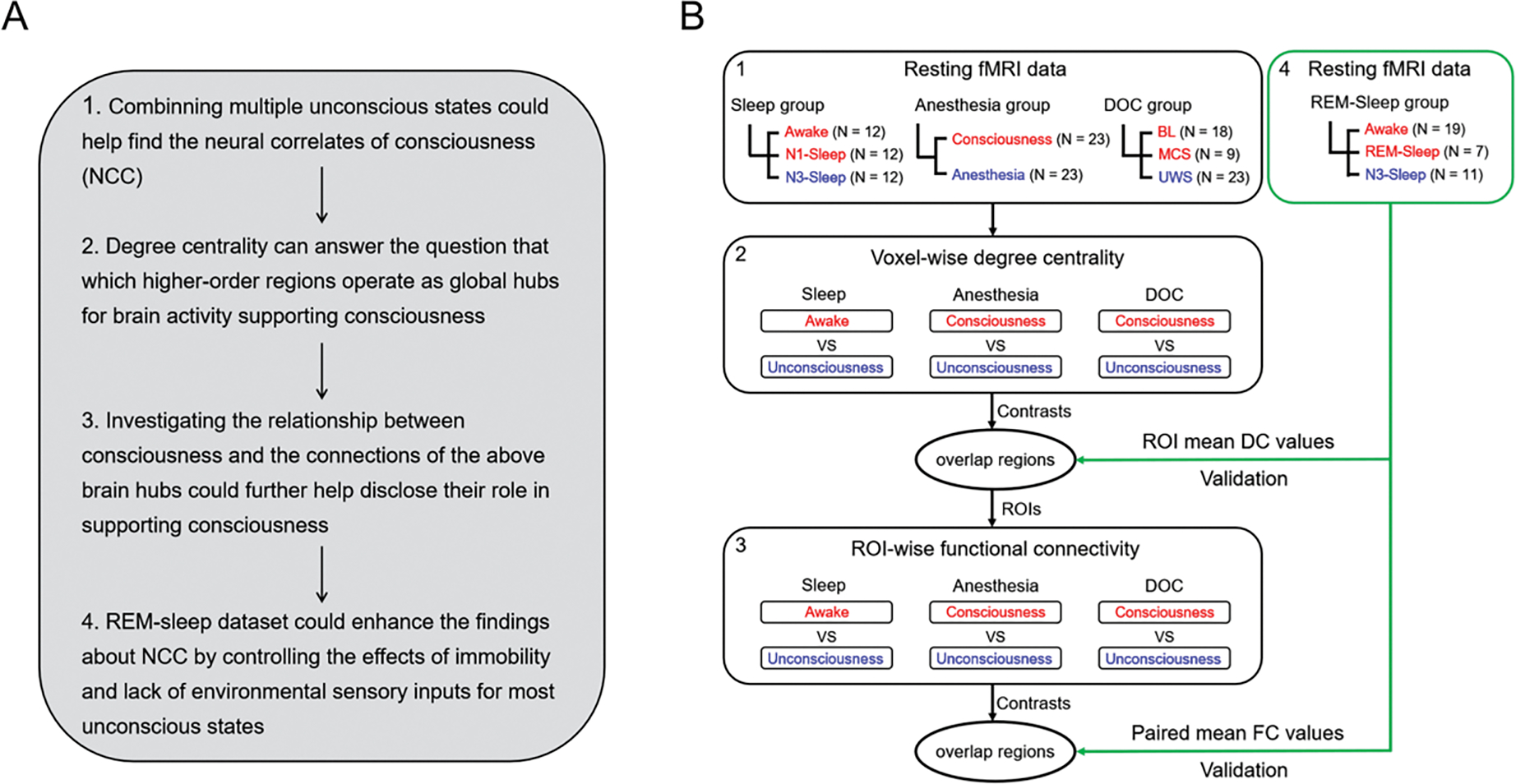
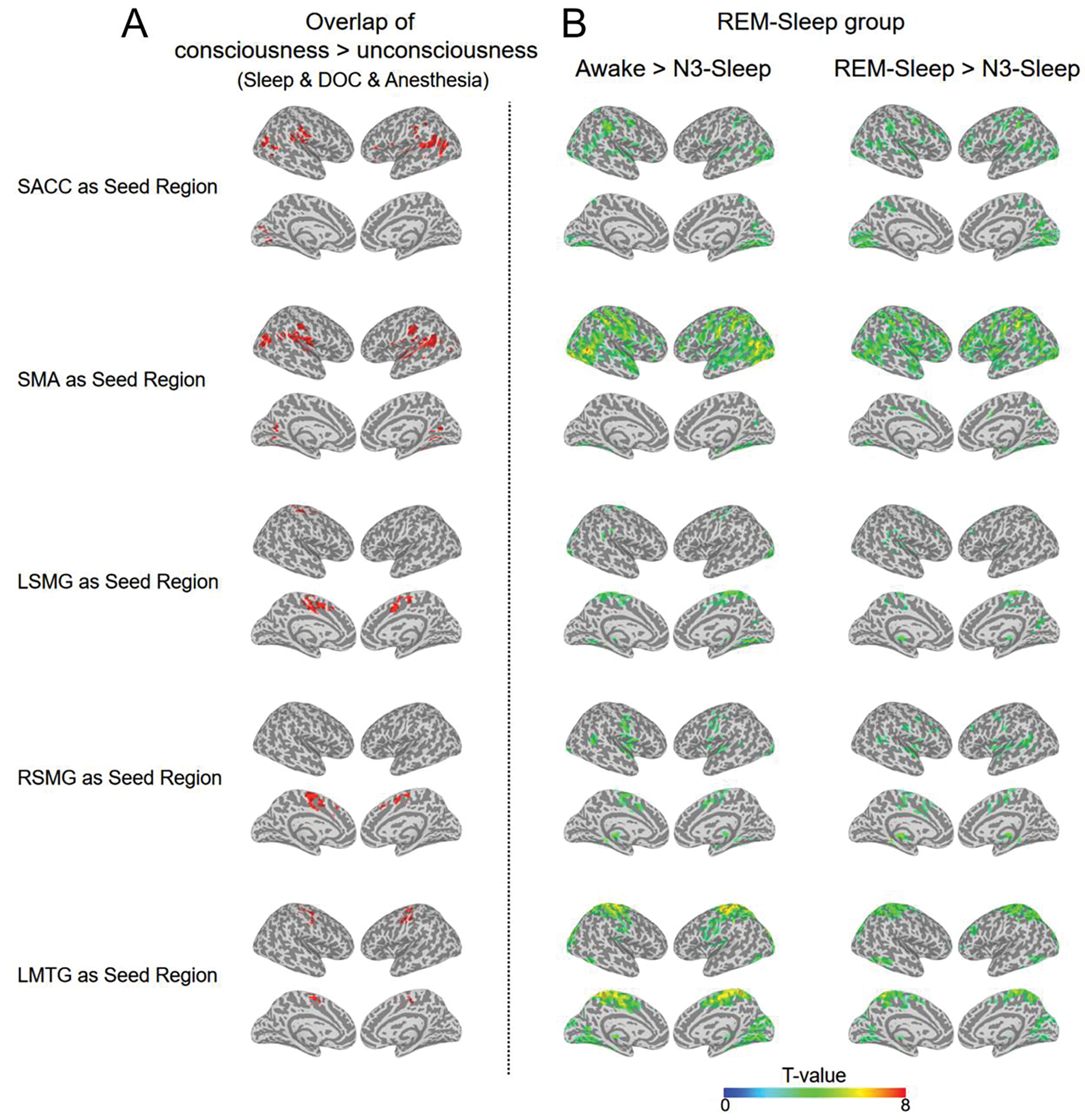
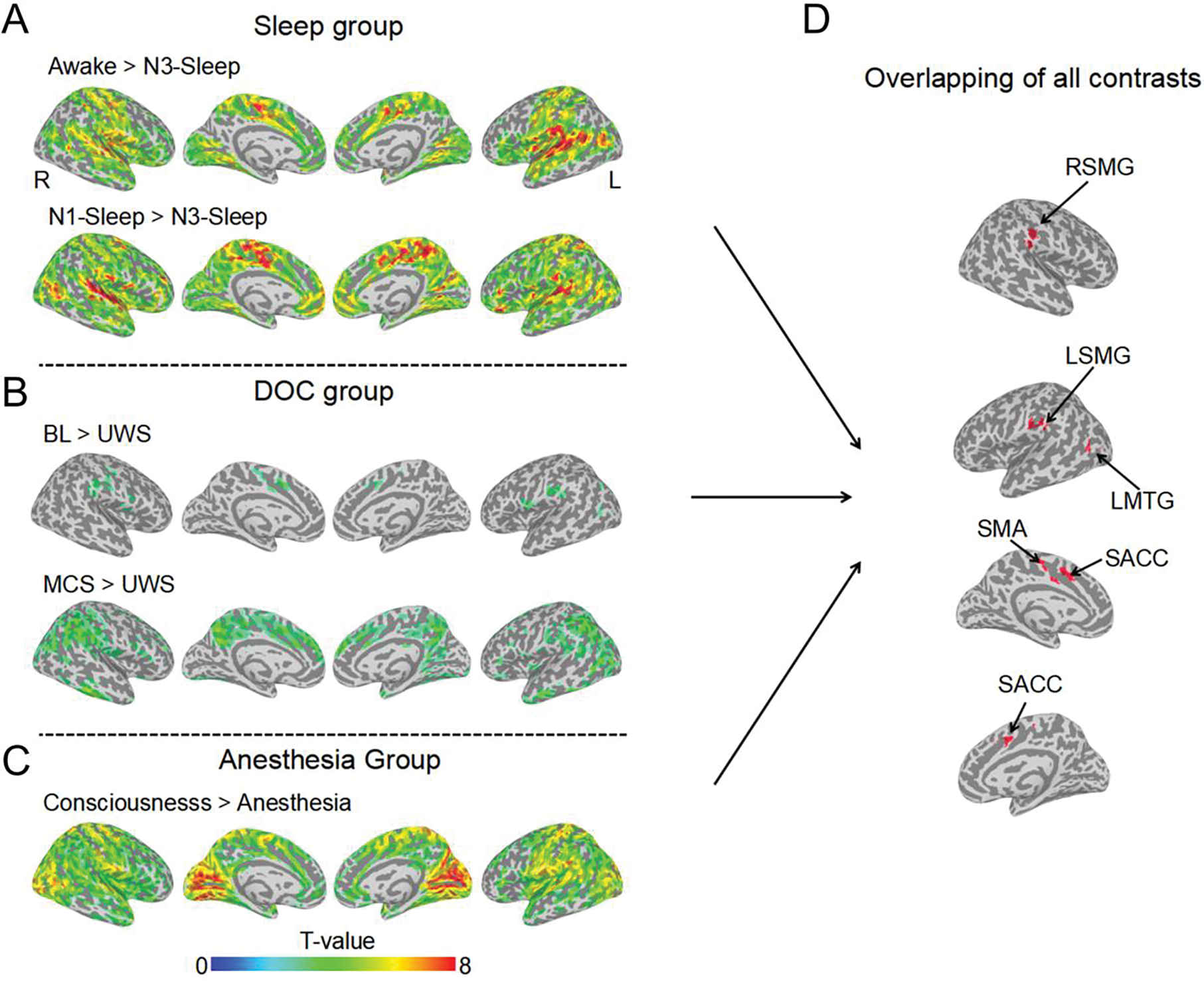
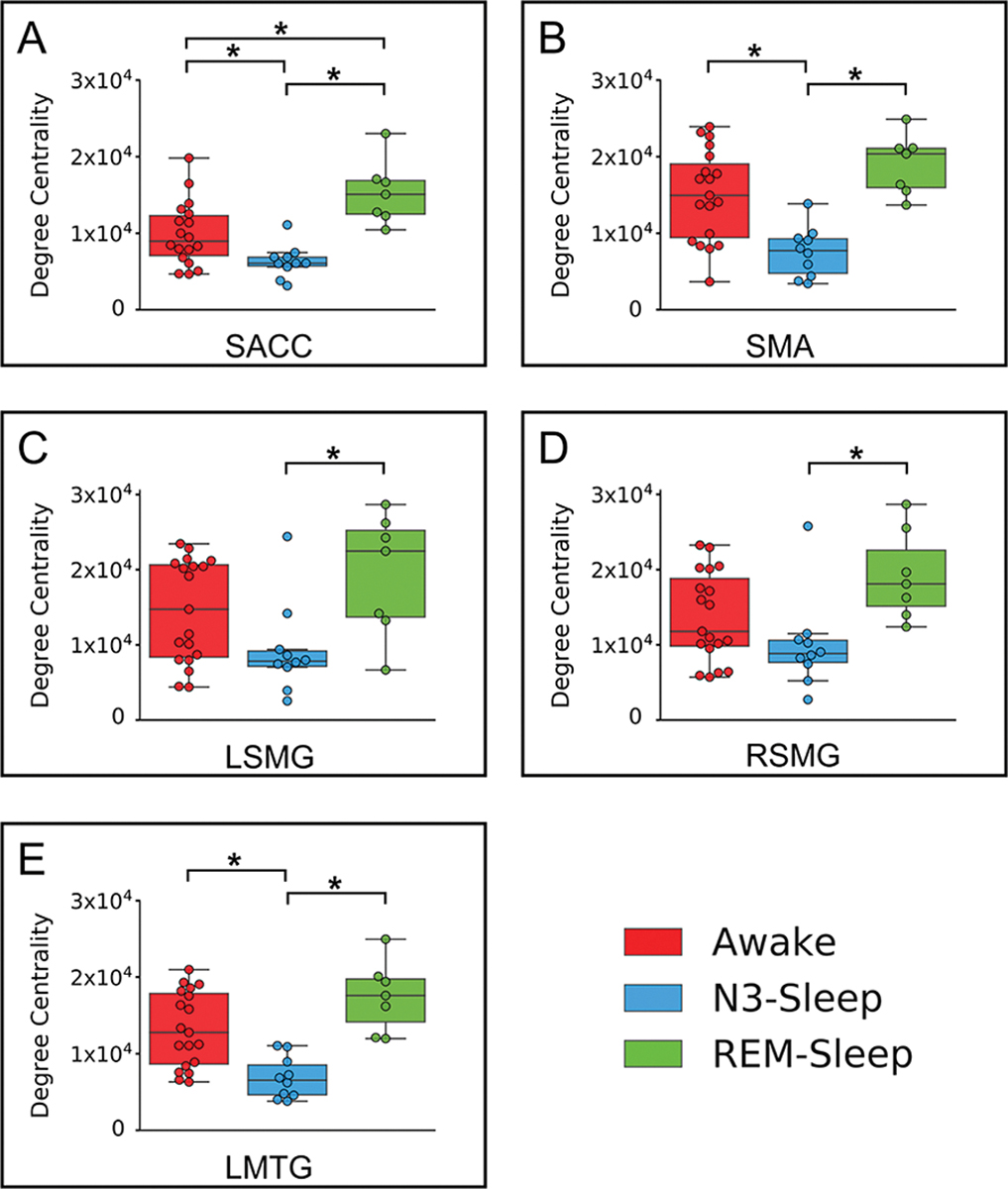
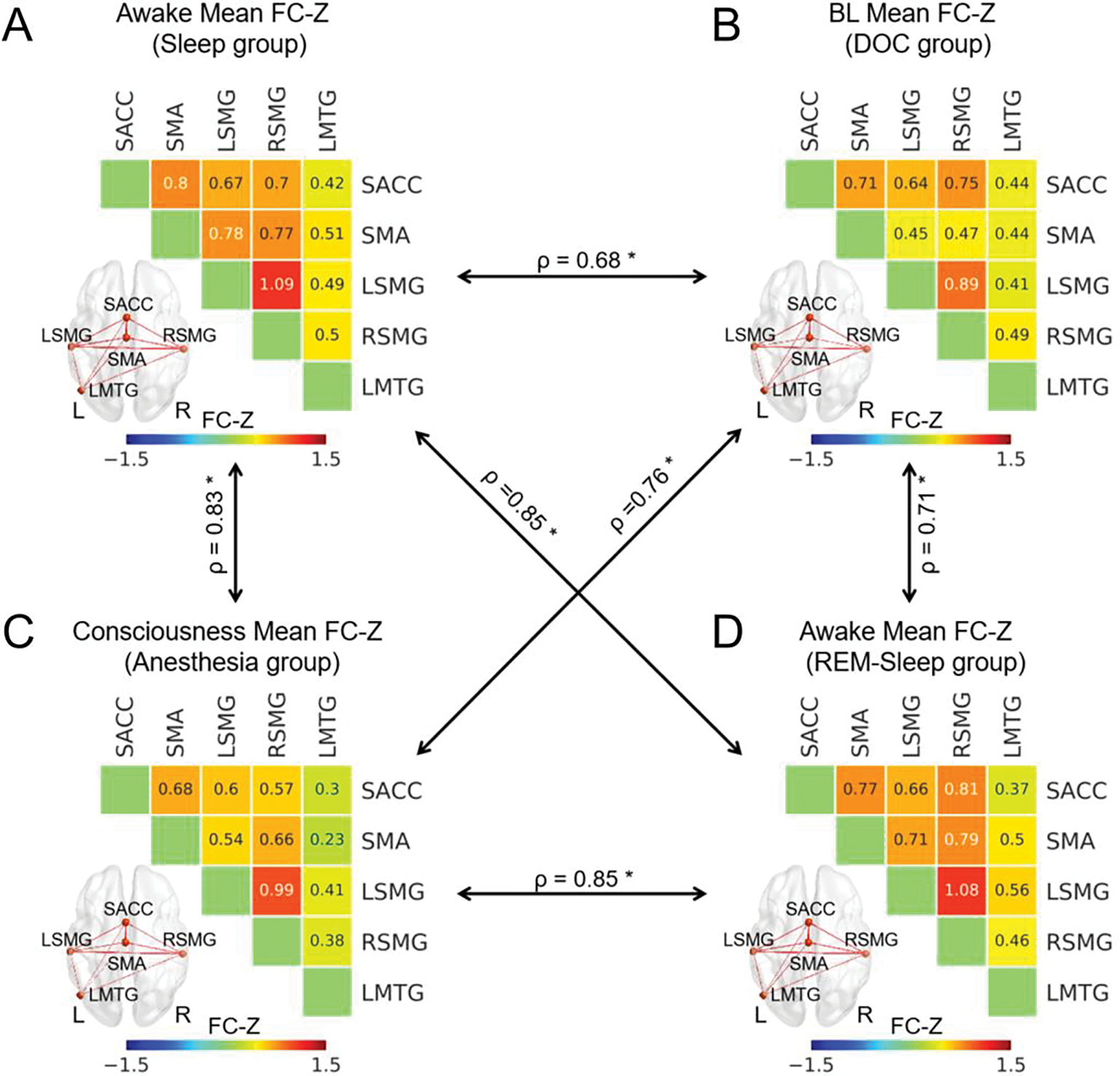
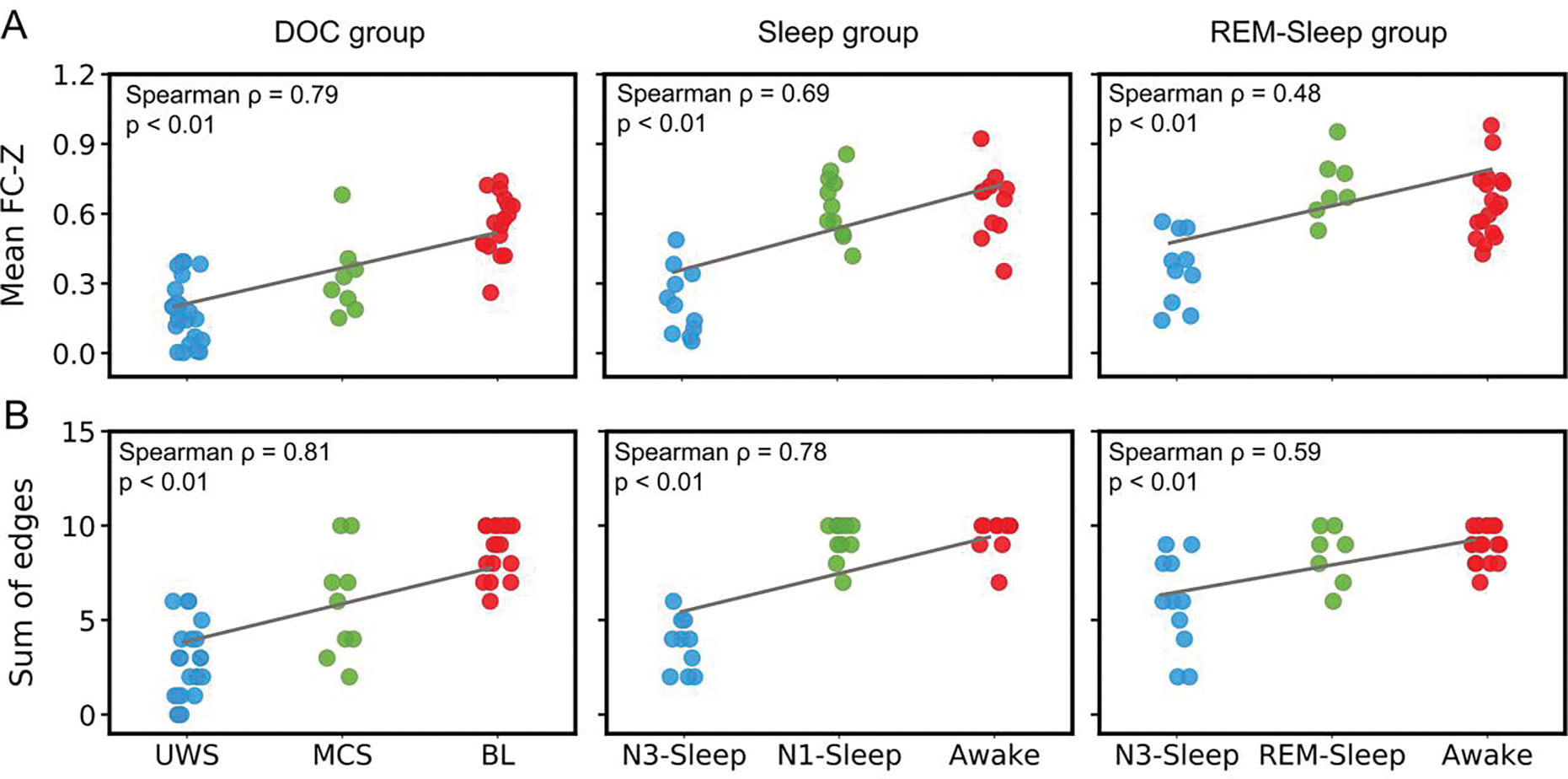
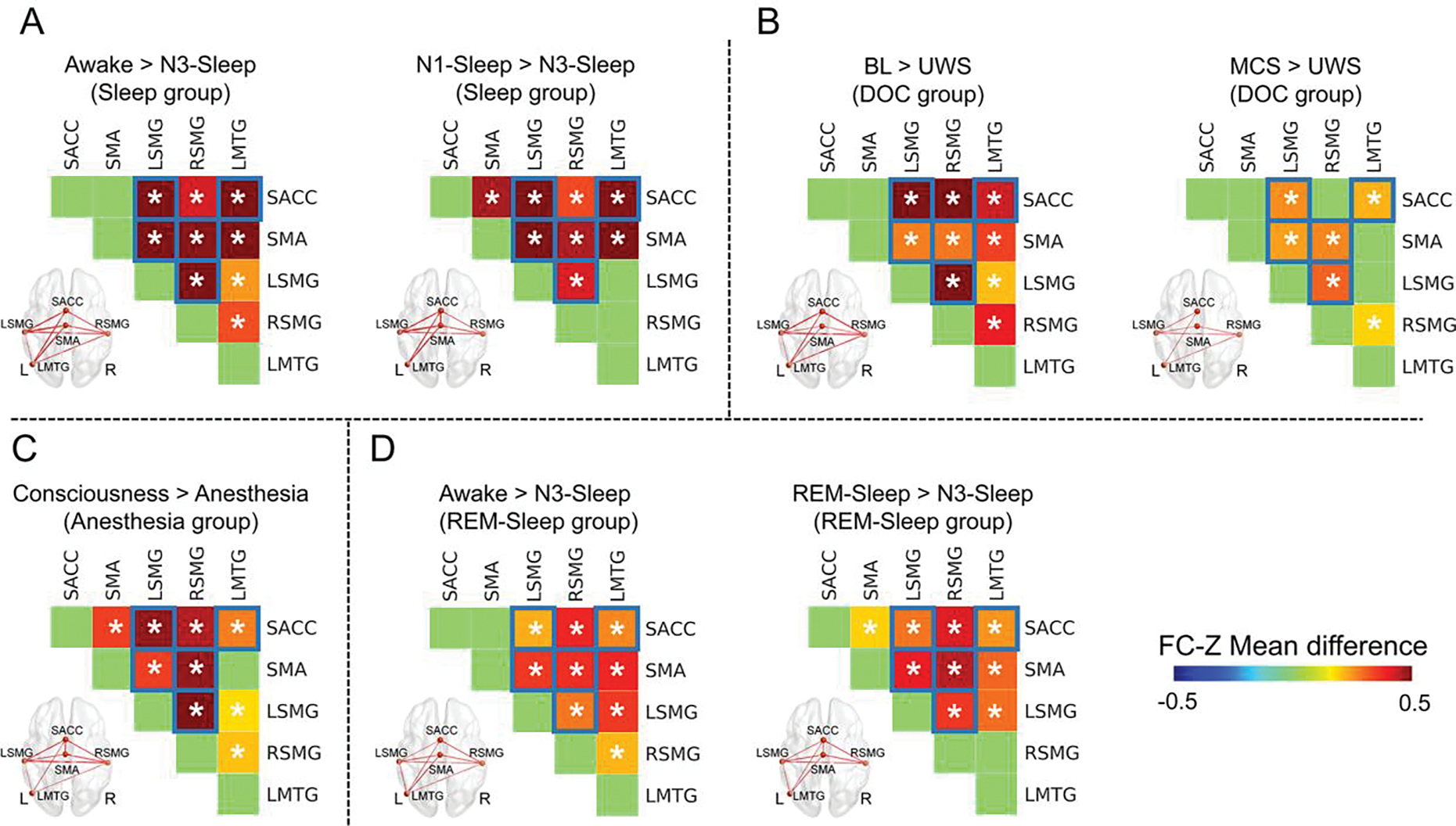
Consciousness is a mental characteristic of the human mind, whose exact neural features remain unclear. We aimed to identify the critical nodes within the brain's global functional network that support consciousness. To that end, we collected a large fMRI resting state dataset with subjects in at least one of the following three consciousness states: preserved (including the healthy awake state, and patients with a brain injury history (BI) that is fully conscious), reduced (including the N1-sleep state, and minimally conscious state), and lost (including the N3-sleep state, anesthesia, and unresponsive wakefulness state). We also included a unique dataset of subjects in rapid eye movement sleep state (REM-sleep) to test for the presence of consciousness with minimum movements and sensory input. To identify critical nodes, i.e., hubs, within the brain's global functional network, we used a graph-theoretical measure of degree centrality conjoined with ROI-based functional connectivity. Using these methods, we identified various higher-order sensory and motor regions including the supplementary motor area, bilateral supramarginal gyrus (part of inferior parietal lobule), supragenual/dorsal anterior cingulate cortex, and left middle temporal gyrus, that could be important hubs whose degree centrality was significantly reduced when consciousness was reduced or absent. Additionally, we identified a sensorimotor circuit, in which the functional connectivity among these regions was significantly correlated with levels of consciousness across the different groups, and remained present in the REM-sleep group. Taken together, we demonstrated that regions forming a higher-order sensorimotor integration circuit are involved in supporting consciousness within the brain's global functional network. That offers novel and more mechanism-guided treatment targets for disorders of consciousness.
意识是人类思维的一种心理特征,其确切的神经特征仍不清楚。我们的目的是确定大脑全局功能网络中支持意识的关键节点。为此,我们收集了一个大型 fMRI 静息态数据集,其中至少有一个被试处于以下三种意识状态之一:存在(包括健康的清醒状态,以及有脑损伤病史但完全有意识的患者)、减少(包括 N1 睡眠状态和最小意识状态)和丧失(包括 N3 睡眠状态、麻醉和无反应觉醒状态)。我们还包括一个 REM 睡眠状态(快速眼动睡眠)的独特数据集,以在最小运动和感觉输入的情况下测试意识的存在。为了确定大脑全局功能网络中的关键节点,即枢纽,我们使用了基于度中心性的图论度量和基于 ROI 的功能连接。使用这些方法,我们确定了各种高级感觉和运动区域,包括辅助运动区、双侧缘上回(顶下小叶的一部分)、前扣带回皮质上区/背侧、左颞中回,这些区域可能是重要的枢纽,当意识减少或不存在时,其度中心性显著降低。此外,我们还确定了一个感觉运动回路,其中这些区域之间的功能连接与不同组之间的意识水平显著相关,并且在 REM 睡眠组中仍然存在。总之,我们证明了形成高级感觉运动整合回路的区域参与了大脑全局功能网络中意识的支持。这为意识障碍提供了新的、更具机制导向的治疗靶点。