Health Education England, North West Deanery, UK.
Division of Musculoskeletal and Dermatological Sciences, Centre for Epidemiology Versus Arthritis, The University of Manchester, Oxford Road, Manchester, M13 9PL, UK.
Drug Saf. 2021 May;44(5):553-564. doi: 10.1007/s40264-021-01042-6. Epub 2021 Feb 13.
Information on suspected adverse drug reactions (ADRs) voluntarily submitted by patients can be a valuable source of information for improving drug safety; however, public awareness of reporting mechanisms remains low. Whilst methods to automatically detect ADR mentions from social media posts using text mining techniques have been proposed to improve reporting rates, it is unclear how acceptable these would be to social media users.
The objective of this study was to explore public opinion about using automated methods to detect and report mentions of ADRs on social media to enhance pharmacovigilance efforts.
Users of the online health discussion forum HealthUnlocked participated in an online survey (N = 1359) about experiences with ADRs, knowledge of pharmacovigilance methods, and opinions about using automated data mining methods to detect and report ADRs. To further explore responses, five qualitative focus groups were conducted with 20 social media users with long-term health conditions.
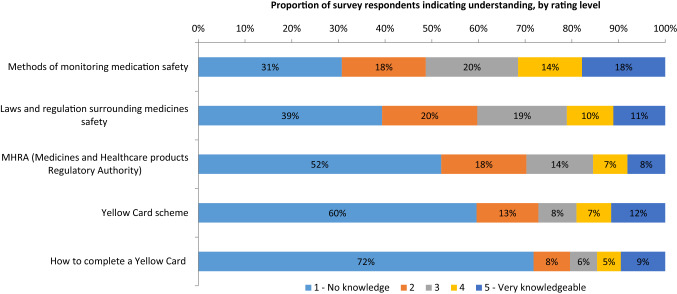
Participant responses indicated a low awareness of pharmacovigilance methods and ADR reporting. They showed a strong willingness to share health-related social media data about ADRs with researchers and regulators, but were cautious about automated text mining methods of detecting and reporting ADRs.
Social media users value public-facing pharmacovigilance schemes, even if they do not understand the current framework of pharmacovigilance within the UK. Ongoing engagement with users is essential to understand views, share knowledge and respect users' privacy expectations to optimise future ADR reporting from online health communities.
患者自愿提交的疑似药物不良反应(ADR)信息可以成为提高药物安全性的宝贵信息来源;然而,公众对报告机制的认识仍然很低。虽然已经提出了使用文本挖掘技术自动检测和从社交媒体帖子中提取 ADR 提及的方法来提高报告率,但这些方法对社交媒体用户的可接受程度尚不清楚。
本研究旨在探讨公众对使用自动化方法检测和报告社交媒体上的 ADR 提及以加强药物警戒工作的看法。
在线健康讨论论坛 HealthUnlocked 的用户参与了一项在线调查(N=1359),调查内容涉及对 ADR 的体验、对药物警戒方法的了解以及对使用自动化数据挖掘方法检测和报告 ADR 的看法。为了进一步探讨响应情况,对 20 名患有长期健康状况的社交媒体用户进行了五次定性焦点小组讨论。
参与者的回复表明他们对药物警戒方法和 ADR 报告的认识较低。他们强烈愿意与研究人员和监管机构分享与 ADR 相关的健康相关社交媒体数据,但对自动文本挖掘方法检测和报告 ADR 持谨慎态度。
社交媒体用户重视面向公众的药物警戒计划,即使他们不了解英国当前的药物警戒框架。与用户保持持续互动对于了解观点、分享知识和尊重用户的隐私期望以优化来自在线健康社区的未来 ADR 报告至关重要。