Robinson Fiona, Wilkes Sonji, Schaefer Nathan, Goldstein Miriam, Rice Michelle, Gray Johanna, Meyers Sharon, Valentino Leonard A
Communications, Montréal, QC, Canada.
Hemophilia Federation of America, Washington, DC, USA.
Ther Adv Drug Saf. 2023 Feb 25;14:20420986221146418. doi: 10.1177/20420986221146418. eCollection 2023.
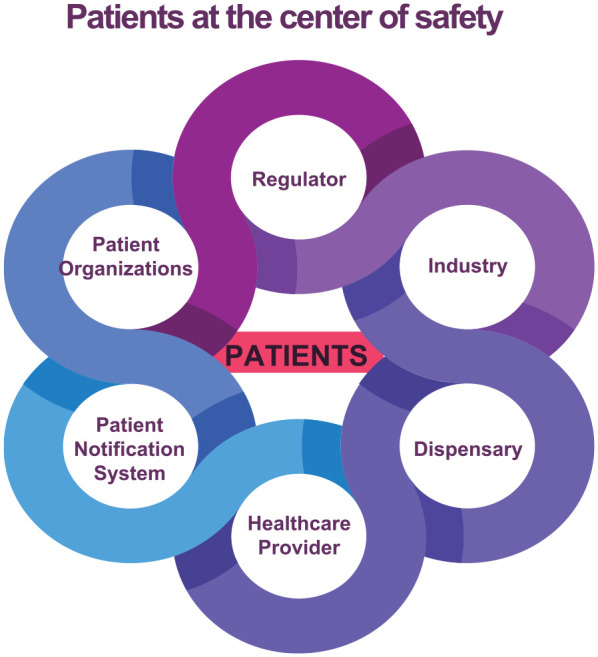
Pharmacovigilance, the science and practice of monitoring the effects of medicinals and their safety, is the responsibility of all stakeholders involved in the development, manufacture, regulation, distribution, prescription, and use of drugs and devices. The patient is the stakeholder most impacted by and the greatest source of information on safety issues. It is rare, however, for the patient to take a central role and exert leadership in the design and execution of pharmacovigilance. Patient organizations in the inherited bleeding disorders community are among the most established and empowered, particularly in the rare disorders. In this review, two of the largest bleeding disorders patient organizations, Hemophilia Federation of America (HFA) and National Hemophilia Foundation (NHF), offer insights into the priority actions required of all stakeholders to improve pharmacovigilance. The recent and ongoing increase in incidents raising safety concerns and a therapeutic landscape on the cusp of unprecedented expansion heighten the urgency of a recommitment to the primacy of patient safety and well-being in drug development and distribution.
Every medical device and therapeutic product has potential benefits and harms. The pharmaceutical and biomedical companies that develop them must demonstrate that they are effective, and the safety risks are limited or manageable, for regulators to approve them for use and sale. After the product has been approved and people are using it in their daily lives, it is important to continue to collect information about any negative side effects or adverse events; this is called pharmacovigilance. Regulators, like the United States (US) Food and Drug Administration, the companies that sell and distribute the products, and healthcare professionals who prescribe them are all required to participate in collecting, reporting, analyzing, and communicating this information. The people with the most firsthand knowledge of the benefits and harms of the drug or device are the patients who use them. They have an important responsibility to learn how to recognize adverse events, how to report them, and to stay informed of any news about the product from the other partners in the pharmacovigilance network. Those partners have a crucial responsibility to provide clear, easy-to-understand information to patients about any new safety concerns that come to light. The community of people with inherited bleeding disorders has recently encountered problems with poor communication of product safety issues, prompting two large US patient organizations, National Hemophilia Foundation and Hemophilia Federation of America, to hold a Safety Summit with all the pharmacovigilance network partners. Together they developed recommendations to improve the collection and communication of information about product safety so that patients can make well-informed, timely decisions about their use of drugs and devices. This article presents these recommendations in the context of how pharmacovigilance is supposed to work and some of the challenges encountered by the community.

药物警戒是监测药物疗效及其安全性的科学与实践,是参与药品和器械研发、生产、监管、分销、处方和使用的所有利益相关者的责任。患者是受安全问题影响最大且是安全问题信息的最大来源。然而,患者很少能在药物警戒的设计和实施中发挥核心作用并引领工作。遗传性出血性疾病领域的患者组织是最成熟且最具影响力的组织之一,尤其是在罕见病领域。在本综述中,美国血友病联盟(HFA)和美国国家血友病基金会(NHF)这两个最大的出血性疾病患者组织,深入探讨了所有利益相关者为改善药物警戒所需采取的优先行动。近期及持续出现的引发安全担忧的事件增加,以及治疗领域即将迎来前所未有的扩张,这凸显了在药物研发和分销中重新致力于将患者安全和福祉置于首位的紧迫性。
每种医疗器械和治疗产品都有潜在的益处和危害。研发这些产品的制药和生物医学公司必须证明其有效,且安全风险有限或可控,监管机构才会批准其使用和销售。产品获批后人们在日常生活中使用时,继续收集有关任何负面副作用或不良事件的信息很重要;这被称为药物警戒。监管机构,如美国食品药品监督管理局、销售和分销产品的公司以及开处方的医疗保健专业人员都必须参与收集、报告、分析和交流这些信息。对药物或器械的益处和危害了解最直接的是使用它们的患者。他们有重要责任学习如何识别不良事件、如何报告这些事件,并随时了解药物警戒网络中其他合作伙伴发布的有关该产品的任何消息。这些合作伙伴有至关重要的责任向患者提供有关任何新出现安全问题的清晰、易懂的信息。遗传性出血性疾病患者群体最近遇到了产品安全问题沟通不畅的问题,促使美国两个大型患者组织,即美国国家血友病基金会和美国血友病联盟,与所有药物警戒网络合作伙伴举行了一次安全峰会。他们共同制定了建议,以改善产品安全信息的收集和沟通,以便患者能够就其使用药物和器械做出明智、及时的决策。本文在介绍药物警戒应如何运作以及该群体遇到的一些挑战的背景下呈现了这些建议。