Pirola Carlos Jose, Salatino Adrian, Sookoian Silvia
Department of Molecular Genetics and Biology of Complex Diseases, National Scientific and Technical Research Council (CONICET), University of Buenos Aires, Institute of Medical Research (IDIM), Ciudad Autónoma de Buenos Aires C1427ARO, Argentina.
Institute of Medical Research A Lanari, University of Buenos Aires, School of Medicine, Ciudad Autónoma de Buenos Aires, Ciudad Autónoma de Buenos Aires C1427ARO, Argentina.
World J Gastroenterol. 2021 Jan 28;27(4):305-320. doi: 10.3748/wjg.v27.i4.305.
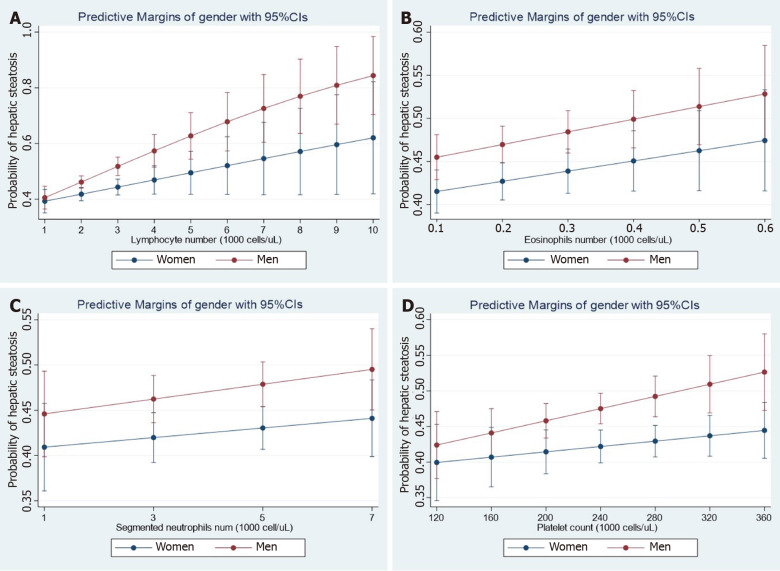
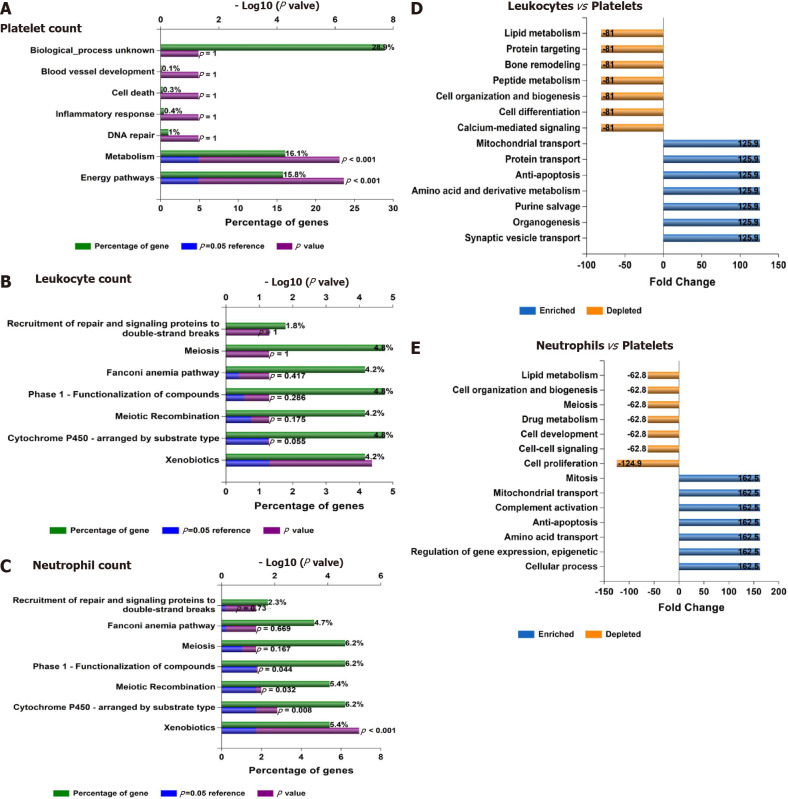
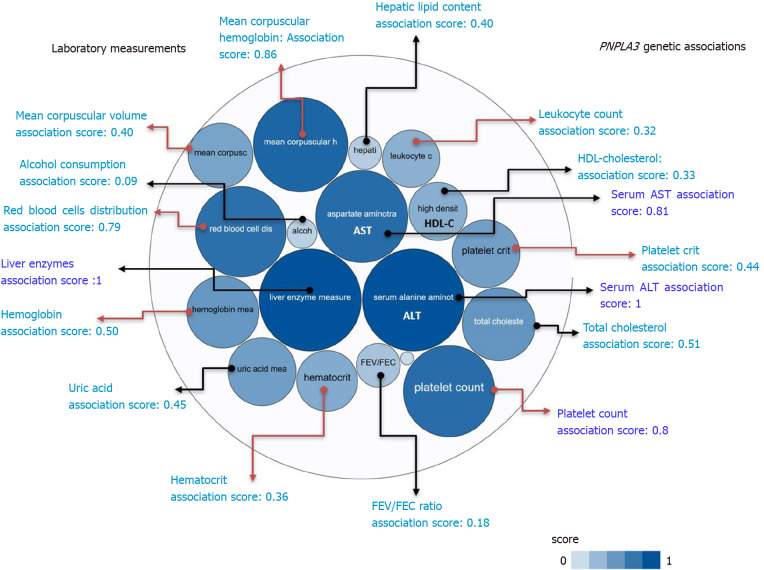
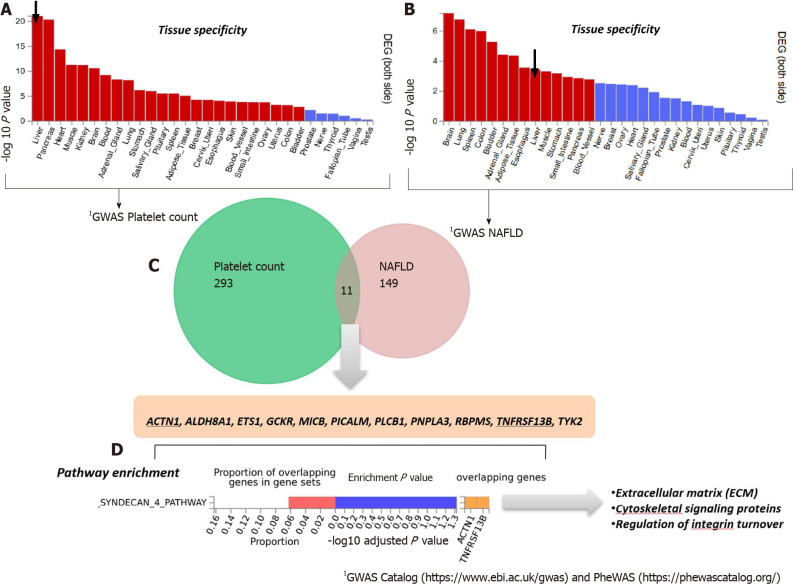
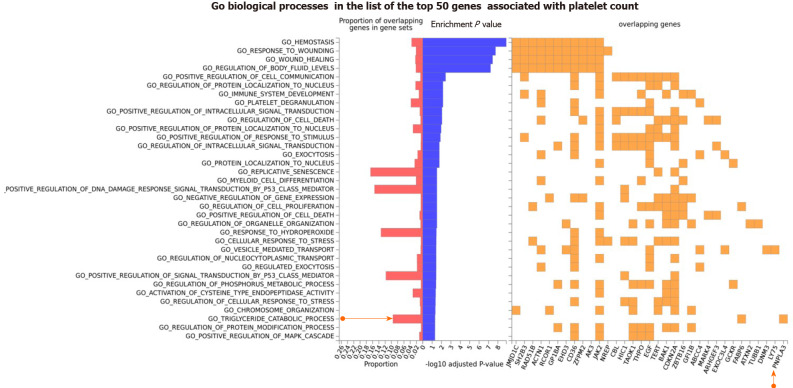
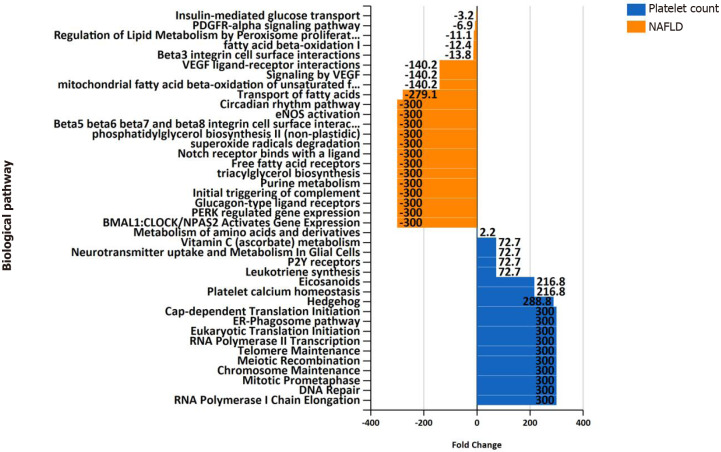
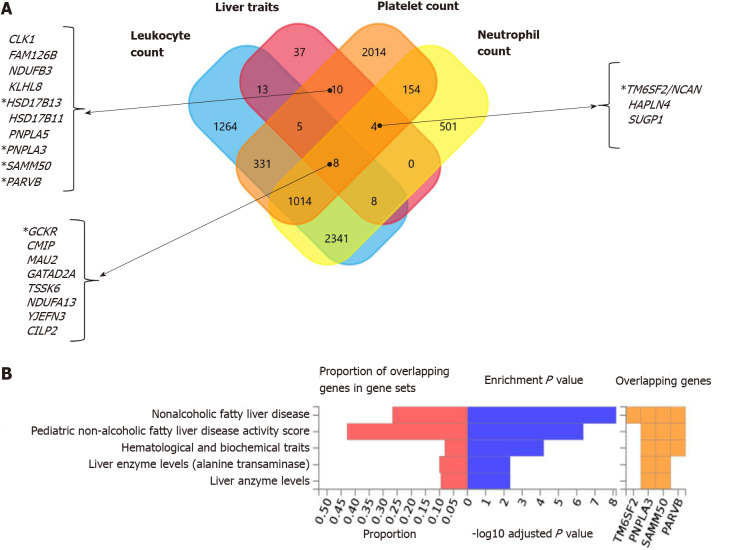
Genome-wide association studies of complex diseases, including nonalcoholic fatty liver disease (NAFLD), have demonstrated that a large number of variants are implicated in the susceptibility of multiple traits - a phenomenon known as pleiotropy that is increasingly being explored through phenome-wide association studies. We focused on the analysis of pleiotropy within variants associated with hematologic traits and NAFLD. We used information retrieved from large public National Health and Nutrition Examination Surveys, Genome-wide association studies, and phenome-wide association studies based on the general population and explored whether variants associated with NAFLD also present associations with blood cell-related traits. Next, we applied systems biology approaches to assess the potential biological connection/s between genes that predispose affected individuals to NAFLD and nonalcoholic steatohepatitis, and genes that modulate hematological-related traits-specifically platelet count. We reasoned that this analysis would allow the identification of potential molecular mediators that link NAFLD with platelets. Genes associated with platelet count are most highly expressed in the liver, followed by the pancreas, heart, and muscle. Conversely, genes associated with NAFLD presented high expression levels in the brain, lung, spleen, and colon. Functional mapping, gene prioritization, and functional analysis of the most significant loci ( < 1 × 10) revealed that loci involved in the genetic modulation of platelet count presented significant enrichment in metabolic and energy balance pathways. In conclusion, variants in genes influencing NAFLD exhibit pleiotropic associations with hematologic traits, particularly platelet count. Likewise, significant enrichment of related genes with variants influencing platelet traits was noted in metabolic-related pathways. Hence, this approach yields novel mechanistic insights into NAFLD pathogenesis.
包括非酒精性脂肪性肝病(NAFLD)在内的复杂疾病的全基因组关联研究表明,大量变异与多种性状的易感性有关——这种现象被称为多效性,目前正通过全表型组关联研究越来越多地进行探索。我们专注于分析与血液学性状和NAFLD相关的变异中的多效性。我们利用从大型公共国民健康与营养检查调查、全基因组关联研究以及基于普通人群的全表型组关联研究中检索到的信息,探讨与NAFLD相关的变异是否也与血细胞相关性状存在关联。接下来,我们应用系统生物学方法来评估使受影响个体易患NAFLD和非酒精性脂肪性肝炎的基因与调节血液学相关性状(特别是血小板计数)的基因之间潜在的生物学联系。我们推断,这种分析将有助于识别将NAFLD与血小板联系起来的潜在分子介质。与血小板计数相关的基因在肝脏中表达最高,其次是胰腺、心脏和肌肉。相反,与NAFLD相关的基因在大脑、肺、脾脏和结肠中呈现高表达水平。对最显著位点(<1×10)的功能图谱绘制、基因优先级排序和功能分析表明,参与血小板计数基因调控的位点在代谢和能量平衡途径中显著富集。总之,影响NAFLD的基因变异与血液学性状,特别是血小板计数,呈现多效性关联。同样,在代谢相关途径中也发现了影响血小板性状的变异相关基因的显著富集。因此,这种方法为NAFLD发病机制提供了新的机制性见解。